From Buzzword to Blueprint: Implementing a Sustainable Disruptive Innovation Strategy
We’ve all heard the buzzwords: disruptive innovation strategy, game-changing technologies, and market revolutions.
As a business leader, I know you feel the pressure, and you’re right to, because standing still is no longer an option. But there’s a significant gap between understanding the theory of disruptive innovation and actually executing a lasting innovation strategy implementation.
My goal is to help you transform fleeting ideas into tangible competitive advantages, making sustainable innovation planning a core competency of your business.
Looking to inspire bold, future-ready thinking at your next event? Hire futurist Daniel Burrus as your AI keynote speaker and spark real innovation.
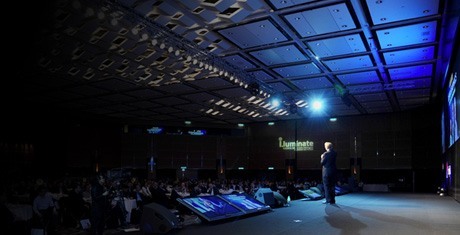
Watch the reaction to Daniel Burrus’ Recent Keynote presentation.
Daniel Burrus has over three decades of being right about where things are going, which is evidenced by his long and diverse list of repeat clients. Daniel has worked with leaders from Fortune 500 companies, the Pentagon, and heads of State-delivering powerful insights and actionable strategies.
By applying Daniel Burrus’ principles to our business, in less than a year we have been able to double our revenues and increase the value of our company by a factor of four, and we feel the biggest impact is yet to come.
We are going through an incredible digital transformation right now, and in his keynote speech, Daniel touched on a large number of points that tied everything together with practical strategies that we can immediately take action on.He really energized our dealer network to embrace the transformation that we’re going through.I can’t recommend Daniel enough!
“Your keynote at our digital annual convention was perfect. The Hard Trend future facts you shared was exactly what our industry leaders needed.It gives them a critical view that provides confidence for decision making.”
Daniel Burrus did a truly outstanding job as the opening keynoter for our CIO 100 2017 Symposium conference. He impressed our audience of 350+ Chief Information Officers and senior IT executives with his innovative ideas, business acumen and – most importantly — his thorough understanding of the challenges they face as enterprise technology leaders.
“You covered all the key points we discussed and more in your digital keynote to our audience of executive customers, and you customized your examples for our industry in just the right way.”
“Daniel delivered a great keynote at our Annual Global User Conference; his presentation was nicely tuned to our audience and the examples he incorporated were all accessible and helpful. It’s not easy to find compelling speakers who appeal to a broad audience and also convey something practical, but Daniel sailed over this bar. I would enthusiastically recommend him to companies looking to inspire innovative thinking.”
A ‘must-hear’ presentation.
It came as no surprise that you were rated the top speaker in our audience evaluations. Your unique blend of wit and insight awakened all of us to the need to develop the knowledge network necessary to move to a 21st century mind set.
Daniel studied the details about our audience in advance and listened carefully to our objectives for his keynote speech. He seamlessly incorporated every key point we discussed. As a result, the audience hung on every word, relating directly with each insight and recommendation. It’s no wonder he received a standing ovation. People are still buzzing.
Daniel Burrus was the keynote speaker at the ITF STORE Capital 2018 conference, and he was amazing – thought provoking, interesting, relevant to the business leaders in the audience. He customized the program for the group, and he did his homework. Many of the attendees are continuing to talk about his presentation and content. He was terrific to have right before lunch to spark lots of good conversation. I would highly recommend Daniel to speak to any leadership group that is interested in being prepared for the future and learning ways to be more innovative in their business.
Your presentation and interactive discussion with the Agents Council for Technology was a transforming event for our group. You helped us look at trends in a much more methodical way that will enable us to rework our Vision of the Future document into a much more credible and living tool for our industry.You spent the time in advance to understand our issues and then applied them actively throughout your presentation.
This is the third time you’ve addressed this conference and each presentation has been better than the last… and I wouldn’t hesitate inviting you back to a future conference!
Our people, without exception, felt that your ideas were provocative, original, and timely. Your entertaining style captured the audience and compelled them to listen, think, and apply your thoughts to their own professional and personal lives.You truly made a memorable impression on the audience.
“Your comments and insight were perfect and led right into the topics we planned to present at our digital event. Survey responses were highly complementary after the event concluded. Many thanks for your time and talent.”
You were fabulous! You received rave reviews from our participants for the relevancy, insight and expertise of your presentation material and style.You are the only keynote speaker we have invited back numerous times. I am convinced the extraordinary success of your continued contribution is due in no small part to the enormous amount of time you put into each presentation by customizing it to fit the unique and challenging needs of our CMO audience each year.
I don’t know any other speaker that could present after Bill Gates and ‘wow’ an audience of CEOs like you did! You were the perfect choice.
Your thoughts on how to create an opportunity for change through a customer focus is the excellence our team is striving for. The framework you provided on innovation, creativity and customer value will be instituted as a management practiceto enable the technology infrastructure group to take Wells Fargo to the next stage.
We hired Daniel as the keynote speaker for both our Business Innovation Technology Summit as well as our annual company meeting. I was thoroughly impressed with not only his actual keynote speeches, but even more so with his preparation process beforehand. We had a great conversation via phone a couple weeks beforehand where I realized how much he genuinely cared about catering his speech specifically to our audience, as well as aligning it with the message we wanted to send as a company. He is engaging, incredibly well spoken, and great to work with.
“Daniel Burrus is a dynamic speaker and delivered a lot of “aha” moments with his insights. I appreciated the activity and takeaways that he left the audience with. Daniel also was very engaging before the meeting, asking our clients questions, taking notes, and genuinely interested in learning more about our clients’ business.”
“Daniel is a powerful business strategist bringing significant value to those he works with.”
Daniel Burrus delivered! Not only did he do the upfront homework and research, ensuring that he fully understood the SPECS audience, but he presented an excellent keynote address that hit all the points we discussed in advance. He was interesting, knowledgeable, and dynamic. Our audience is still raving about his performance — and I would hire him again in a heartbeat.
“Daniel Burrus was exceptional, and we are thankful for the opportunity to have him join our meeting. Thank you for everything you have done in making our Annual Partner Meeting a huge success.”
Daniel came highly recommended and delivered on his Keynote at the Global CISO Executive Summit. He made the keynote interactive and challenged participants to put their newly gained insights to work in an interactive session identifying trends that you can anticipate and prepare for through strategic planning.
“Daniel Burrus did an excellent job. The feedback was extremely positive and he made me look like a genius.”
“Your digital presentation to the hospital CEOs gave them a new anticipatory mindset to view the present and future. This was exactly what they needed to help them design transformational strategies going forward.”
“Daniel Burrus exceeded our expectations, it was simply out of this world!”
“The feedback from the attendees on Daniel Burrus has been excellent. The content was right on point and very eye opening for everyone.”
Our practitioners were invigorated by the presentation and they left the conference thinking differently about how to navigate the road ahead. Daniel Burrus was 100% on point aligning our message to our conference’s theme.
Phase I: The Foundation of Disruptive Thinking
Before diving into strategic plans, you must first lay the groundwork with a shift in perspective and a supportive organizational culture. In my work, I find this phase is all about understanding the evolving landscape of disruption and fostering an environment where radical ideas can not only emerge but also thrive.
Re-evaluating the “Innovator’s Dilemma” in the Modern Age
When you dive into the world of disruptive innovation, it’s almost impossible to avoid the foundational ideas of Clayton Christensen. His landmark book, “The Innovator’s Dilemma,” first brought clarity to why even the most successful companies can be blindsided by smaller, less obvious market entrants. This classic work offers a crucial lens for any disruptive innovation strategy, highlighting the significant distinction between enhancing existing products and creating entirely new market categories.
But here’s where my perspective diverges. While Christensen’s theory is foundational, it presents a largely reactive view—a focus on how new entrants disrupt incumbents from below.
The true path forward, I believe, is centered on anticipation over reaction. The goal isn’t just to respond to disruption, but to become the disruptor.
To achieve this, my framework is built on a proactive understanding of the future. I distinguish between Hard Trends—which are future certainties, things that will happen regardless of what we do—and Soft Trends—which are future possibilities open to influence. This model provides you with a method to pre-solve predictable problems and seize inevitable opportunities. It’s an approach that helps you shape the future, rather than just adapt to it.
Building a Future-Ready Culture
A robust disruptive innovation strategy cannot flourish in a rigid, risk-averse environment. Cultivating a future-ready culture requires a conscious effort to foster psychological safety, encourage the formation of cross-functional teams, and embrace a fail fast, learn faster mindset.
I believe these three pillars are absolutely critical to building a truly innovative culture. However, from my perspective, they’re not the full picture. A truly future-ready culture must also include a fourth pillar: being anticipatory. It’s about empowering people at all levels to actively look ahead, identify the Hard Trends and predictable changes heading our way, and innovate around them.
This proactive stance moves an organization from simply reacting to disruptions to actively shaping its own future.
Phase II: Planning for Disruptive Strategy
With a foundational understanding of disruption and a supportive culture in place, the next phase involves strategically identifying opportunities and charting a course for action. This requires looking beyond the immediate horizon and developing an adaptable plan that can evolve with the changing landscape.
Horizon Scanning and Trend Analysis
To identify potential disruptions before they become mainstream, a proactive and systematic approach is essential. We begin with horizon scanning and trend analysis. These are powerful tools used to look for early indicators of change by monitoring a wide range of factors, from technological advancements to shifts in consumer behavior. By systematically collecting and analyzing this information, you can spot correlations with emerging disruptive changes.
But what I find is that traditional horizon scanning often produces long lists of possibilities without distinguishing between what will happen (Hard Trends) versus what might happen (Soft Trends). This is a critical distinction that I believe is necessary to move from mere observation to true foresight.
My approach to this is transformational. It lets you focus resources on the certainties that can’t be disrupted. It involves actively monitoring technological advancements, shifts in consumer behavior, emerging business models, and even geopolitical changes that could have significant implications for your industry. The goal is to identify early indicators of potentially disruptive forces and analyze their potential impact.
Crafting a Dynamic Innovation Roadmap
I’ve found that traditional, rigid strategic plans can quickly become obsolete in the face of rapid technological change. That’s why crafting a dynamic innovation roadmap is essential for staying ahead. My approach is to treat the roadmap not as a fixed blueprint but as a guiding framework that is flexible enough to adapt to new information and emerging opportunities. This practice is integrated into my Anticipatory Organization model, making it a core differentiator from static, reactive planning.
As I often tell my clients, “An innovation roadmap must be dynamic, because the future is not static. By basing it on Hard Trends, we can build roadmaps that evolve while still being anchored in certainty.“
Key elements of a dynamic innovation roadmap include:
Integrated with Strategy: It clearly outlines how sustainable innovation planning will be woven into the overall business strategy.
Agile, Anticipatory, and Adaptable: It must be flexible and future-focused to respond to new information rather than being a rigid, unchanging document.
Identifies Trends: It is built on a forward-looking methodology that distinguishes between predictable certainties—or the Hard Trends—and possibilities—Soft Trends.
Clear, Flexible Goals: It sets adaptable goals and priorities that allow for course correction as new insights emerge.
Multiple Time Horizons: It incorporates both near-term projects and long-term, high-impact disruptive ventures.
Integrated with Strategy: It clearly outlines how sustainable innovation planning will be woven into the overall business strategy.
Phase III: Execution and Measurement
The most well-conceived disruptive innovation strategy will fall flat without effective execution and a system for measuring progress. This phase focuses on empowering individuals and teams to drive innovation and establishing metrics that truly reflect the success of disruptive efforts.
The Role of an Internal Disruptor
Driving innovation strategy implementation requires specific individuals or teams to act as catalysts for change. I call these “internal disruptors.” They are empowered to challenge the status quo and champion unconventional ideas. By giving them the autonomy and resources to explore new possibilities, you can foster a culture of continuous disruptive innovation.
Visionary and Resilient: These individuals possess a unique blend of vision and resilience, championing new ideas even in the face of resistance. They see the potential for change where others see obstacles and are persistent in advocating for new approaches.
Challengers of the Status Quo: Internal disruptors are given a clear mandate to think differently and challenge existing processes and norms. This allows them to operate with the freedom of a startup, enabling them to experiment and pilot projects without the usual bureaucratic hurdles.
Catalysts for Change: They are crucial for transforming ideas into reality by pushing boundaries and advocating for innovative solutions. By empowering these teams, you can accelerate the innovation planning process and achieve faster proofs-of-concept for transformative projects.
Empowered and Autonomous: These teams need the authority and resources to explore new possibilities and conduct experiments independently. Protecting them from day-to-day operational pressures ensures they can focus solely on their disruptive mandate.
Champions of New Ideas: Ultimately, their role is to identify, nurture, and champion new ideas from the ground up. This is crucial for fostering a culture where groundbreaking concepts are valued and given a chance to grow within the organization.
Key Performance Indicators (KPIs) for Innovation Planning
When it comes to measuring the success of disruptive innovation efforts, I would argue that traditional metrics like revenue growth and market share are too lagging. My belief is that disruption is successful when you’ve transformed an industry standard, not when you’ve simply improved incrementally, and we need metrics that reflect this.
A better set of KPIs for measuring disruptive efforts includes anticipatory metrics that reflect the unique nature of disruption. I have found that a more complete set of KPIs for measuring disruptive efforts includes:
Speed of experimentation and iteration: This metric gauges your organization’s anticipatory focus, agility, and ability to learn quickly from new data.
Speed to market with innovations based on Hard Trends: This KPI assesses how quickly you can turn a new idea into a tangible product or service available to customers. Minimizing this time can provide a significant competitive advantage.
Percentage of initiatives tied to future certainties: This metric helps ensure that your innovation pipeline is strategically focused on predictable change, rather than on guesswork.
Level of pre-solved problems that competitors haven’t anticipated: This measures the effectiveness of your anticipatory analysis by quantifying how many future problems you’ve proactively addressed.
Measures of cultural adoption: This includes metrics like employee engagement in innovation initiatives and internal survey results on risk tolerance, psychological safety, and the depth of anticipatory thinking embedded in teams. These non-financial indicators are crucial for understanding whether your sustainable innovation planning efforts are truly embedding a culture of disruption that will last.
Ultimately, whether an effort is successful is defined by its ability to fulfill the strategic goals set in the innovation roadmap, whether that’s creating a new revenue stream, capturing a new market, or pre-solving an inevitable problem.
Making Disruption Your Competitive Advantage
Implementing a sustainable disruptive innovation strategy is not a one-time project; it’s an ongoing journey that requires a commitment to continuous learning, adaptation, and a willingness to challenge the status quo.
By building a future-ready culture, adopting a dynamic approach to innovation planning, and empowering internal disruptors, you can move beyond simply talking about disruption to truly making it a core competitive advantage.
As a disruptive innovation expert, I believe embracing a proactive and strategic approach to disruption will not only help you navigate the inevitable changes ahead but also position you to lead the way in shaping the future of your industry. Want to learn more about disruptive innovation? Get in touch and let’s discuss disruptive strategy further and explore how it can benefit your business.
Book Daniel Burrus for Your Next Event
If you want to transform your team’s understanding of artificial intelligence and spark innovation across your organization, consider booking Daniel Burrus, a best selling author and artificial intelligence keynote speaker, for your next conference or corporate event.
Visit www.burrus.com to learn more or to request availability.
Because the future isn’t something you react to. It’s something you create—and the right keynote speaker can show you how. Booking an AI expert like Daniel Burrus can transform your team’s understanding of AI and its potential impact on your business strategy.