How Future Inventions Will Reshape Your Industry In The Next Decades
The technological landscape is shifting faster than most organizations can adapt. While your competitors are still catching up to today’s innovations, the smartest leaders are already preparing for tomorrow’s breakthroughs. Understanding what inventions are in the future isn’t just about staying informed; it’s about survival in an increasingly competitive marketplace.
Looking to inspire bold, future-ready thinking at your next event? Hire futurist Daniel Burrus as your AI keynote speaker and spark real innovation.
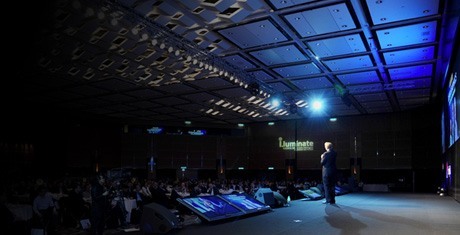
Watch the reaction to Daniel Burrus’ Recent Keynote presentation.
Daniel Burrus has over three decades of being right about where things are going, which is evidenced by his long and diverse list of repeat clients. Daniel has worked with leaders from Fortune 500 companies, the Pentagon, and heads of State-delivering powerful insights and actionable strategies.
By applying Daniel Burrus’ principles to our business, in less than a year we have been able to double our revenues and increase the value of our company by a factor of four, and we feel the biggest impact is yet to come.
We are going through an incredible digital transformation right now, and in his keynote speech, Daniel touched on a large number of points that tied everything together with practical strategies that we can immediately take action on.He really energized our dealer network to embrace the transformation that we’re going through.I can’t recommend Daniel enough!
“Your keynote at our digital annual convention was perfect. The Hard Trend future facts you shared was exactly what our industry leaders needed.It gives them a critical view that provides confidence for decision making.”
Daniel Burrus did a truly outstanding job as the opening keynoter for our CIO 100 2017 Symposium conference. He impressed our audience of 350+ Chief Information Officers and senior IT executives with his innovative ideas, business acumen and – most importantly — his thorough understanding of the challenges they face as enterprise technology leaders.
“You covered all the key points we discussed and more in your digital keynote to our audience of executive customers, and you customized your examples for our industry in just the right way.”
“Daniel delivered a great keynote at our Annual Global User Conference; his presentation was nicely tuned to our audience and the examples he incorporated were all accessible and helpful. It’s not easy to find compelling speakers who appeal to a broad audience and also convey something practical, but Daniel sailed over this bar. I would enthusiastically recommend him to companies looking to inspire innovative thinking.”
A ‘must-hear’ presentation.
It came as no surprise that you were rated the top speaker in our audience evaluations. Your unique blend of wit and insight awakened all of us to the need to develop the knowledge network necessary to move to a 21st century mind set.
Daniel studied the details about our audience in advance and listened carefully to our objectives for his keynote speech. He seamlessly incorporated every key point we discussed. As a result, the audience hung on every word, relating directly with each insight and recommendation. It’s no wonder he received a standing ovation. People are still buzzing.
Daniel Burrus was the keynote speaker at the ITF STORE Capital 2018 conference, and he was amazing – thought provoking, interesting, relevant to the business leaders in the audience. He customized the program for the group, and he did his homework. Many of the attendees are continuing to talk about his presentation and content. He was terrific to have right before lunch to spark lots of good conversation. I would highly recommend Daniel to speak to any leadership group that is interested in being prepared for the future and learning ways to be more innovative in their business.
Your presentation and interactive discussion with the Agents Council for Technology was a transforming event for our group. You helped us look at trends in a much more methodical way that will enable us to rework our Vision of the Future document into a much more credible and living tool for our industry.You spent the time in advance to understand our issues and then applied them actively throughout your presentation.
This is the third time you’ve addressed this conference and each presentation has been better than the last… and I wouldn’t hesitate inviting you back to a future conference!
Our people, without exception, felt that your ideas were provocative, original, and timely. Your entertaining style captured the audience and compelled them to listen, think, and apply your thoughts to their own professional and personal lives.You truly made a memorable impression on the audience.
“Your comments and insight were perfect and led right into the topics we planned to present at our digital event. Survey responses were highly complementary after the event concluded. Many thanks for your time and talent.”
You were fabulous! You received rave reviews from our participants for the relevancy, insight and expertise of your presentation material and style.You are the only keynote speaker we have invited back numerous times. I am convinced the extraordinary success of your continued contribution is due in no small part to the enormous amount of time you put into each presentation by customizing it to fit the unique and challenging needs of our CMO audience each year.
I don’t know any other speaker that could present after Bill Gates and ‘wow’ an audience of CEOs like you did! You were the perfect choice.
Your thoughts on how to create an opportunity for change through a customer focus is the excellence our team is striving for. The framework you provided on innovation, creativity and customer value will be instituted as a management practiceto enable the technology infrastructure group to take Wells Fargo to the next stage.
We hired Daniel as the keynote speaker for both our Business Innovation Technology Summit as well as our annual company meeting. I was thoroughly impressed with not only his actual keynote speeches, but even more so with his preparation process beforehand. We had a great conversation via phone a couple weeks beforehand where I realized how much he genuinely cared about catering his speech specifically to our audience, as well as aligning it with the message we wanted to send as a company. He is engaging, incredibly well spoken, and great to work with.
“Daniel Burrus is a dynamic speaker and delivered a lot of “aha” moments with his insights. I appreciated the activity and takeaways that he left the audience with. Daniel also was very engaging before the meeting, asking our clients questions, taking notes, and genuinely interested in learning more about our clients’ business.”
“Daniel is a powerful business strategist bringing significant value to those he works with.”
Daniel Burrus delivered! Not only did he do the upfront homework and research, ensuring that he fully understood the SPECS audience, but he presented an excellent keynote address that hit all the points we discussed in advance. He was interesting, knowledgeable, and dynamic. Our audience is still raving about his performance — and I would hire him again in a heartbeat.
“Daniel Burrus was exceptional, and we are thankful for the opportunity to have him join our meeting. Thank you for everything you have done in making our Annual Partner Meeting a huge success.”
Daniel came highly recommended and delivered on his Keynote at the Global CISO Executive Summit. He made the keynote interactive and challenged participants to put their newly gained insights to work in an interactive session identifying trends that you can anticipate and prepare for through strategic planning.
“Daniel Burrus did an excellent job. The feedback was extremely positive and he made me look like a genius.”
“Your digital presentation to the hospital CEOs gave them a new anticipatory mindset to view the present and future. This was exactly what they needed to help them design transformational strategies going forward.”
“Daniel Burrus exceeded our expectations, it was simply out of this world!”
“The feedback from the attendees on Daniel Burrus has been excellent. The content was right on point and very eye opening for everyone.”
Our practitioners were invigorated by the presentation and they left the conference thinking differently about how to navigate the road ahead. Daniel Burrus was 100% on point aligning our message to our conference’s theme.
Competitive Cost of Ignoring Emerging Technology
Every major industry disruption in history started as an improbable invention. The internet seemed like a novelty until it wasn’t. Smartphones were dismissed as overpriced toys until they revolutionized how we do business. Futurist speakers have helped companies in the US identify potential breakthroughs in technology. Leaders who recognize and adapt to future inventions early gain significant competitive advantages, while those who wait become cautionary tales.
What is the future of inventions in your sector? That question should keep you up at night. Because somewhere, right now, someone is developing the technology that could make your current business model obsolete.
Exponential technologies continue to advance at an accelerating rate, often doubling in capability while reducing in cost. The good news is that these same technological advancements can also unlock unprecedented opportunities if you’re positioned correctly.
The Convergence Principle Driving Innovation
Future inventions emerge when multiple technologies converge in unexpected ways. Artificial intelligence needed cloud computing, big data, and advanced algorithms working in concert. This convergence principle will define the next decades of innovation.
Consider materials science meeting biotechnology. Buildings will be grown as living infrastructure that repairs itself, purifies air, and adapts to environmental conditions. Research laboratories are already engineering these biological materials for deployment within this decade.
Quantum computing intersects with drug discovery. Neural interfaces merge with enterprise software. Atmospheric energy combines with carbon capture. These interconnected waves of transformation will hit simultaneously, and organizations unprepared for this convergence will drown while competitors ride the wave.
From Smart Infrastructure to Regenerative Systems
The conversation around futuristic technology focuses on making things “smarter.” But the real revolution lies in moving beyond optimization to regeneration. Future inventions will actively improve the systems they’re part of. Transportation networks will anticipate and prevent congestion by analyzing millions of variables in real-time. Infrastructure will continuously repair and improve itself using materials engineered at the molecular level.
This regenerative approach extends to manufacturing. Tomorrow’s factories will operate in closed loops where every output becomes input for another process. Materials will be continuously reconfigured at the atomic level, existing in perpetual cycles without degradation. For executives, this represents a complete reimagining of operational efficiency and cost structures. Companies that position themselves around regenerative systems will redefine competitive advantage.
The Eight Controls That Will Define Leadership
Among the countless technological advancements emerging, eight fundamental capabilities stand out as civilization-defining breakthroughs. Organizations that gain early advantages in these areas won’t just lead their industries, they’ll shape entirely new markets.
Molecular-level matter manipulation – Direct atoms into any configuration, eliminating traditional production constraints.
Mastering energy systems – Capture power from weather patterns, electromagnetic fields, and temperature differentials for unlimited operational capacity.
Collective intelligence systems – Enable teams to temporarily merge expertise into unified problem-solving entities through brain-computer interfaces.
Quantum information processing – Solve previously impossible computational problems in seconds rather than centuries.
Biological system programming – Engineer living organisms and materials that grow, adapt, and self-repair.
Autonomous coordination networks – Deploy systems that make complex decisions and execute actions without human intervention.
Climate and environmental control – Actively manage weather patterns, atmospheric composition, and ecological systems at scale.
Space-based resource access – Extract and utilize materials from asteroids, the moon, and beyond to eliminate terrestrial scarcity.
These aren’t fantasies for 2050. Research laboratories are demonstrating working principles today. The question is whether your organization is tracking these developments and preparing strategic positions around them.
Hard Trends Versus Hopeful Thinking
Most organizations treat all future inventions as equal possibilities and wait for market signals before acting. This approach guarantees you’ll be late to every significant transition.
Smart leaders distinguish between two types of trends. Soft trends are “maybes” that might happen and can change direction. Hard trends are certainties based on measurable facts already in motion. Demographics are hard trends. If a technology requires infrastructure being built globally, that’s a hard trend. If a scientific principle has been proven and only engineering remains, that’s a hard trend.
Understanding this distinction transforms planning from speculation to strategy. Your competitors are making billion-dollar bets on possibilities while you’re building capabilities around certainties.
Building Anticipatory Capability
Preparing for technological advancements isn’t about dedicated innovation teams. It’s about embedding anticipatory thinking into your organizational DNA at every level.
Map current technological trajectories against your core business model. Which convergences create opportunities? Which pose existential threats? Then ask the harder question: does your leadership team have the expertise to make these assessments accurately? Most don’t, which is precisely why they seek outside guidance from experts who’ve spent decades identifying these patterns.
The organizations thriving in the next decades won’t react fastest to change. They’ll be the ones that saw change coming years earlier and positioned themselves to capitalize on it. This is where working with a futurist keynote speaker like Daniel Burrus becomes strategically essential, bringing the pattern recognition and hard trend identification that only comes from immersing yourself in technological evolution full-time.
The Competitive Cost of Hesitation
There’s a persistent myth that moving too early on emerging technology carries more risk than waiting for proven results. Analysis of actual market transformations reveals exactly the opposite. Early movers capture disproportionate advantages that late entrants can never overcome.
Consider every technology that reshaped your industry in the past decade. It was visible five to ten years before it became dominant. The companies now leading their sectors with those technologies weren’t lucky. They recognized the hard trends early and committed resources before the business case was “proven.”
By the time a technology becomes consensus-proven, strategic advantages are already claimed. You’re no longer competing to be first or even second with next-generation capabilities. You’re competing to survive against organizations that already own the high ground.
Your Strategic Next Step
The future inventions that will transform your industry are taking shape in research laboratories right now. The trajectories are set. The only variable is whether your organization positions itself ahead of these shifts or scrambles to catch up after they’ve already transformed your competitive landscape.
The leaders who will thrive aren’t waiting for certainty. They’re building strategies around measurable technological patterns happening today, developing capabilities to turn disruption into opportunity before their competitors recognize the disruption exists.
If you’re serious about positioning your organization to lead rather than follow, consulting with a futurist keynote speaker becomes essential to maintaining competitive relevance in the decades ahead. The question is whether you’ll be creating the transformation or struggling to survive it.
Book Daniel Burrus for Your Next Event
If you want to transform your team’s understanding of artificial intelligence and spark innovation across your organization, consider booking Daniel Burrus, a best selling author and artificial intelligence keynote speaker, for your next conference or corporate event.
Visit www.burrus.com to learn more or to request availability.
Because the future isn’t something you react to. It’s something you create—and the right keynote speaker can show you how. Booking an AI expert like Daniel Burrus can transform your team’s understanding of AI and its potential impact on your business strategy.