

March 09, 2026 | By Daniel Burrus
Leadership, Newsletter, Strategy, Technology, Transformation
The types of humanoid robots entering enterprise operations today aren’t a preview of what’s coming. They’re already reshaping how companies compete, and the gap between organizations that understand this landscape and those that don’t is widening fast.
From bipedal robots on factory floors to AI-powered robots handling front-line customer interactions, the deployment pace has outrun most executive briefings.
This isn’t just a technology story. It’s a competitive positioning story. And it starts with knowing what you’re actually looking at.
What Is a Humanoid Robot?
A humanoid robot is a machine designed to replicate the structure of the human body, typically a head, torso, arms, and legs, though many systems include only the upper body. The human-like design isn’t purely aesthetic. It’s functional.
Most real-world environments were built around human proportions, and humanoid robots can operate in those spaces without requiring costly infrastructure redesign.
Before examining the specific types of humanoid robots in detail, two examples anchor the broader conversation.
Atlas, developed by Boston Dynamics, represents the frontier of agile, full-body movement in bipedal systems.
Pepper, created by SoftBank Robotics, shows how humanoid design translates into effective human-robot interaction in commercial environments.
They’re built for very different purposes, and that difference is exactly why classification matters for any serious business assessment of humanoid robotics.
How Humanoid Robots Are Classified
The types of humanoid robots are most usefully understood through two axes, physical structure and mobility on one side, and application domain and function on the other. A dual-axis framework gives business leaders a clearer map of where these machines are operating today and which categories are most directly relevant to their industries.
Classification by Structure and Mobility
Bipedal Humanoid Robots
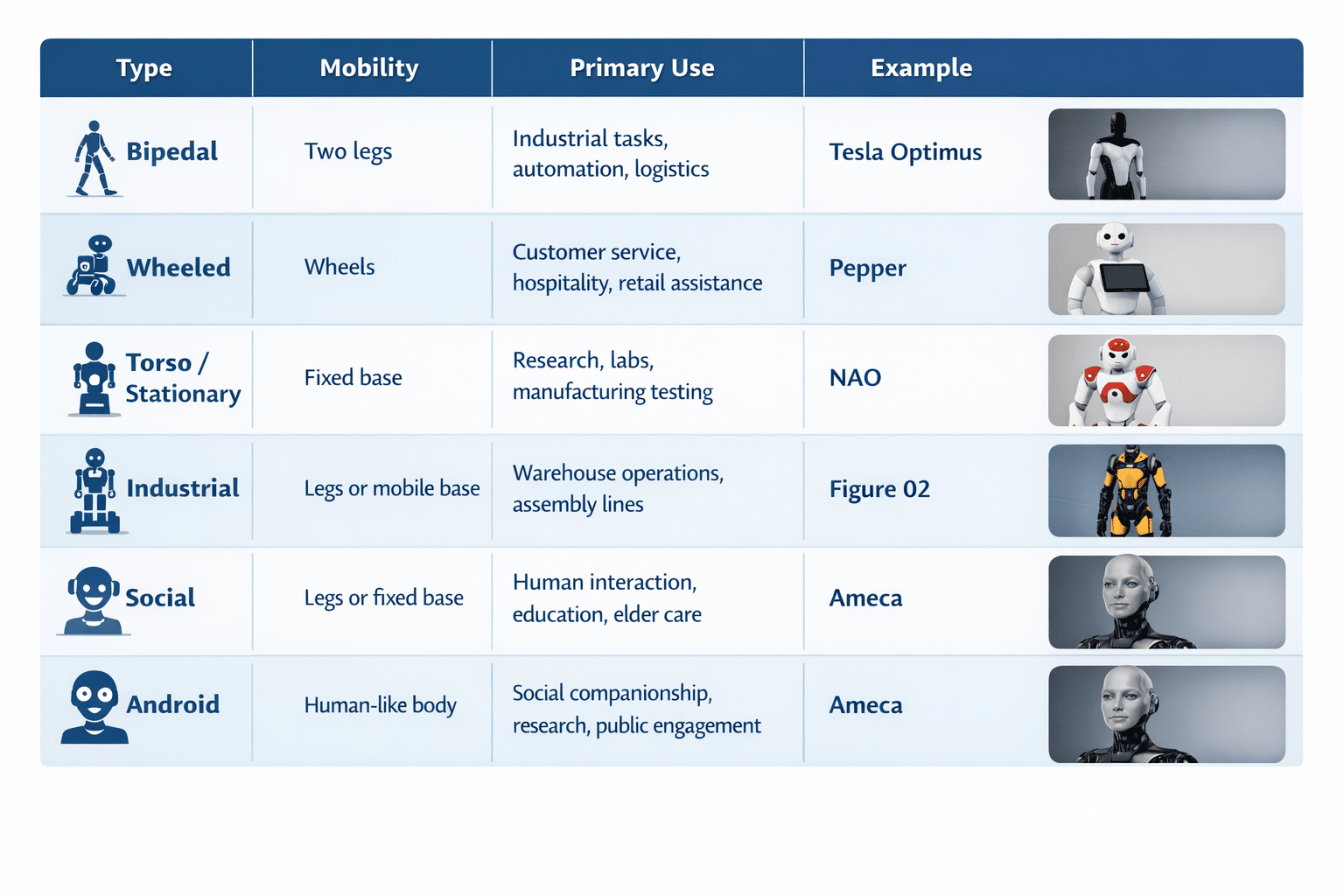
Bipedal robots are two-legged machines capable of walking, climbing stairs, and maintaining balance in dynamic environments. Tesla Optimus, Figure 02, and the Unitree G1 represent the current generation pushing into active industrial deployment.
Their strategic value comes from an ability to operate in unmodified human workspaces, using balance algorithms, whole-body motion control, and advanced robot locomotion to navigate terrain that stops traditional automation cold.
For executives tracking industrial automation trends and warehouse robotics, bipedal humanoids are the closest available proxy for a flexible, drop-in workforce solution.
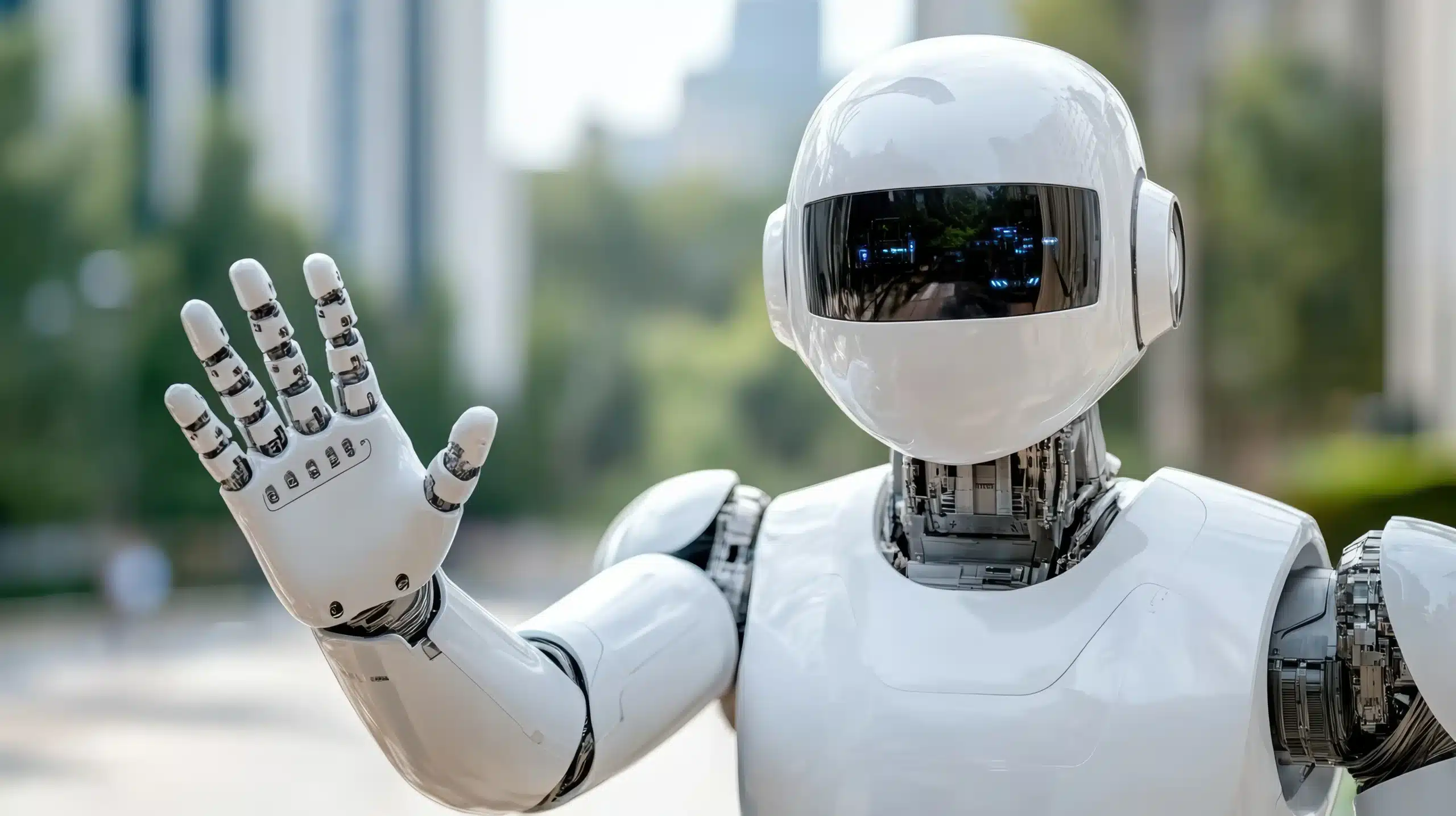
Wheeled Humanoid Robots
Wheeled humanoids pair a human-like upper body with a motorized base. Agility Robotics’ Digit and SoftBank’s Pepper are the most recognized examples.
The design trade-off is deliberate. Wheels sacrifice stair navigation for meaningful gains in energy efficiency, indoor stability, and speed. In flat-surface environments like retail floors, logistics facilities, and hospitality settings, wheeled platforms consistently outperform bipedal systems on cost-per-task metrics.
Service robotics in these environments has been dominated by this form factor for good reason.
Stationary and Torso Humanoids
Not every humanoid robot moves through space. Stationary and torso-only systems like NAO and Apollo-class upper-body platforms are designed for research labs and structured manufacturing cells where dexterous robotic hands and human-robot interaction take priority over mobility.
These platforms often serve as the proving ground for AI perception systems before those capabilities migrate into mobile units.
Classification by Application Domain
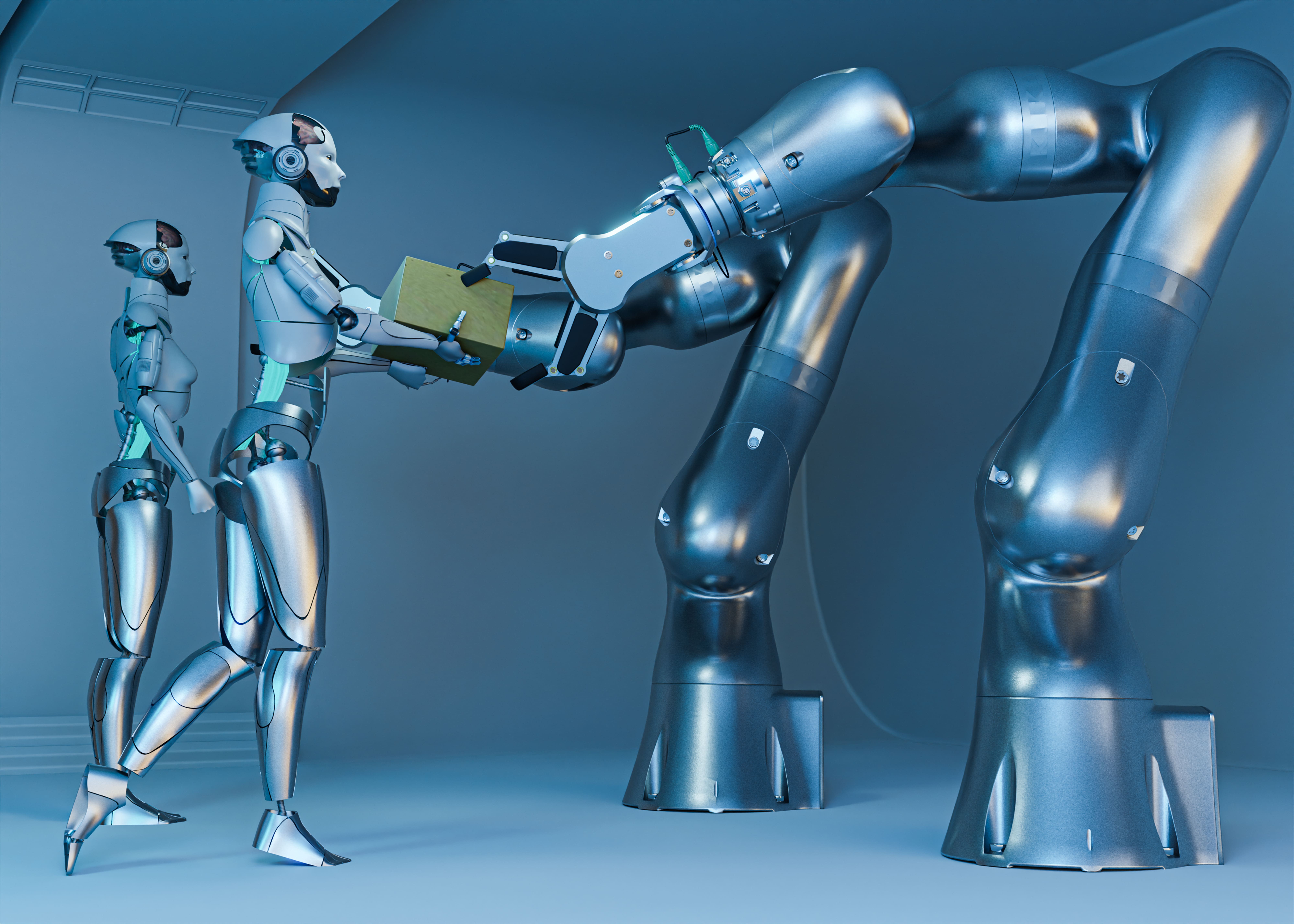
Industrial Humanoid Robots
Industrial humanoid robots are built for physical work including lifting, assembly, sorting, and warehouse stacking. Tesla Optimus and Figure 02 are both in early-stage deployment in manufacturing settings, and the cost curves are moving in one direction.
The defining capabilities are payload capacity, force feedback systems, and durability under repetitive load. For leaders in manufacturing and supply chain, this category deserves the most immediate strategic attention.
Service and Domestic Humanoids
Service robots like Pepper and Ameca are designed for environments where human interaction is the core task. Retail, hospitality, and assisted living are the leading use cases. These platforms prioritize natural language processing and expressive communication over raw physical output.
The business case for service robotics centers on delivering consistent customer experience at scale, something human staffing models can’t reliably guarantee at volume.
Social and Companion Robots
Social humanoid robots are a focused subset of service robotics, built almost entirely around emotional engagement. Ameca, developed by Engineered Arts, leads this category commercially with nuanced facial expressions and real-time conversational AI.
The applications span elder care, mental health support, and premium hospitality. For organizations in those sectors, social robots present both a differentiation opportunity and a design challenge worth addressing early.
Research and Educational Humanoids
NAO and Atlas have long served as reference platforms for AI experimentation in academic and enterprise R&D environments. Open APIs, modularity, and a deep body of published research make these systems well-suited for organizations building internal AI and robotics capabilities.
If your company is investing in proprietary robotics applications, research-grade humanoids are typically where that work begins.
Androids and Hyper-Realistic Humanoids
Androids are a subtype of humanoid robots designed to closely mimic human appearance, including skin texture, expressive facial movement, and behavioral patterns that blur the line between human and machine.
A gynoid is the female-presenting variant within this subtype. Ameca currently leads this category in commercial availability. The distinction between humanoid and android comes down to degree of realism.
All androids are humanoid robots, but not all humanoid robots are androids. For executives considering customer-facing deployments, this distinction matters more than it may initially appear.
Humanoid Robot Types at a Glance
Key Technologies Behind Humanoid Robots
What separates the most capable types of humanoid robots from their predecessors isn’t just mechanical engineering. It’s the AI and sensing layers that make real-world operation possible.
A few of these layers are worth understanding at the strategic level. For a deeper look at how these systems are evolving, AI-driven enterprise robotics is a fast-moving area with direct implications for competitive positioning.
- AI-driven perception systems, including computer vision and LiDAR/vision mapping, allow robots to interpret their environments in real time. Without robust robotic perception systems, autonomous navigation breaks down in anything but controlled conditions.
- Dexterous robotic hands and force feedback systems determine what a robot can actually accomplish once it’s positioned. Handling variable objects without damaging them remains one of the harder unsolved engineering problems in the field.
- Motion planning and whole-body control govern how a robot moves safely through physical space. Natural language processing governs how it communicates. Together, these layers define not just current capability, but how quickly a given platform can be adapted as operational needs change.
What This Means for Business Leaders

Most organizations are still treating humanoid robotics as something to monitor from a comfortable distance. That’s a reactive posture, and it’s getting more costly every quarter.
The companies making real progress aren’t waiting for the technology to mature. They’re mapping which types of humanoid robots align with their specific operational gaps, building internal literacy before competitive pressure forces the issue, and positioning themselves to anticipate rather than react.
While reactive organizations are still debating whether to engage, Daniel Burrus has spent decades helping enterprise leaders turn emerging technology into durable competitive advantage.
The types of humanoid robots in limited deployment today are early-stage versions of what the next 24 months will bring. Leaders who understand the current taxonomy will recognize the next strategic inflection point before their competitors do.If you’re ready to build that strategic clarity, working with an AI futurist keynote speaker is a direct path forward.
Frequently Asked Questions
What are five types of humanoid robots?
Bipedal, wheeled, stationary/torso-only, industrial, and social or service humanoids. Each is designed for a different operational environment.
What are examples of humanoid robots?
Tesla Optimus, Figure 02, Boston Dynamics Atlas, Unitree G1, SoftBank Pepper, and Engineered Arts Ameca.
What is the difference between a humanoid and an android?
A humanoid replicates human body structure. An android is a subtype built to closely mimic human appearance. All androids are humanoids, but not all humanoids are androids.
What are humanoid robots used for?
Industrial automation, warehouse logistics, retail and hospitality service, healthcare assistance, research, and social companionship.
What is the most advanced humanoid robot in 2026?
Tesla Optimus and Figure 02 lead in industrial capability. Ameca leads in expressive human-robot interaction. It depends on the metric applied.
How do humanoid robots move?
Bipedal robots use balance algorithms and whole-body motion control. Wheeled humanoids use motorized bases. Most modern platforms navigate autonomously.
Are humanoid robots powered by AI?
Yes. Modern platforms combine computer vision, natural language processing, and machine learning to interpret environments and respond in real time.
What industries are adopting humanoid robots the fastest?
Manufacturing, logistics, and warehousing lead adoption. Healthcare and hospitality are close behind.
What is robot locomotion in humanoid systems?
How a humanoid moves through its environment, via legs, wheels, or fixed mounting. Locomotion type determines which operational settings a robot can function in.
How much do humanoid robots cost?
Research platforms like NAO run in the tens of thousands. Industrial platforms like Optimus and Figure 02 are in limited commercial release. Service humanoids like Pepper have typically been available through leasing.
What is a gynoid?
A female-presenting android subtype. Most common in social, hospitality, and companion robot applications.
Can humanoid robots replace human workers?
They’re already supplementing labor in structured environments. The more pressing question for executives is which functions shift first and whether their organization is positioned to respond.

Daniel Burrus is a globally recognized futurist, keynote speaker, business strategist, and AI expert who helps leaders anticipate disruption and create exponential opportunities.
The author of seven books—including the New York Times and Wall Street Journal bestseller Flash Foresight.
As one of the world’s leading technology futurists, Burrus has delivered thousands of keynotes across six continents.
Learn More