March 19, 2026 | By Daniel Burrus
LeadershipNewsletterStrategyTechnologyTransformation

Nature has been solving complex problems for millions of years without a central command. Ant colonies find the shortest path to food. Bird flocks navigate obstacles in real time. Fish schools evade predators with split-second coordination.

None of these systems has a leader. Yet all of them work.

That’s the core idea behind swarm intelligence. It’s the study of how decentralized, self-organized systems produce intelligent collective behavior from simple individual rules. And it’s now one of the most promising frameworks in modern AI.

Daniel Burrus has identified decentralized AI systems as a Hard Trend shaping the future of automation, logistics, and enterprise technology. Understanding swarm intelligence is increasingly a strategic requirement for leaders navigating that shift.

What Is Swarm Intelligence?

Swarm intelligence is the collective behavior of decentralized systems where individual agents follow simple local rules. No single agent controls the group. Yet the group produces complex, adaptive outcomes.

The term was introduced by researchers Jing Wang and Gerardo Beni in 1989. It emerged from the study of cellular robotic systems and has since expanded into AI, optimization, robotics, and logistics.

The key distinction is this: swarm intelligence doesn’t require central coordination to function. Intelligence emerges from interaction, not instruction.

Key Principles of Swarm Intelligence

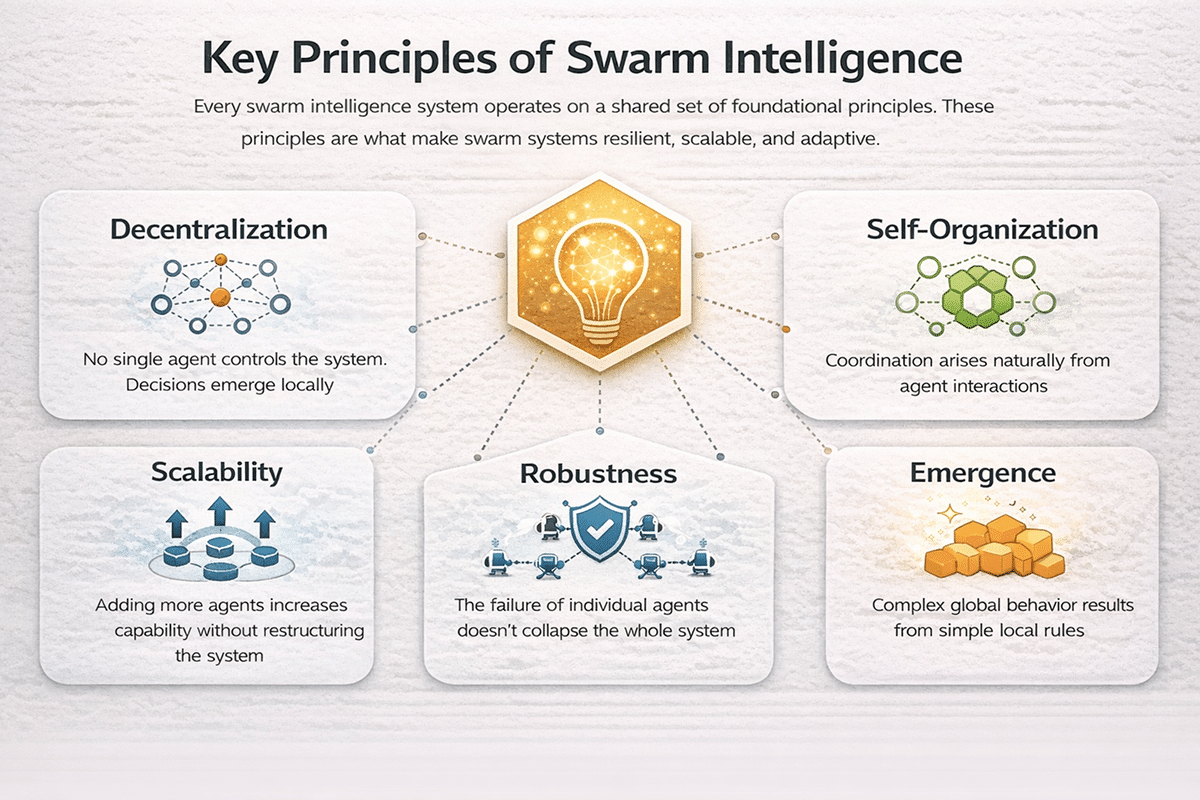
Every swarm intelligence system operates on a shared set of foundational principles. These principles are what make swarm systems resilient, scalable, and adaptive.

These principles explain why swarm intelligence systems consistently outperform centralized approaches in dynamic, unpredictable environments.

Biological Examples of Swarm Intelligence

The most compelling swarm intelligence diagrams aren’t charts. They’re nature itself. Biological systems have been demonstrating these principles far longer than any algorithm.

Ant colonies use pheromone trails to map the shortest routes to food. As more ants reinforce a path, it becomes the dominant route. No ant has a map. The map emerges from behavior.

Bee swarms select new hive locations through a voting process where scout bees perform waggle dances to advocate for sites. The strongest candidate earns the most support through distributed consensus.

Bird flocks maintain formation through three simple rules: stay close, avoid collisions, and match velocity. No bird leads. The flock navigates as a single adaptive unit.

Each of these biological systems directly inspired the swarm algorithms driving AI today.

How Swarm Algorithms Work

Swarm algorithms translate biological collective behavior into computational systems. Each algorithm mimics a specific natural process to solve optimization problems that traditional methods struggle with.

AI algorithms that analyze real-world complexity increasingly rely on decentralized approaches because centralized systems break down under dynamic conditions. Swarm algorithms thrive precisely where that breakdown occurs.

The general process works like this. A population of agents is initialized across a solution space. Each agent evaluates its local environment and adjusts behavior based on neighboring agents. Over iterations, the collective converges on an optimal or near-optimal solution.

Major Swarm Intelligence Algorithms

Ant Colony Optimization

Ant Colony Optimization, or ACO, mimics how ants deposit pheromones to reinforce efficient paths. In computational terms, artificial ants traverse a graph representing a problem. Shorter, more efficient paths accumulate more pheromone weight over time. Other agents follow the stronger trails. The algorithm converges on optimal routing solutions.

ACO is widely used for vehicle routing, network optimization, and scheduling problems.

Particle Swarm Optimization

Particle Swarm Optimization, or PSO, is inspired by the social behavior of bird flocks and fish schools. Each particle in the swarm represents a candidate solution moving through a search space. Particles adjust their trajectory based on their own best position and the best position found by the swarm.

IEEE research on swarm intelligence algorithms documents PSO as one of the most widely applied swarm algorithms across engineering, finance, and logistics optimization.

Artificial Bee Colony

Artificial Bee Colony algorithms model how honeybees search for food sources. Employed bees exploit known food sources while onlooker bees evaluate options based on shared information. Scout bees explore new areas randomly. This division of labor produces efficient exploration of large solution spaces.

Firefly Algorithm

The Firefly Algorithm is based on the bioluminescent signaling behavior of fireflies. Brighter fireflies attract others, guiding the swarm toward stronger solutions. It performs well in multimodal optimization problems where multiple peaks exist in the solution space.

Swarm Intelligence Applications in AI

Swarm intelligence AI is no longer a research novelty. It’s embedded in production systems across multiple industries.

  • Logistics and routing: Amazon and DHL use swarm-inspired algorithms to optimize delivery routes, warehouse operations, and real-time traffic response.
  • Cybersecurity: Decentralized swarm agents monitor network traffic and detect anomalies without a central vulnerability point.
  • Financial modeling: PSO-based systems analyze market scenarios and optimize portfolio allocation under volatile conditions.
  • Telecommunications: Swarm algorithms dynamically optimize network traffic and bandwidth allocation across distributed systems.
  • Drug discovery: Swarm optimization accelerates molecular search processes by efficiently exploring vast chemical solution spaces.

Swarm Robotics

Swarm robotics applies swarm intelligence principles to physical multi-robot systems. Rather than building one highly capable robot, swarm robotics deploys many simpler robots that coordinate through local interaction.

This approach has major practical advantages. If one robot fails, others compensate. The system scales naturally. And swarm robotics systems can adapt to environments no single robot could navigate alone.

Working with atop AI futurist keynote speaker helps enterprise leaders evaluate which swarm robotics applications represent near-term deployment opportunities versus longer-term bets.

Current swarm robotics applications include search and rescue operations, agricultural monitoring, environmental mapping, military reconnaissance, and warehouse automation. Peer-reviewed research on swarm robotics systems shows rapid expansion in multi-robot coordination capabilities across all of these verticals.

Swarm Intelligence vs Machine Learning

These two approaches are often discussed as alternatives. They’re better understood as complements.

Swarm Intelligence Machine Learning
Learning method Emergent collective behavior Pattern recognition from data
Control structure Decentralized Centralized model
Adaptability High in dynamic environments Dependent on training data quality
Scalability Naturally scalable Requires retraining at scale
Best use case Optimization and routing problems Classification and prediction tasks

Swarm intelligence excels at optimization problems in unpredictable environments. Machine learning excels at learning from historical data to make predictions. Many advanced AI systems now combine both approaches.
Swarm Intelligence vs Neural Networks

Neural networks process information through layers of weighted connections trained on large datasets. They excel at pattern recognition, language modeling, and image classification.

Swarm intelligence doesn’t learn from data in the same way. It produces solutions through collective agent interaction. Where neural networks require significant computational overhead and training time, swarm algorithms are lightweight and adaptive in real time.

The practical difference matters for deployment. Neural networks suit static, data-rich environments. Swarm intelligence suits dynamic, resource-constrained environments where real-time adaptation is essential.

Multi-Agent Systems vs Swarm Systems

Multi-agent systems and swarm systems both involve multiple autonomous agents. The distinction is important.

Multi-agent systems typically involve agents with distinct roles, goals, and communication protocols. They often rely on negotiation and planning between agents. Swarm systems involve homogeneous agents following identical simple rules. Complexity emerges from volume and interaction, not individual sophistication.

In practice, many modern AI deployments blend both architectures. Swarm principles handle large-scale coordination while multi-agent structures manage specialized task allocation.

Human Swarm Intelligence Platforms

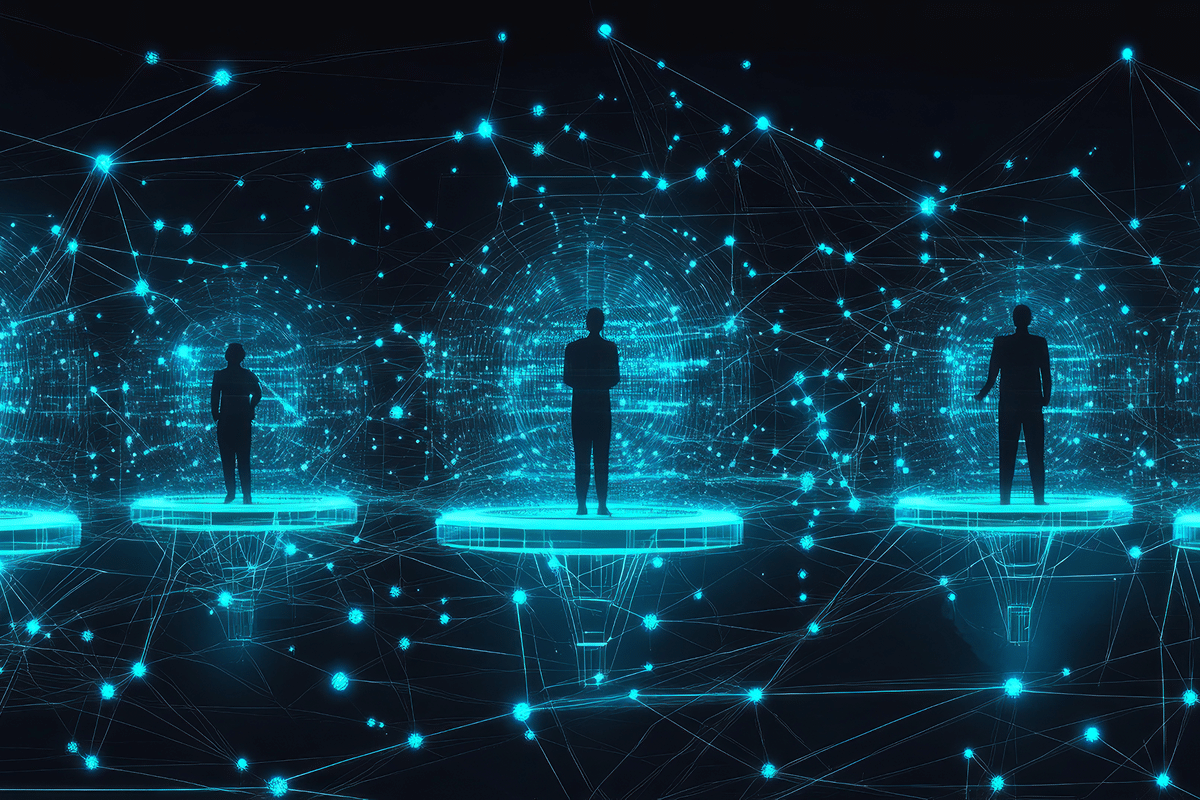
An emerging application of collective intelligence systems extends swarm principles to networked human groups. Platforms like Unanimous AI connect human participants in real-time deliberation systems modeled after natural swarms.

Groups using human swarm intelligence platforms have outperformed traditional polling and individual expert predictions in forecasting markets, medical diagnoses, and event outcomes. The Food and Agriculture Organization of the United Nations has used such platforms to forecast famines in high-risk regions.

This represents a fundamental shift in how organizations can aggregate human judgment at scale, with implications for strategic planning, risk assessment, and enterprise decision-making.

human swarn intelligent

Real-World Case Studies

Amazon logistics: Amazon’s fulfillment network uses swarm-inspired optimization algorithms to coordinate thousands of warehouse robots simultaneously. Each robot operates on local rules. The collective system routes inventory, avoids collisions, and responds to demand shifts in real time.

Military drone swarms: The U.S. Department of Defense has invested heavily in autonomous drone swarms that coordinate through swarm intelligence principles. Individual drones communicate locally and adapt formation in response to environmental conditions without centralized command.

Traffic management: Several cities are deploying swarm-based adaptive traffic control systems where individual signals act as agents adjusting timing based on vehicle density. The result is self-organizing traffic flow that reduces congestion without central oversight.

NASA planetary mapping: NASA has explored swarm intelligence for distributed planetary mapping missions where multiple small probes coordinate exploration of large surface areas far more efficiently than a single probe could.

The Future of Swarm Intelligence in AI

Swarm intelligence is moving from specialized research application to mainstream AI infrastructure. Several converging trends are accelerating that shift.

The future of AI increasingly favors decentralized, adaptive systems that can operate in unpredictable environments without centralized control. Swarm intelligence is architecturally suited for exactly that operating condition.

Key developments shaping the next phase include robotics-as-a-service models deploying swarm robotics at commercial scale, AI-integrated swarm systems combining machine learning with collective optimization, edge computing enabling real-time swarm coordination without cloud dependency, and autonomous mobility networks using swarm principles for vehicle coordination.

Organizations that build swarm intelligence capabilities now will have a durable advantage as the complexity and unpredictability of operating environments continue to increase. The Anticipatory Organization® Learning System gives leaders a practical framework for identifying which AI capabilities represent Hard Trend certainties and building toward them before competitors do.

Frequently Asked Questions

What are the applications of swarm intelligence? 

Key applications include logistics optimization, warehouse automation, drone coordination, cybersecurity, financial modeling, traffic management, and drug discovery.

What do you mean by swarm intelligence? 

Swarm intelligence is the collective behavior of decentralized systems where simple agents interact locally to produce complex, adaptive outcomes without central control.

What are real-world examples of swarm intelligence? 

Amazon’s warehouse robots, military drone swarms, adaptive traffic signals, PSO-based financial optimization, and NASA’s multi-probe planetary mapping research are leading examples.

How does swarm AI work? 

Multiple autonomous agents follow simple local rules and interact with neighbors. Intelligent behavior emerges from those interactions collectively rather than from any single agent.

What is swarm intelligence in drones? 

It enables multiple drones to coordinate flight, share data, and adapt formation without centralized command. Applications include reconnaissance, mapping, delivery, and infrastructure inspection.

What is the difference between swarm intelligence and artificial intelligence? 

AI is the broad field. Swarm intelligence is a specific AI approach where intelligence emerges from decentralized collective agent behavior rather than a central model.

What industries benefit most from swarm intelligence? 

Logistics, defense, manufacturing, agriculture, telecommunications, and financial services currently see the strongest applications.
What are the limitations of swarm intelligence? 

Emergent behavior can be unpredictable in edge cases. Poorly designed agent rules produce erratic outcomes, and each deployment requires careful parameter tuning.

How is swarm intelligence used in robotics? 

Swarm robotics deploys large numbers of simple coordinating robots for search and rescue, warehouse automation, agricultural monitoring, and environmental mapping.

What is the future of swarm intelligence in business? 

Broader swarm robotics deployment, hybrid AI systems combining swarm and machine learning, and human swarm platforms for enterprise decision-making are the leading near-term directions.