Frequently Asked Questions
What is a brain-computer interface?
A brain-computer interface is a direct communication pathway between the brain and an external device. It reads brain signals and translates them into commands without voice or physical input.
How does a brain-computer interface work?
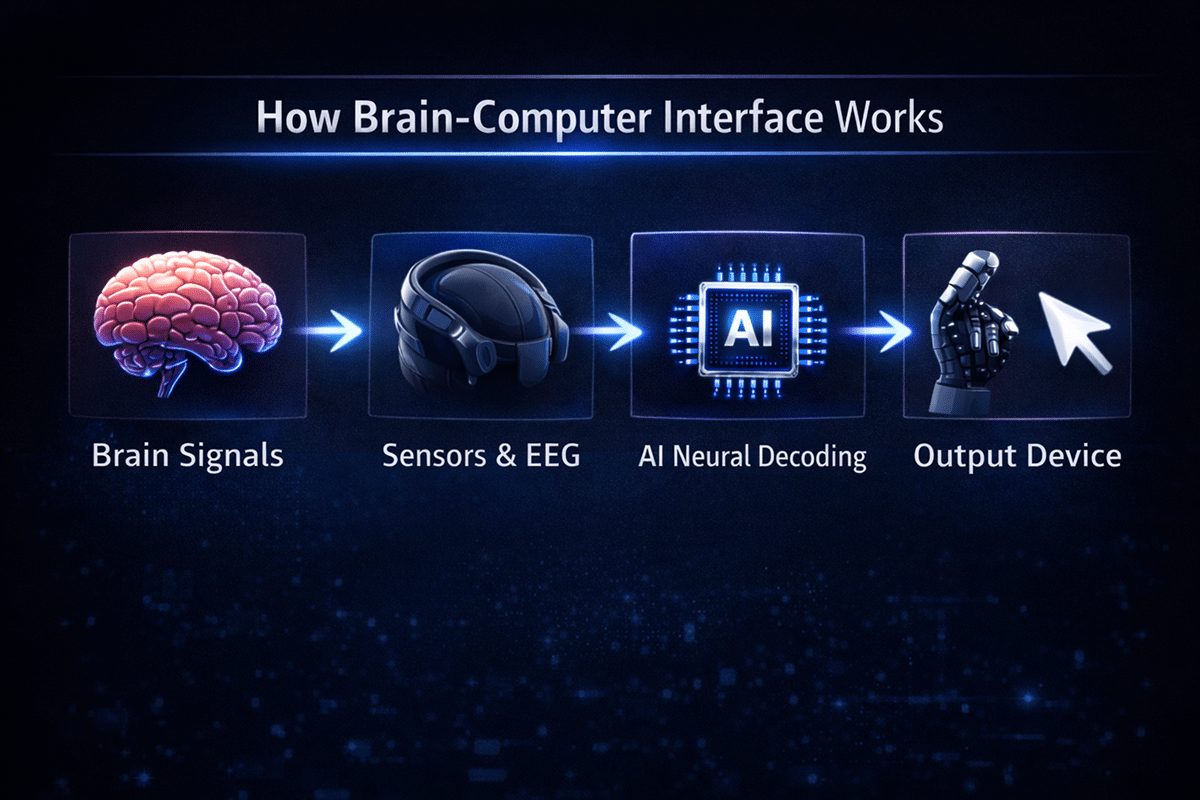
Sensors detect electrical activity in the brain, a neural signal processing system decodes intent, and the system executes an output. Neural signal decoding is what makes real-time accuracy possible.
What is the difference between invasive and non-invasive BCI?
An invasive brain computer interface requires surgical implantation into brain tissue for higher signal resolution. Non invasive BCI captures brain signals through external EEG headsets with no surgery required.
What are the main brain-computer interface applications in healthcare?
Brain computer interface applications include communication devices for ALS patients, neuroprosthetic devices for paralysis, and neural implants for motor rehabilitation, all progressing through formal clinical trials.
What companies are leading brain-computer interface development?
Neuralink, Synchron, and Blackrock Neurotech lead in invasive brain interface development. Emotiv, Neurosity, and OpenBCI lead on the non-invasive side.
What is Neuralink and what has it achieved?
Neuralink develops invasive brain computer interface systems. In early 2024, it completed its first human implant, enabling a paralyzed patient to control a computer interface using thought alone.
How is AI used in brain-computer interface technology?
AI powers the neural signal decoding layer that interprets brain signals in real time. Machine learning models are what make brain computer interface technology functional outside lab settings.
What are the ethical concerns around brain-computer interfaces?
Key concerns include neural data privacy, consent, and ownership of brain signals. Invasive brain computer interface systems raise additional questions about long-term safety and equitable access.
Who regulates brain-computer interface devices?
The FDA governs brain computer interface devices as high-risk medical devices requiring premarket approval. Leaders should treat the regulatory trajectory as a material factor in any BCI-related investment.
What is neural data privacy and why does it matter for enterprises?
Neural data privacy governs information captured directly from brain signals. It matters because frameworks for ownership and security of that data are still being established.
What is the future of brain-computer interface technology?
Near-term development will focus on non invasive BCI accuracy and more capable neural signal processing systems. Longer term, brain computer interface technology is expected to become an ambient layer in enterprise human-machine interaction.
How should business leaders think about BCI as a strategic opportunity?
Leaders don’t need a deployment strategy today but do need an awareness strategy. Tracking brain computer interface applications across healthcare, defense, and manufacturing will surface early signals relevant to your industry.