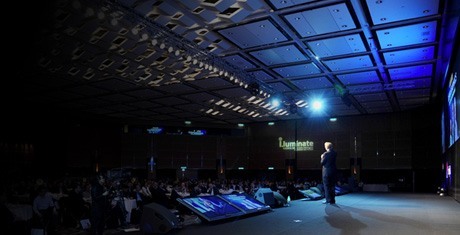
Future of E-commerce Technology: What Leaders Must Do Now to Stay Ahead
The future of e-commerce technology is not a technology problem. It is a leadership problem. Daniel Burrus has spent four decades helping executives distinguish between the technological shifts that are certain and those still open to speculation. In e-commerce, that distinction has never been more consequential. The leaders who will define the next five years are not waiting to see which technologies win. They are positioning ahead of the certainties right now.
Looking to inspire bold, future-ready thinking at your next event? Hire futurist Daniel Burrus as your AI keynote speaker and spark real innovation.
Watch the reaction to Daniel Burrus’ Recent Keynote presentation.
Daniel Burrus has over three decades of being right about where things are going, which is evidenced by his long and diverse list of repeat clients. Daniel has worked with leaders from Fortune 500 companies, the Pentagon, and heads of State-delivering powerful insights and actionable strategies.
By applying Daniel Burrus’ principles to our business, in less than a year we have been able to double our revenues and increase the value of our company by a factor of four, and we feel the biggest impact is yet to come.
We are going through an incredible digital transformation right now, and in his keynote speech, Daniel touched on a large number of points that tied everything together with practical strategies that we can immediately take action on.He really energized our dealer network to embrace the transformation that we’re going through.I can’t recommend Daniel enough!
“Your keynote at our digital annual convention was perfect. The Hard Trend future facts you shared was exactly what our industry leaders needed.It gives them a critical view that provides confidence for decision making.”
Daniel Burrus did a truly outstanding job as the opening keynoter for our CIO 100 2017 Symposium conference. He impressed our audience of 350+ Chief Information Officers and senior IT executives with his innovative ideas, business acumen and – most importantly — his thorough understanding of the challenges they face as enterprise technology leaders.
“You covered all the key points we discussed and more in your digital keynote to our audience of executive customers, and you customized your examples for our industry in just the right way.”
“Daniel delivered a great keynote at our Annual Global User Conference; his presentation was nicely tuned to our audience and the examples he incorporated were all accessible and helpful. It’s not easy to find compelling speakers who appeal to a broad audience and also convey something practical, but Daniel sailed over this bar. I would enthusiastically recommend him to companies looking to inspire innovative thinking.”
A ‘must-hear’ presentation.
It came as no surprise that you were rated the top speaker in our audience evaluations. Your unique blend of wit and insight awakened all of us to the need to develop the knowledge network necessary to move to a 21st century mind set.
Daniel studied the details about our audience in advance and listened carefully to our objectives for his keynote speech. He seamlessly incorporated every key point we discussed. As a result, the audience hung on every word, relating directly with each insight and recommendation. It’s no wonder he received a standing ovation. People are still buzzing.
Daniel Burrus was the keynote speaker at the ITF STORE Capital 2018 conference, and he was amazing – thought provoking, interesting, relevant to the business leaders in the audience. He customized the program for the group, and he did his homework. Many of the attendees are continuing to talk about his presentation and content. He was terrific to have right before lunch to spark lots of good conversation. I would highly recommend Daniel to speak to any leadership group that is interested in being prepared for the future and learning ways to be more innovative in their business.
Your presentation and interactive discussion with the Agents Council for Technology was a transforming event for our group. You helped us look at trends in a much more methodical way that will enable us to rework our Vision of the Future document into a much more credible and living tool for our industry.You spent the time in advance to understand our issues and then applied them actively throughout your presentation.
This is the third time you’ve addressed this conference and each presentation has been better than the last… and I wouldn’t hesitate inviting you back to a future conference!
Our people, without exception, felt that your ideas were provocative, original, and timely. Your entertaining style captured the audience and compelled them to listen, think, and apply your thoughts to their own professional and personal lives.You truly made a memorable impression on the audience.
“Your comments and insight were perfect and led right into the topics we planned to present at our digital event. Survey responses were highly complementary after the event concluded. Many thanks for your time and talent.”
You were fabulous! You received rave reviews from our participants for the relevancy, insight and expertise of your presentation material and style.You are the only keynote speaker we have invited back numerous times. I am convinced the extraordinary success of your continued contribution is due in no small part to the enormous amount of time you put into each presentation by customizing it to fit the unique and challenging needs of our CMO audience each year.
I don’t know any other speaker that could present after Bill Gates and ‘wow’ an audience of CEOs like you did! You were the perfect choice.
Your thoughts on how to create an opportunity for change through a customer focus is the excellence our team is striving for. The framework you provided on innovation, creativity and customer value will be instituted as a management practiceto enable the technology infrastructure group to take Wells Fargo to the next stage.
We hired Daniel as the keynote speaker for both our Business Innovation Technology Summit as well as our annual company meeting. I was thoroughly impressed with not only his actual keynote speeches, but even more so with his preparation process beforehand. We had a great conversation via phone a couple weeks beforehand where I realized how much he genuinely cared about catering his speech specifically to our audience, as well as aligning it with the message we wanted to send as a company. He is engaging, incredibly well spoken, and great to work with.
“Daniel Burrus is a dynamic speaker and delivered a lot of “aha” moments with his insights. I appreciated the activity and takeaways that he left the audience with. Daniel also was very engaging before the meeting, asking our clients questions, taking notes, and genuinely interested in learning more about our clients’ business.”
“Daniel is a powerful business strategist bringing significant value to those he works with.”
Daniel Burrus delivered! Not only did he do the upfront homework and research, ensuring that he fully understood the SPECS audience, but he presented an excellent keynote address that hit all the points we discussed in advance. He was interesting, knowledgeable, and dynamic. Our audience is still raving about his performance — and I would hire him again in a heartbeat.
“Daniel Burrus was exceptional, and we are thankful for the opportunity to have him join our meeting. Thank you for everything you have done in making our Annual Partner Meeting a huge success.”
Daniel came highly recommended and delivered on his Keynote at the Global CISO Executive Summit. He made the keynote interactive and challenged participants to put their newly gained insights to work in an interactive session identifying trends that you can anticipate and prepare for through strategic planning.
“Daniel Burrus did an excellent job. The feedback was extremely positive and he made me look like a genius.”
“Your digital presentation to the hospital CEOs gave them a new anticipatory mindset to view the present and future. This was exactly what they needed to help them design transformational strategies going forward.”
“Daniel Burrus exceeded our expectations, it was simply out of this world!”
“The feedback from the attendees on Daniel Burrus has been excellent. The content was right on point and very eye opening for everyone.”
Our practitioners were invigorated by the presentation and they left the conference thinking differently about how to navigate the road ahead. Daniel Burrus was 100% on point aligning our message to our conference’s theme.
Why Most Companies Misread the Future of E-commerce
The mistake most organizations make is treating every new e-commerce technology as equally urgent. The result is scattered investment, reactive adoption, and no meaningful competitive advantage from any of it. Trend overload without prioritization is more dangerous than being slow.
The correct framework separates Hard Trends from Soft Trends. Hard Trends are future certainties based on measurable, tangible facts. They will happen regardless of organizational choice. Soft Trends are possibilities that leaders can still shape or influence. As the future of retail has consistently demonstrated, the executives who build strategy around certainties first consistently outperform those chasing possibilities.
The 6 Technologies Defining the Future of E-commerce
1. AI-Powered Autonomous Commerce
AI is moving e-commerce from recommendation engines to autonomous purchasing agents. These systems do not wait for consumer action. They monitor behavioral patterns, predict needs, and execute purchases within defined parameters on behalf of the consumer. Research on how agentic AI is reshaping customer experience confirms that brands must now design platforms capable of interacting with both humans and their AI agents simultaneously.
For executives, this is the most consequential near-term shift in e-commerce. The conversion funnel is being redesigned from the ground up. Organizations that build AI-ready commerce infrastructure now will capture the transactions that AI agents are already beginning to execute.
2. Hyper-Personalization at Scale
Generative AI is enabling e-commerce experiences that adapt in real time to individual behavioral signals. Product display, pricing, content, and offers can all be dynamically generated based on who is visiting and what their pattern suggests they need. This is not personalization as a marketing feature. It is personalization as the default operating model.
For leaders, the strategic asset here is data infrastructure. Hyper-personalization at scale requires clean, unified customer data. Organizations without that foundation will not be able to take advantage of the AI tools designed to leverage it.
3. Immersive Commerce Through AR and VR
Augmented reality try-before-you-buy experiences are reducing return rates and increasing purchase confidence across apparel, furniture, beauty, and accessories. Research on how Americans shop across channels confirms that smartphones are now the primary shopping device for most adults. Combining that mobile-first behavior with AR capability creates a powerful purchase acceleration tool.
Virtual reality commerce environments are further out in commercial deployment but advancing rapidly. Spatial computing hardware costs are falling. Organizations piloting immersive commerce now will have the learning advantage when broader adoption accelerates.
4. Conversational and Voice Commerce
The shift from search-based to conversation-driven buying is already underway. Voice assistants, AI chatbots, and conversational interfaces are changing how consumers find, evaluate, and purchase products. The discovery phase of the purchase journey is being restructured around dialogue rather than keyword search.
For e-commerce leaders, this changes SEO, product catalog architecture, and customer service infrastructure simultaneously. Organizations that optimize for conversational discovery now will carry a meaningful head start when voice becomes the dominant entry point.
5. Headless and Composable Commerce Architecture
Headless commerce decouples the front-end customer experience from the back-end commerce engine. Composable architecture allows organizations to assemble best-in-class components for each part of their commerce stack rather than relying on a single monolithic platform. Together, they create the technical agility that omnichannel commerce requires. The five digital innovations reshaping retail make clear that organizational agility in adopting new commerce capabilities is a direct function of underlying technical architecture. Organizations locked into rigid legacy platforms will consistently lag on every new capability that emerges.
6. Autonomous Logistics and Fulfillment
Speed and reliability of delivery have become core competitive differentiators. Autonomous fulfillment systems, AI-optimized routing, robotics in warehousing, and predictive delivery models are compressing the gap between order placement and delivery. For executives in retail and consumer goods, logistics automation is no longer an operational efficiency initiative. It is a front-line competitive variable that affects customer retention as directly as product quality does.
The Missing Layer: From Technology to Strategy
Knowing which technologies are coming is the easy part. The harder question is which ones deserve your capital and organizational attention right now, which ones are worth running experiments on, and which ones you can safely monitor without investing.
A simple prioritization model helps. Technologies with strong Hard Trend signals and documented enterprise ROI belong in the adopt category immediately. Technologies with clear trajectories but unresolved implementation challenges belong in the experiment category.
Technologies that are genuinely speculative or not yet relevant to your specific business model belong in the monitor category. Without this kind of framework, every new capability announcement creates an organizational decision crisis. With it, strategic clarity becomes the default.
A Leadership Framework for E-commerce Innovation
Step 1: Identify Hard Trends in Your Market
AI advancement in commerce is a Hard Trend. Mobile-first consumer behavior is a Hard Trend. The expectation of personalized, frictionless experiences is a Hard Trend. These will continue regardless of what any individual organization chooses to do. Build primary investment strategy around these certainties.
Step 2: Anticipate Disruptions Before Competitors
AI resilience in business leadership consistently demonstrates that the organizations gaining ground are anticipating rather than reacting. In e-commerce, anticipation means modeling how autonomous AI agents will interact with your commerce platform before they are widespread, not after. It means building personalization infrastructure before customers demand it openly, not in response to churn.
Step 3: Transform Business Models, Not Just Tools
The most consequential e-commerce transformation is not adopting a new platform. It is shifting from transactional commerce to experiential commerce. That shift affects brand positioning, customer relationship design, data strategy, and revenue model architecture simultaneously. Tools enable that shift. They do not produce it on their own.
What This Means for C-Suite Leaders
Every C-suite role has a distinct stake in the future of e-commerce technology.
The CEO’s primary question is competitive positioning. Which e-commerce capabilities will define your market in 2030, and is your organization building toward them now?
The CIO and CTO own the infrastructure decision. Headless and composable architecture, AI-ready data systems, and API-first platform design are the technical foundations that everything else runs on.
The CMO is managing a customer experience transformation. Hyper-personalization, conversational commerce, and immersive experiences are reshaping every stage of the purchase journey.
The COO’s focus is logistics and efficiency. Autonomous fulfillment, predictive inventory, and AI-optimized supply chains are operational certainties with measurable margin implications.
The Biggest Mistakes Companies Will Make
The most costly mistake is chasing every trend simultaneously. It produces investment fragmentation and no competitive advantage from any individual capability. The second mistake is ignoring infrastructure while investing in surface capabilities. AI personalization does not work without unified customer data. Composable commerce does not work without API-ready systems.
Underestimating the speed of AI disruption in commerce is the third. The organizations that are already deploying autonomous commerce capabilities are not waiting for broad market adoption before building the advantage. Failing to act early on Hard Trends is not a conservative strategy. It is a compounding competitive liability.
The Future Timeline: 2026 to 2030
Near-term, covering 2026 to 2027, is defined by AI personalization at scale, widespread mobile AR commerce adoption, voice and conversational commerce becoming standard discovery channels, and headless architecture becoming the baseline expectation for competitive commerce platforms.
Mid-term, covering 2027 to 2029, brings autonomous AI purchasing agents operating on behalf of consumers as a mainstream reality, immersive virtual commerce environments achieving commercial viability beyond early adopters, and predictive fulfillment reaching near-instant delivery in dense urban markets.
The longer-term shift through 2030 is the full transition from transactional to experiential commerce models, where the purchase itself is often invisible and the competitive differentiator is the quality of the experience and relationship surrounding it.
The future of AI technology driving these shifts is already in motion. The timeline is compressing faster than most organizations are planning for.
Conclusion: Turning Disruption into Opportunity
The future of e-commerce technology rewards the leaders who act on certainties before urgency forces their hand. Every Hard Trend in this space is already generating competitive advantage for the organizations that identified it early. Reactive organizations will spend the next five years catching up to positions their competitors built today.
The organizations that define e-commerce by 2030 are building now. They are investing in AI-ready infrastructure, personalization data systems, composable architecture, and autonomous fulfillment capability. They are not waiting to see which technologies win. They are positioning ahead of the certainties.
For executives who want to build that kind of anticipatory posture with direct advisory support, strategic advisory services are designed for organizations at exactly this inflection point. And for organizations ready to bring this strategic thinking directly to their leadership teams, a hologram keynote from Daniel Burrus delivers the foresight framework in one of the most memorable and impactful event formats available today.
Frequently Asked Questions
What is the future of e-commerce technology?
The future of e-commerce technology is the shift from transactional, search-driven shopping to autonomous, personalized, and experiential commerce. AI agents will increasingly handle purchasing decisions on behalf of consumers, while immersive experiences and conversational interfaces replace traditional browsing and checkout flows.
Which technologies will dominate e-commerce by 2030?
AI-powered autonomous commerce, hyper-personalization engines, augmented reality shopping, conversational and voice commerce, composable commerce architecture, and autonomous logistics will define competitive e-commerce by 2030. Each is already in active deployment at leading organizations today.
How is AI transforming online shopping?
AI is transforming online shopping at every stage of the purchase journey. It powers real-time personalization, autonomous product recommendations, conversational discovery, fraud prevention, and increasingly autonomous purchasing agents that act on behalf of consumers without manual initiation.
What is headless commerce and why does it matter?
Headless commerce decouples the customer-facing front end from the back-end commerce engine. It matters because it gives organizations the technical agility to deliver consistent experiences across every channel, adopt new capabilities quickly, and avoid the limitations of monolithic platform dependencies.
How will AR and VR impact e-commerce sales?
AR reduces purchase hesitation and return rates by allowing consumers to visualize products in their own environments before buying. VR creates immersive shopping environments that blur the line between physical and digital retail. Both increase purchase confidence and reduce the friction that causes cart abandonment.
What is autonomous commerce?
Autonomous commerce refers to AI systems that execute purchasing decisions on behalf of consumers based on behavioral patterns, preferences, and defined parameters. The consumer sets the criteria and the AI handles discovery, evaluation, and transaction completion without requiring manual input at each step.
How can businesses prepare for future e-commerce trends?
Separate Hard Trends from Soft Trends. Invest in AI-ready data infrastructure, composable architecture, and mobile-first experience design as foundational priorities. Run structured experiments on emerging capabilities like AR and voice commerce. Build governance frameworks around AI deployment before incidents force reactive policy.
What are the biggest challenges in adopting new e-commerce technologies?
Legacy infrastructure that cannot support new capabilities, fragmented customer data that prevents effective personalization, organizational resistance to changing established workflows, and regulatory uncertainty around AI-driven autonomous commerce are the primary barriers most organizations face.
Is voice commerce the next big thing in retail?
Voice commerce is already reshaping discovery and reorder behavior, particularly for consumables and frequently purchased items. It will become a dominant commerce entry point as AI assistants become more capable and consumers develop the habit of delegating routine purchasing decisions to them.
How can companies prioritize which technologies to invest in?
Apply a three-category prioritization model. Technologies with strong Hard Trend signals and documented enterprise ROI belong in the adopt category now. Technologies with clear trajectories but unresolved implementation challenges belong in the experiment category. Technologies that remain genuinely speculative belong in the monitor category until the evidence justifies moving them forward.
Book Daniel Burrus for Your Next Event
If you want to transform your team’s understanding of artificial intelligence and spark innovation across your organization, consider booking Daniel Burrus, a best selling author and artificial intelligence keynote speaker, for your next conference or corporate event.
Visit www.burrus.com to learn more or to request availability.
Because the future isn’t something you react to. It’s something you create—and the right keynote speaker can show you how. Booking an AI expert like Daniel Burrus can transform your team’s understanding of AI and its potential impact on your business strategy.