Frequently Asked Questions
What is the future of knowledge management?
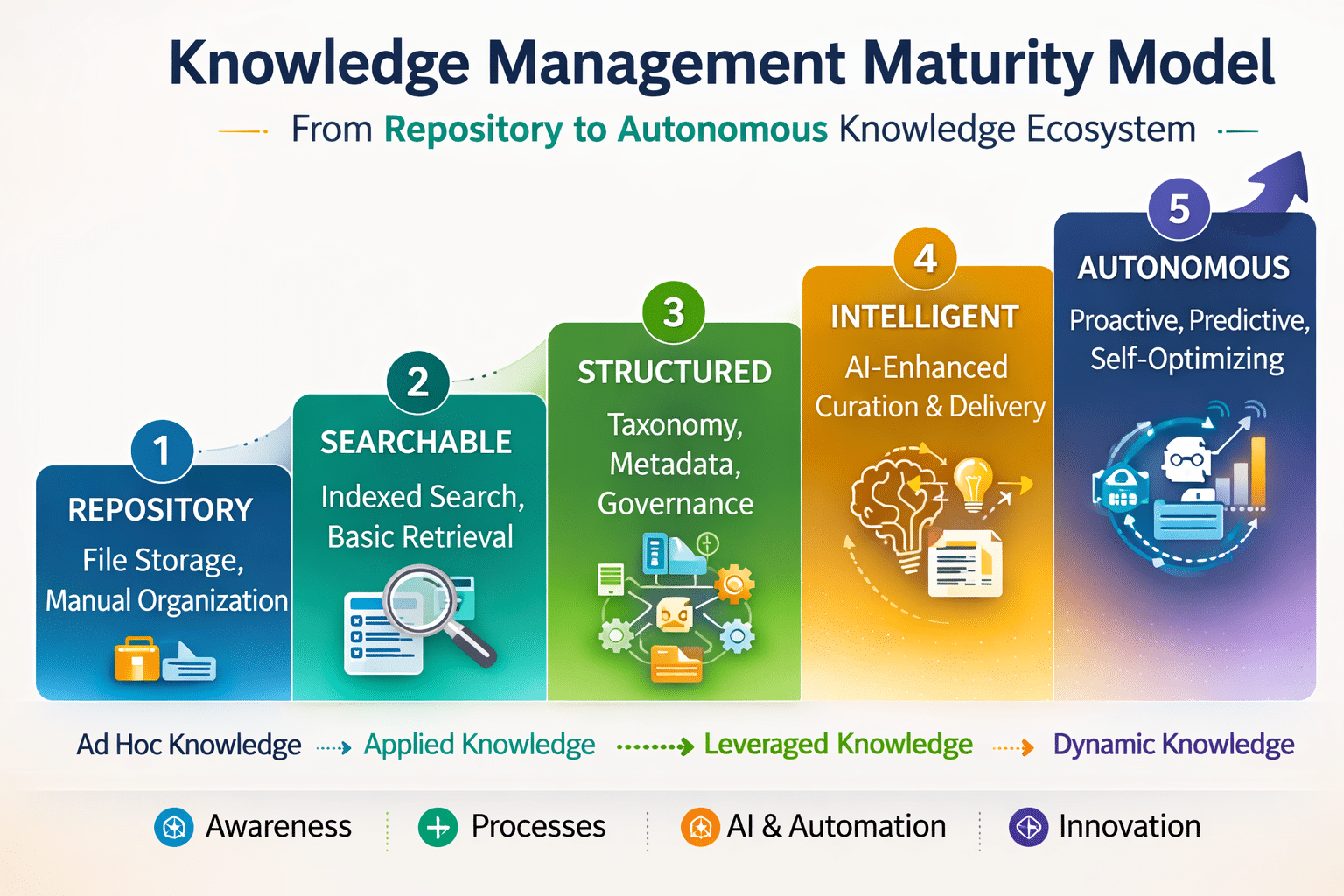
The future of knowledge management is intelligent, proactive, and predictive. It’s about ecosystems that surface the right knowledge at the right moment rather than static repositories that require manual search.
What are the top knowledge management trends in 2026?
The seven key trends are generative AI and automated content curation, conversational and semantic search, proactive knowledge delivery, predictive analytics, knowledge governance and AI ethics, connected knowledge ecosystems, and the shift in KM roles toward AI governance.
How is AI changing knowledge management?
AI is automating content curation, enabling semantic search, powering AI copilots, and making proactive knowledge delivery possible. KM is moving from a retrieval function to an embedded intelligence layer inside enterprise operations.
Will generative AI replace knowledge managers?
No. It will transform the role. Knowledge managers are shifting from content librarians to AI governance strategists and data stewards. The function becomes more strategic, not obsolete.
What is proactive knowledge delivery?
A system capability where knowledge is pushed to employees based on context rather than waiting to be searched for. It surfaces relevant expertise, documents, and next-step recommendations automatically inside existing workflows.
What role do knowledge graphs play in the future of KM?
Knowledge graphs map the relationships between information, people, and processes across an organization. They’re the connective layer that makes truly integrated knowledge ecosystems possible at enterprise scale.
How will predictive analytics impact knowledge management?
Predictive analytics allows organizations to forecast skill gaps, identify expertise aging out of the organization, and measure the business impact of KM investments before problems surface operationally.
What are the biggest challenges in the future of knowledge management?
AI hallucinations, knowledge-sharing culture resistance, tool fragmentation, and the tension between security and openness are the most significant challenges organizations face in KM transformation.
How can organizations prepare for the future of knowledge management?
Start with a knowledge audit, invest in metadata strategy, build a governance framework, develop AI literacy across the workforce, and pilot AI copilots in a single workflow before scaling deployment.
Is knowledge management becoming more strategic?
Yes. As AI makes KM infrastructure more capable, it’s moving from a back-office function to a core component of competitive strategy and organizational agility.
What technologies will define the next generation of KM systems?
Generative AI, semantic search, retrieval-augmented generation, knowledge graphs, AI copilots, and predictive analytics are the core technologies reshaping enterprise KM in 2026.
What skills will future knowledge managers need?
Data governance, AI literacy, metadata strategy, analytics interpretation, and the ability to align KM systems with business KPIs. The role requires both technical fluency and strategic thinking.