April 24, 2026 | By Daniel Burrus
Leadership, Newsletter, Strategy, Technology, Transformation
Most articles about future technology read the same way. A list of innovations. A paragraph on each. No sense of which ones are certain, which are speculative, or when any of them will actually affect your organization. That’s the gap this piece closes.
Daniel Burrus has spent four decades accurately predicting which technologies would reshape industries and when. The framework behind those predictions separates technologies that will happen from technologies that might happen. That distinction determines where your attention and investment should go.
How to Predict the Future of Technology
The reason most future technology lists are strategically useless is that they treat certainty and speculation as the same category. They’re not.
Hard Trends are future certainties based on measurable, tangible, and fully predictable facts. They will happen regardless of what any individual organization chooses to do. The continued advancement of AI processing power is a Hard Trend.
The expansion of genomic medicine is a Hard Trend. The growth of connected devices is a Hard Trend. Strategy built around Hard Trends carries low risk because the future is already in motion.
Soft Trends are possibilities that might happen and can still be shaped or influenced. Which specific AI platform dominates enterprise by 2030 is a Soft Trend. How quickly any given country regulates autonomous vehicles is a Soft Trend.
Understanding disruptive technology through this lens transforms a list of innovations into a decision-making framework. The 22 technologies below are organized by timeline and filtered through exactly that lens.
Near-Term Technologies (0 to 5 Years)
These technologies are already in deployment or crossing into it now. They carry the strongest Hard Trend signals and the most immediate strategic relevance for leaders making investment decisions today.
1. Generative AI and Large Language Models
Generative AI is the most consequential near-term technology across every industry sector. It has already moved from experimentation to operational infrastructure in legal, finance, healthcare, and knowledge work. The capability curve is still steep. Organizations treating generative AI as a future consideration are already behind those treating it as a current operational reality. Breakthrough technologies shaping enterprise strategy consistently place AI at the top of any near-term disruption ranking for exactly this reason.
Why it matters: Compresses knowledge work timelines, reduces operational costs, and enables personalization at scale.
When it scales: Already scaling. The governance question is more urgent than the adoption question.
2. Agentic AI Systems
The shift from AI that responds to prompts to AI that pursues goals, manages multi-step workflows, and requests human approval only at critical decision points is already underway. Agentic AI is what happens when generative AI gets operational autonomy.
Why it matters: Automates complex workflows previously requiring sustained human judgment.
When it scales: Active deployment in enterprise environments now, broad adoption within three years.
3. mRNA Vaccine Expansion
The mRNA platform proven in COVID-19 vaccines is being applied to influenza, HIV, cancer, and autoimmune conditions. The technology infrastructure already exists. Pipeline breadth is accelerating faster than most healthcare leaders anticipated.
Why it matters: Compresses drug development timelines from decades to years for a growing class of conditions.
When it scales: Multiple mRNA-based cancer vaccines entering late-stage trials now, commercial deployment within five years.
4. Fast-Charging Battery Technology
Energy storage is the bottleneck for electric vehicles, grid stability, and portable device capability. Fast-charging solid-state and lithium-silicon battery architectures are crossing from research into commercial production.
Why it matters: Removes the primary adoption barrier for electric vehicles and enables grid-scale renewable energy storage.
When it scales: Commercial EV applications within three years, grid-scale applications within five.
5. Digital Twins
A digital twin is a real-time virtual replica of a physical asset, system, or process. Manufacturing, infrastructure, healthcare, and urban planning are all in active deployment.
Why it matters: Enables predictive maintenance, operational optimization, and risk simulation without physical intervention.
When it scales: Already scaling in manufacturing and aerospace. Healthcare and urban applications within five years.
6. Edge AI
AI processing moving from centralized cloud infrastructure to the devices and environments where decisions need to happen. Lower latency, improved privacy, and real-time capability are the core benefits.
Why it matters: Enables autonomous decision-making in industrial, medical, and transportation environments where cloud latency is unacceptable.
When it scales: Active deployment in industrial IoT and autonomous vehicles now. Broad enterprise adoption within three years.
7. Precision Medicine and Genomics
The cost of genome sequencing has fallen by orders of magnitude and continues to drop. Treatment protocols tailored to individual genetic profiles are moving from elite research institutions into mainstream clinical settings.
Why it matters: Replaces population-average treatment with individualized protocols, improving outcomes and reducing trial-and-error prescribing.
When it scales: Oncology and rare disease applications scaling now. Broader clinical deployment within five years.
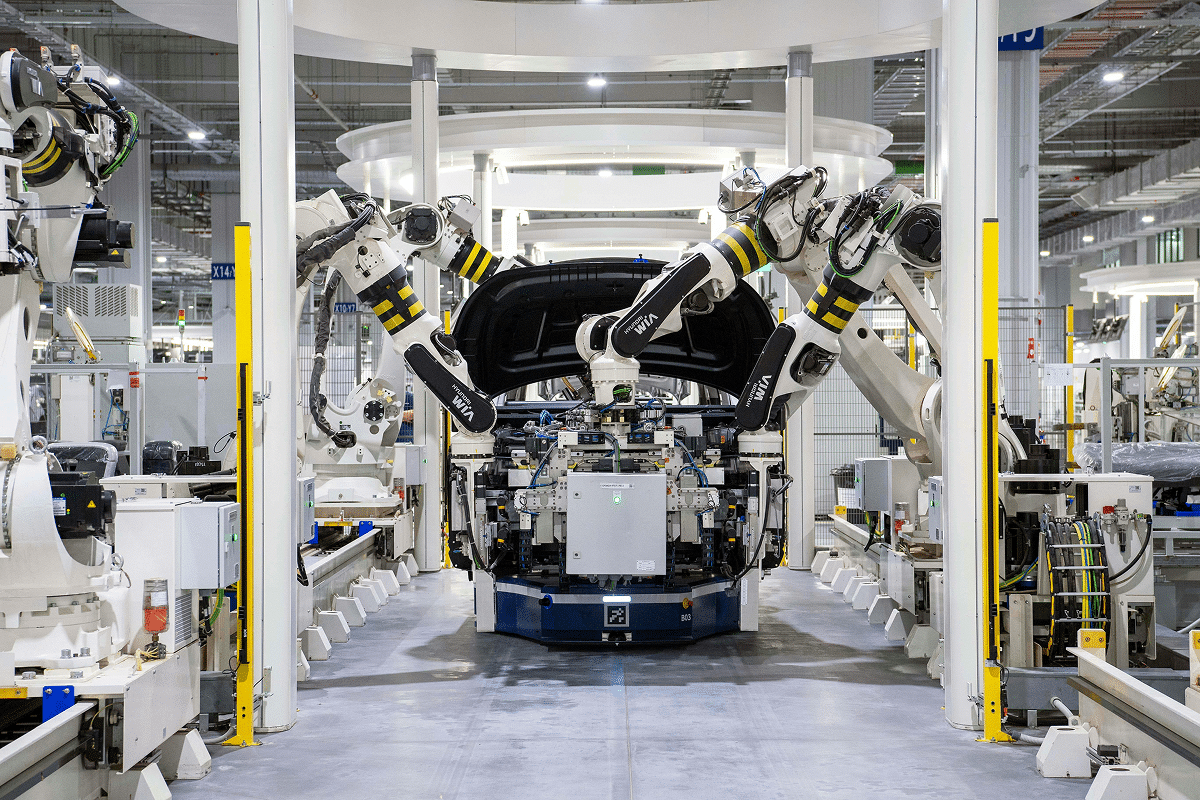
8. Advanced Robotics
Robots capable of navigating unstructured environments, adapting to new tasks, and learning from interaction are crossing from controlled industrial settings into healthcare, logistics, and service environments.
Why it matters: Expands automation beyond structured manufacturing into every sector with physical operational requirements.
When it scales: Logistics and warehouse applications scaling now. Healthcare and service environments within five years.
Mid-Term Technologies (5 to 15 Years)
These technologies have clear Hard Trend trajectories but face adoption barriers including regulatory frameworks, infrastructure requirements, and integration complexity that push broad deployment beyond the immediate window.
9. Xenotransplantation
Genetically modified animal organs, primarily pig hearts and kidneys, transplanted into human patients. Early human trials have produced encouraging survival outcomes. The organ shortage driving demand is a Hard Trend. The regulatory path is the primary variable.
Why it matters: Could functionally eliminate organ transplant waiting lists, which currently cost tens of thousands of lives annually.
When it scales: Conditional regulatory approval in select jurisdictions within five to ten years. Broader clinical use within fifteen.
10. AI Scientists
AI systems capable of generating hypotheses, designing experiments, interpreting results, and producing publishable research outputs without human initiation are already demonstrating capability in drug discovery and materials science.
Why it matters: Compresses research timelines across every field dependent on systematic experimentation.
When it scales: Specialized research applications within five years. Broad scientific deployment within ten to fifteen.
11. Autonomous Flying Vehicles
Electric vertical takeoff and landing vehicles for urban air mobility are past the concept stage. Certification and air traffic management infrastructure are the primary constraints on deployment timelines.
Why it matters: Reshapes urban transportation economics and geography, particularly for medical transport and high-density corridors.
When it scales: Limited commercial operations in select markets within five to seven years. Broader deployment within fifteen.
12. Direct Air Carbon Capture
Technology that removes CO2 directly from the atmosphere rather than capturing it at the emissions source. Current costs remain high but are falling rapidly with scale and engineering advancement.
Why it matters: Provides a pathway to net-negative carbon emissions that doesn’t depend entirely on eliminating existing emission sources.
When it scales: Commercial-scale facilities operating now at high cost. Cost-competitive deployment within ten to fifteen years.
13. Brain-Computer Interfaces
Direct communication pathways between neural systems and external devices. Medical applications in paralysis and neurological conditions are in active clinical deployment. Consumer applications remain further out.
Why it matters: Restores function for neurological conditions currently lacking treatment options and establishes the foundation for human-computer interaction beyond physical interfaces.
When it scales: Medical applications expanding now. Broader non-medical deployment within ten to fifteen years.
14. Advanced Nuclear Energy
Small modular reactors and next-generation nuclear designs offer lower construction costs, faster deployment timelines, and improved safety profiles compared to traditional nuclear infrastructure.
Why it matters: Provides zero-carbon baseload power that renewable energy alone cannot reliably deliver at current storage capability.
When it scales: First commercial SMR deployments within five to seven years. Meaningful grid contribution within fifteen.
15. Autonomous Vehicles at Scale
Self-driving technology is deployed in commercial robotaxi and trucking applications in select geographies now. The path to broad consumer autonomous driving is longer than early projections suggested but directionally certain.
Why it matters: Reshapes transportation economics, logistics infrastructure, and urban design at a scale comparable to the original automobile transition.
When it scales: Commercial freight and urban robotaxi applications expanding now. Broad consumer deployment within ten to fifteen years.
Long-Term Technologies (15 or More Years)
These technologies have genuine Hard Trend foundations but face fundamental engineering, regulatory, or infrastructure challenges that make near-term deployment unlikely. Exponential technologies follow trajectories that compress these timelines unpredictably, so monitoring is strategic even when investment isn’t yet justified.
16. Quantum Internet
A communication network using quantum entanglement to transmit information with theoretically unbreakable encryption. Foundational research is advancing but practical infrastructure remains decades away.
Why it matters: Would fundamentally transform cybersecurity architecture and enable distributed quantum computing.
When it scales: Limited demonstration networks within fifteen years. Functional infrastructure beyond that.
17. Hypersonic Commercial Aviation
Aircraft capable of traveling at five or more times the speed of sound for commercial passenger routes. Materials, propulsion, and thermal management challenges remain significant.
Why it matters: Compresses intercontinental travel from hours to minutes, reshaping global business and logistics geography.
When it scales: Military applications advancing now. Commercial viability beyond fifteen to twenty years.
18. Artificial Neurons and Neuromorphic Computing
Computing architectures that mimic biological neural structures, enabling dramatically more efficient AI processing with lower energy consumption.
Why it matters: Could resolve the energy consumption constraint currently limiting AI scaling and enable AI capability in power-constrained environments.
When it scales: Research applications within ten years. Broad commercial deployment beyond fifteen.
19. Metamaterials
Engineered materials with properties not found in nature, including negative refractive indices that enable cloaking effects, perfect lenses, and novel antenna architectures.
Why it matters: Enables applications across communications, imaging, energy harvesting, and structural engineering that current materials cannot support.
When it scales: Specialized applications in telecommunications and defense within ten years. Broader industrial applications beyond fifteen.
20. Fusion Energy
Nuclear fusion producing more energy than it consumes has been achieved in laboratory conditions. Translating that into commercially viable power generation remains an engineering challenge of significant complexity.
Why it matters: Would provide effectively unlimited clean energy with minimal waste, resolving the fundamental energy constraint on long-term civilization.
When it scales: First commercial demonstration plants potentially within fifteen to twenty years. Grid contribution beyond that.
21. Longevity Biotechnology
The biology of aging is increasingly understood as a modifiable process rather than an inevitable one. Senolytics, epigenetic reprogramming, and telomere research are producing results that suggest meaningful lifespan extension is a scientific rather than speculative question.
Why it matters: Fundamentally alters healthcare economics, retirement systems, workforce planning, and social structures built around current lifespan assumptions.
When it scales: First approved senolytics within ten years. Meaningful lifespan extension interventions beyond fifteen.
22. Fully Autonomous AI Research and Development
AI systems that not only conduct research but design, build, test, and deploy new AI systems without human initiation. The recursive improvement potential makes this both the most transformative and most carefully monitored technology on this list.
Why it matters: Could compress decades of scientific and technological progress into years.
When it scales: Partial capability demonstrations now. Fully autonomous R&D cycles beyond fifteen years.
The 5 Most Disruptive Technologies Ranked
Not all 22 technologies carry equal strategic weight. Ranked by economic impact, speed of adoption, and breadth of industry disruption, these five deserve the most immediate leadership attention.
- Generative and Agentic AI — broadest cross-industry impact, fastest adoption curve, most immediate governance requirement.
- Energy storage innovation — resolves the primary constraint on electric transportation and renewable grid reliability simultaneously.
- Biotechnology and precision medicine — reshapes healthcare economics, drug development, and the treatment of chronic disease.
- Autonomous systems — from vehicles to robotic surgery to warehouse operations, physical automation is accelerating across every asset-intensive sector.
- Quantum technologies — longer timeline but highest potential disruption to cryptography, computational science, and materials development.
How These Technologies Will Impact Your World
The 22 innovations above aren’t distributed evenly across life and work. Their impact concentrates in four areas.
Work is being restructured around human-AI collaboration. Automation pressure concentrates on repetitive processing and rule-based decision-making. Roles requiring judgment, creativity, and physical adaptability are expanding. The organizations that design for augmentation rather than replacement will outperform those treating AI as a headcount reduction tool.
Health is moving from reactive treatment to predictive, personalized, and preventive care. Genomics, AI diagnostics, mRNA platforms, and continuous monitoring are converging toward a healthcare system that intervenes before conditions escalate rather than after.
Environment is being addressed through energy storage, direct air capture, advanced nuclear, and sustainable computing architectures. The constraint is no longer technological. It’s the pace of infrastructure deployment and policy alignment.
Daily living is being reshaped by smart systems, autonomous vehicles, personalized AI interfaces, and immersive computing environments that blur the boundary between digital and physical interaction.
How to Prepare for Future Technology
The right preparation strategy isn’t to monitor everything. It’s to concentrate on certainty and build adaptability for everything else.
- Focus on Hard Trends first. Identify which technologies on this list have certain trajectories in your specific industry and build investment strategy around those certainties before urgency forces reactive deployment. Just as leaders in education are learning to think strategically about emerging technology in their sector, leaders in every industry benefit from applying the same anticipatory discipline to their own technology landscape.
- Invest in adaptability second. The specific platforms that dominate in five years are Soft Trends. Your organization’s capacity to evaluate, adopt, and govern new technology is not. Building that internal capability now produces returns across every technology cycle ahead.
For leadership teams ready to apply this framework directly to their competitive context, working with a futurist keynote speaker who brings structured foresight methodology accelerates the alignment that technology strategy requires.
And for organizations seeking direct advisory engagement on which of these technologies demands action now, strategic advisory services are built for exactly this kind of inflection point.
The future of technology isn’t waiting. And for the leaders who can separate what’s certain from what’s speculative, it isn’t uncertain either. Those who build on Hard Trends will shape what comes next. Those who wait for consensus will manage the consequences of other people’s decisions.
Frequently Asked Questions
How will future technology change the world? Future technology is shifting every major system simultaneously. Work is being restructured around AI and automation. Healthcare is moving from reactive treatment to predictive and personalized care. Energy systems are being rebuilt around renewable generation and advanced storage. And physical environments are becoming responsive, data-driven, and increasingly autonomous. The convergence of these shifts is what makes this moment genuinely different from previous technology cycles.
What are the most important emerging technologies today? Generative and agentic AI, precision medicine and genomics, advanced robotics, energy storage innovation, and edge computing are the technologies with the most immediate enterprise relevance in 2026. Each is already in active deployment at leading organizations, not in the future planning stage.
Which technologies will dominate by 2030? Agentic AI systems, autonomous vehicles in commercial applications, mRNA-based therapeutics across multiple disease categories, solid-state batteries, and digital twins embedded in industrial operations are the technologies most likely to define competitive advantage by 2030. All five are Hard Trends with measurable trajectories already in motion.
What is the next big thing in technology? Agentic AI is the most significant near-term shift. The move from AI that responds to prompts to AI that pursues goals and manages complex workflows autonomously is already underway and will restructure operations across every knowledge-intensive sector within the next three years.
How can we predict future technology trends? Separate Hard Trends from Soft Trends. Hard Trends are future certainties based on measurable, tangible facts. They will happen regardless of what any organization chooses to do. Soft Trends are possibilities that can still be influenced. Building strategy around Hard Trends produces low-risk positioning. Waiting for certainty on Soft Trends avoids premature investment in speculative outcomes.
What industries will be disrupted the most? Healthcare, financial services, logistics, manufacturing, and energy face the most concentrated disruption from the technologies on this list. Healthcare is being reshaped by AI diagnostics, genomics, and robotic surgery simultaneously. Financial services faces disruption from agentic AI, blockchain, and quantum cryptography on overlapping timelines. Logistics is being restructured by autonomous systems and AI supply chain optimization.
Are these technologies already in use today? Many are. Generative AI, digital twins, advanced robotics, edge AI, and precision medicine are all in active enterprise deployment now. Others, including xenotransplantation, autonomous flying vehicles, and quantum internet, are in research or early clinical stages. The timeline categorization in this article is designed to clarify exactly where each technology sits on that spectrum.
How will AI impact jobs in the future? AI redesigns work rather than simply eliminating it. Roles built around repetitive information processing, rule-based decisions, and high-volume transactional work face the most automation pressure. Roles requiring complex judgment, physical adaptability, emotional intelligence, and creative problem-solving are expanding. The net effect depends heavily on how quickly organizations invest in workforce capability alongside technology deployment.
What is the timeline for future innovations? The 22 technologies in this article are organized into three timeline categories. Near-term innovations covering zero to five years are already in commercial deployment or crossing into it now. Mid-term innovations covering five to fifteen years have clear trajectories but face regulatory or infrastructure barriers. Long-term innovations covering fifteen or more years have genuine scientific foundations but require fundamental engineering advances before commercial viability.
How can businesses prepare for future technology? Identify which technologies have Hard Trend trajectories in your specific industry and build investment strategy around those certainties first. Invest in AI governance and organizational capability alongside technology deployment rather than sequentially. And build adaptability into your technology architecture so it can evolve as the landscape shifts without requiring full replacement cycles.