This article answers the question: What should leaders know about brain-machine interfaces, neural interfaces, and the future of neurotechnology?
Answer: According to Daniel Burrus, a leading futurist and AI strategy expert, brain-machine interfaces are becoming a Hard Trend in the future of healthcare, human performance, and digital interaction. As AI, neural engineering, miniaturized electronics, advanced materials, and medical devices converge, communication between the human brain and digital systems is becoming more precise, practical, and scalable. Leaders who apply an Anticipatory Mindset can identify where neurotechnology is moving from possibility to practical use, prepare for new opportunities in healthcare and accessibility, and act before neural interfaces create major disruption across industries.
How AI and Neural Engineering Are Expanding What Humans and Machines Can Achieve Together
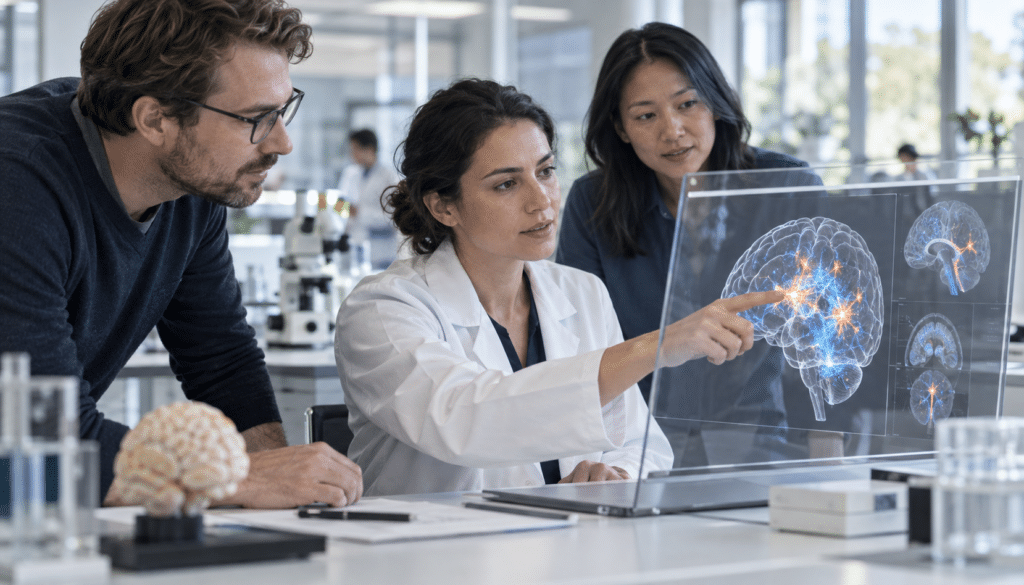
Every generation witnesses a breakthrough that changes how we define human potential.
This generation is at the forefront of AI without question. Artificial intelligence has expanded what machines can accomplish with human input.
Now, neural engineering is expanding what people and machines can accomplish together.
We’re entering an era where communication between the human brain and digital systems is becoming more precise, practical, and scalable. For innovators, healthcare professionals, and entrepreneurs, this is both an exciting field of research and a signal that the future of medicine and human augmentation is taking shape.
What Is Driving the Rapid Growth of Neurotechnology?
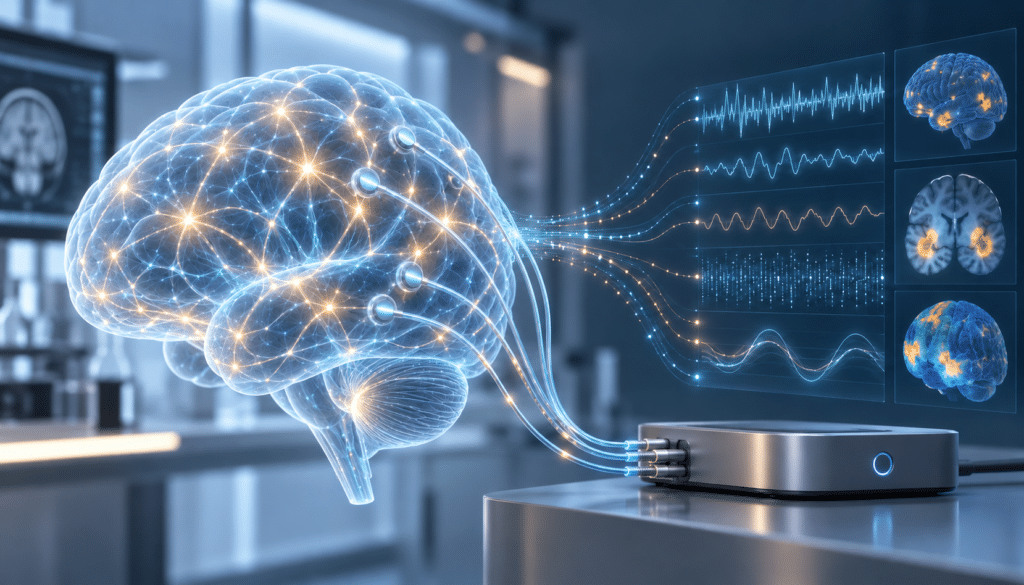
As multiple technologies mature at the same time, they begin to converge. That convergence creates breakthrough capabilities and opportunities that, just moments before, were impossible.
Examples include AI interpreting neural signals more accurately, miniaturized electronics making implants less invasive, and advanced materials improving long-term compatibility with the body.
Together, these developments are accelerating progress in neural engineering and making the modern brain-computer interface more capable than ever before.
According to the World Economic Forum, neurotechnology is moving beyond research laboratories as investment, clinical applications, and regulatory progress continue to accelerate across the healthcare industry.
How Are Brain-Machine Interfaces Changing Lives Today?
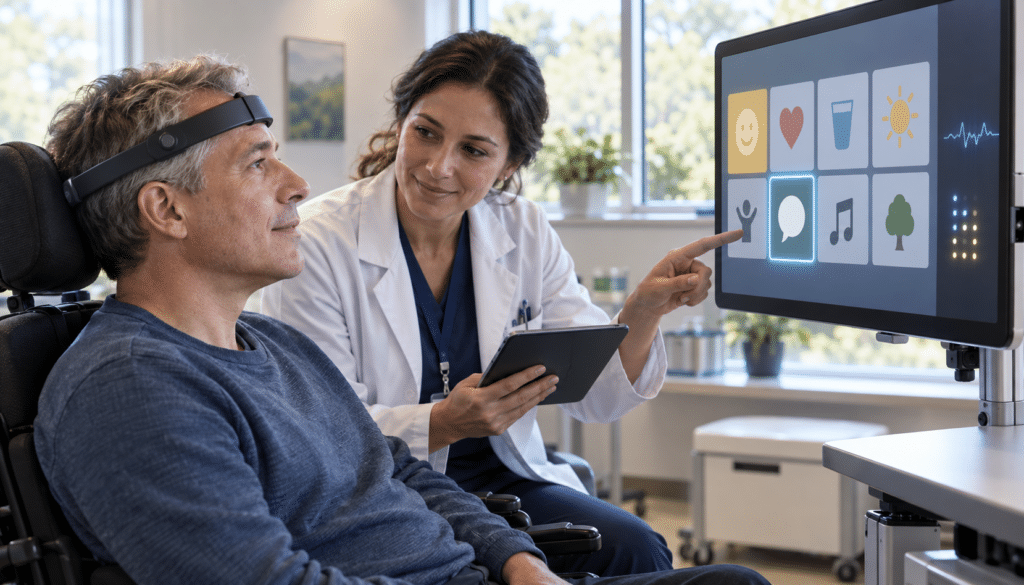
The most compelling examples focus on restoring human capability.
Researchers have demonstrated brain-computer interfaces that allow individuals with paralysis to communicate through digital devices using neural activity alone. Recent clinical studies have also shown promising results in helping patients regain communication and greater independence.
We can already see the neural interface future moving from possibility toward practical use. A 2026 Nature Medicine study documented a person with ALS independently using an implanted brain-computer interface at home on a near-daily basis for speech and cursor control.
When a technology begins working consistently outside controlled demonstrations, I see a powerful signal for what comes next. The opportunity is to recognize that direction early, identify the Hard Trends accelerating it, and begin asking what new capabilities they will make possible.
This example reminds us that the greatest innovations often begin by solving meaningful human problems.
Why Does This Matter Beyond Healthcare?
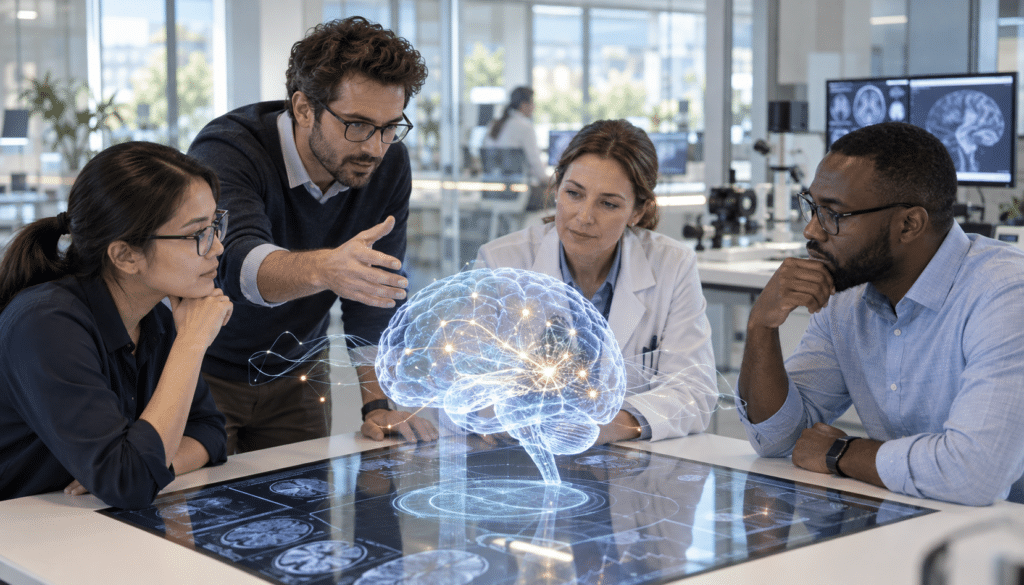
Healthcare may be the starting point, but it won’t be the final destination.
As neurotech continues to mature, industries ranging from education to manufacturing may discover new ways to improve accessibility, human performance, and communication.
Imagine environments where complex systems respond more naturally to human intent. Or consider rehabilitation programs that continuously adapt to a patient’s neurological progress. We might even think about assistive technologies that reduce barriers for millions of people living with physical disabilities.
It’s clear here that the opportunities extend well beyond medicine and provide many industries with an increase in the ability to create exponential transformation.
What Can We Learn From the Future of Neural Interfaces?
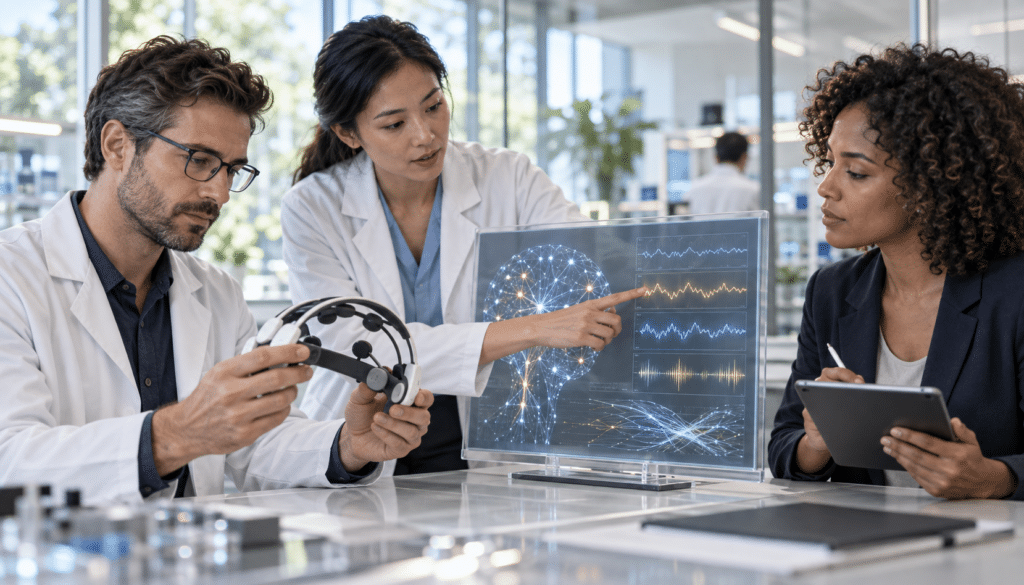
When people hear about the future of neural interfaces, they often imagine science fiction.
I personally believe a different question should be asked: Which developments have already crossed the line from possibility to certainty?
We know there are Hard Trends such as the advancement in computing power, AI models improving, and as a result, medical devices become smaller, smarter, and more connected.
The exact timeline may vary, but the direction is increasingly clear. That’s why I encourage leaders to stop asking whether these technologies will influence their industries and start asking how they can prepare for that certainty today.
What Brain-Machine Interfaces Will Look Like in the Future
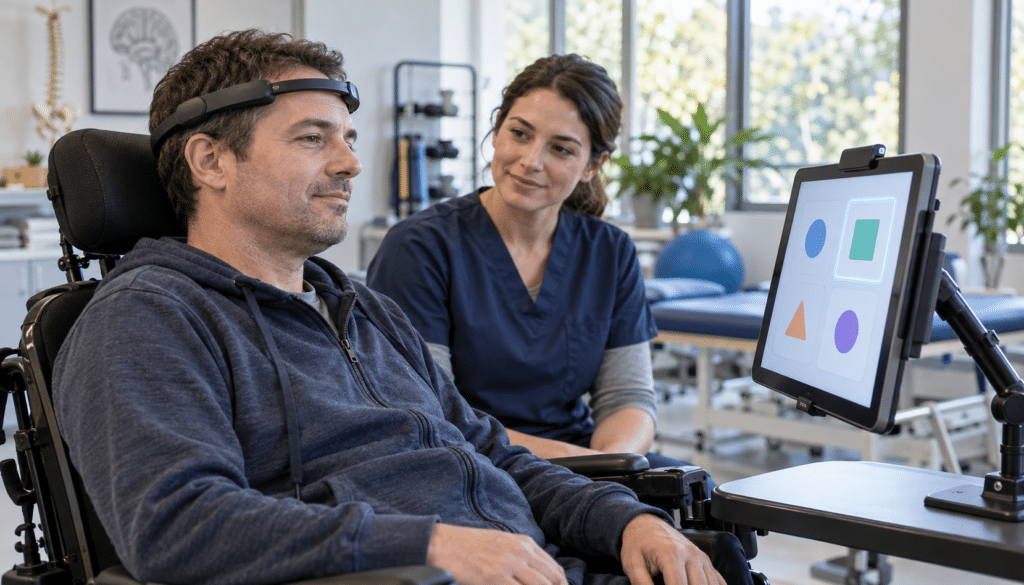
Predictions become more useful when they’re grounded in observable trends.
By the year 2030, I would expect the following continued improvements in brain-machine interfaces:
- Signal accuracy and reliability
- Less invasive neural interfaces
- AI-assisted decoding of brain activity
- Personalized neurorehabilitation
- Greater collaboration between medicine, engineering, and artificial intelligence
But as we know, the pace of innovation will depend greatly on continued clinical validation and regulatory approval. However, the current trajectory points toward broader adoption across specialized healthcare applications.
Another development worth watching is the emergence of new ways to connect with the brain. A July 2026 article in Nature Reviews Electrical Engineering examines functional ultrasound imaging as a high-resolution approach to brain-computer interfaces and the work required to move these systems beyond laboratory prototypes.
From an Anticipatory perspective, the opportunity becomes much larger when several technological paths begin advancing toward the same destination. The future of neural interfaces may include multiple approaches designed around different medical needs rather than a single dominant technology.
Which Neurotech Developments Should You Start Planning Around?
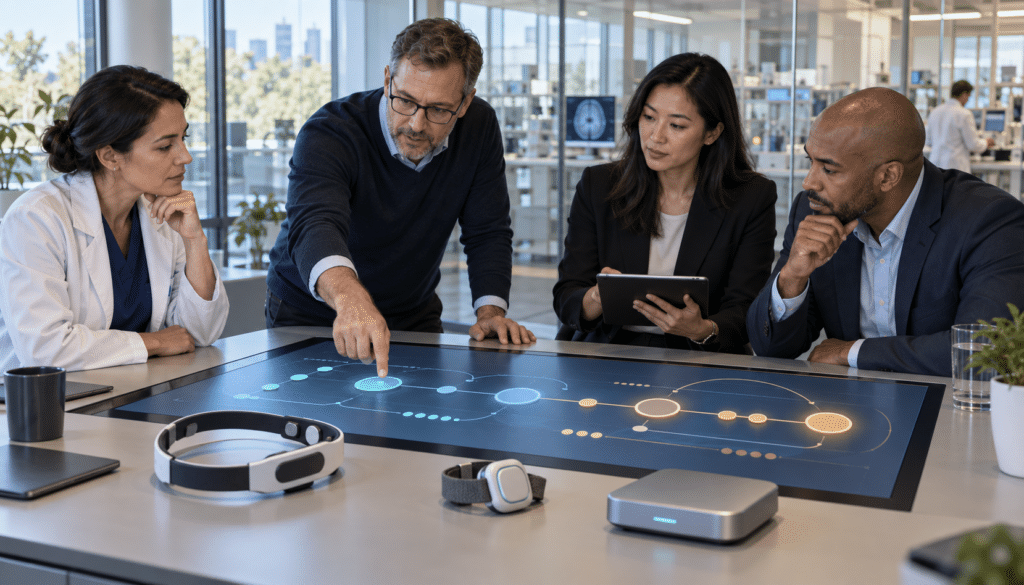
If you’re working in neurotechnology today, I would spend less time trying to predict which company will produce the winning brain-computer interface and more time tracking the capabilities that are becoming increasingly predictable.
Several deserve attention right now:
- Neural decoding is improving, including systems that translate brain activity into speech and computer commands.
- Interface options are expanding, from implanted electrodes to less invasive approaches using ultrasound and other sensing technologies.
- AI is accelerating signal interpretation, making complex neural data more useful in real time.
- Clinical use is moving beyond short demonstrations, creating new questions around reliability, training, reimbursement, privacy, and long-term patient support.
A medical-device company can begin considering how neural data fits into future product development. A healthcare organization can identify which neurological conditions may benefit first. Engineers entering the field can build expertise where neuroscience, AI, materials science, and device design intersect.
Investors and entrepreneurs should also watch the problems forming around the technology. Who will secure neural data? Who will establish interoperability standards? How will patients control access to information generated directly from brain activity?
Some of the largest opportunities in neurotech may emerge from solving the problems that widespread neural interfaces will create.
Are You Ready to Anticipate What’s Next Before Your Competitors Do?
Brain-machine interfaces are one example of how predictable technological change can create entirely new opportunities.
The advantage comes from identifying Hard Trends early and using them to make smarter decisions before disruption arrives.
Visit Burrus.com to explore more strategies, insights, and tools for becoming Anticipatory and turning future certainty into competitive advantage.