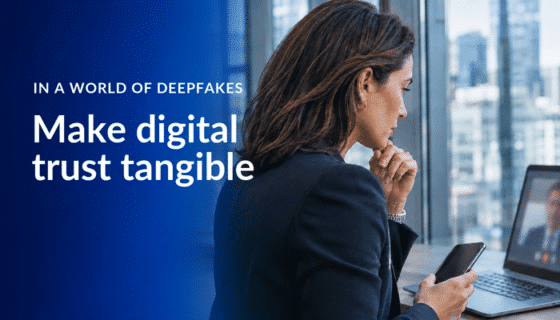
Think for a moment about a voice you would recognize immediately. Perhaps it belongs to a colleague you’ve worked with for years, or a leader whose calls you always take.
Now imagine hearing that person ask you to move money before the end of the day. Would you stop to verify the request? The majority of us still wouldn’t, and that’s a problem.
AI deepfakes are starting to find their way into various industries. This challenges something we have long taken for granted: that recognizing someone tells us who is actually speaking with us.
I see an opportunity for businesses to earn trust in a new way. Give customers and employees a simple way to confirm that a request really came from you, and thank them for taking the time to check.
What Can a $25 Million Fraud Teach Us About Trust?

Trust is extremely hard to build with your client base. But once you have it, it is a valuable gem. However, it takes mere moments to completely dismantle that trust.
Consider Arup’s experience. In a World Economic Forum interview, CIO Rob Greig described a deepfake video call that led to approximately $25 million being sent to criminals in early 2024.
He explained that the company’s systems were not compromised and no data was affected. People believed they were completing legitimate transactions.
For me, the leadership question that stems from this example is pretty straightforward: What have we put in place to help someone make a sound decision when everything looks convincing?
Which Requests Should Your Team Verify to Prevent Deepfake Fraud?
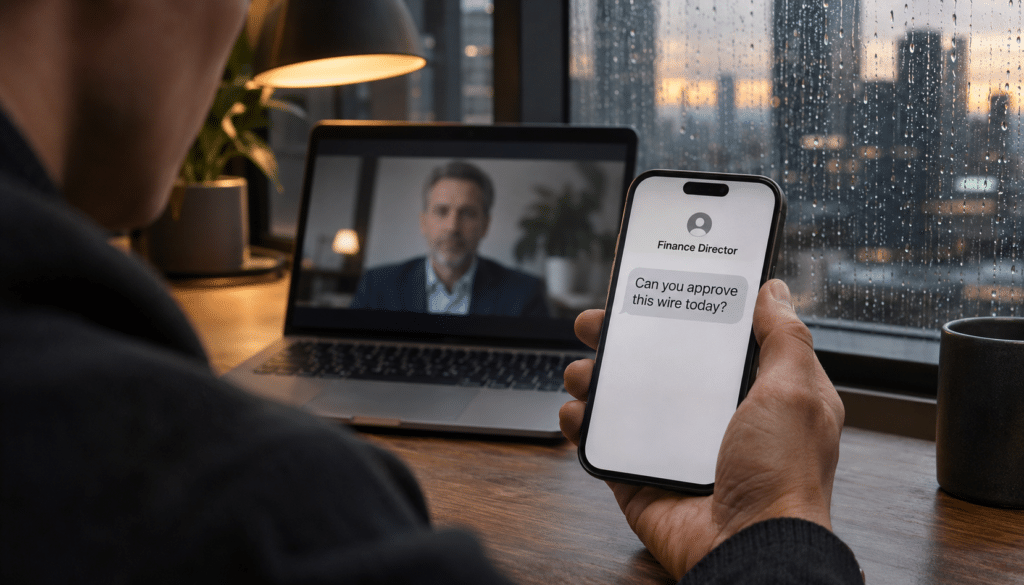
One of the most useful applications of an Anticipatory Mindset is pre-solving a problem before it happens. We don’t need to predict the next impersonation attempt to identify decisions it could exploit.
As I explain in my article on AI security, privacy, and trust, protecting confidence in your business is a leadership responsibility.
Start with three familiar situations:
- Finance: A supplier requests a change to its bank details.
- HR: An executive asks for employee records.
- Customer service: A caller requests access to an account.
Ask your team two questions about each request. How do we know who’s asking? How do we know they have the authority to make the request?
A familiar voice used to feel like proof of identity. Now AI can imitate that voice. Decide in advance how your team will verify each type of request so employees can act with confidence when a convincing one comes in.
How Can Leaders Give Employees Permission to Pause and Verify Urgent Requests?

Imagine an employee saying, “I’ll confirm this through our usual contact before processing it.” Would your leaders welcome that response, even when they’re in a hurry?
The FBI’s guidance on AI-enabled financial fraud recommends ending a call and independently finding the organization’s number to verify the caller. That simple act can save you in so many circumstances.
If a supplier asks you to update their bank details, call your usual contact using the number you already have on file. Confirm the new details and check that the person who requested the change is authorized to do so. For higher-risk payments, have a second person approve the transaction before releasing the funds.
The bottom line is simple: Give employees permission to pause, including when the request appears to come from you. Don’t make them feel rushed to act with the security of your customers in mind.
How Reliable Are Deepfake Detection Tools in Real-World Situations?

It’s tempting to look for a tool that will tell us whether everything we see and hear is real. AI fraud prevention tools can help, but we should learn and understand their limits.
The U.S. Government Accountability Office explains that detection accuracy can decline when real-world conditions differ from training data.
A reassuring result should therefore remain one piece of information, alongside identity checks and approval procedures.
Give people a clear reporting route and practice using it. If an employee raises a concern that turns out to be harmless, thank them for checking. This will always be an ongoing effort, as technology is ever-changing and moving at an exponential rate.
That means those looking to do bad things with it will continue to do so, leaving us needing to be smarter about how we handle customer interactions.
How Can Customers Verify That a Message Really Came From Your Business?

Scammers used AI-generated videos of a senior FBI official to steer people to a fake version of the FBI’s online complaint portal, according to a July 2026 FBI alert.
Fraud is getting that simple, even on a governmental level. It’s frightening, but quite real.
If familiar authority figures and departments can be copied, your customers need a dependable way to check communications carrying your name.
I encourage my clients to give customers a place on their official website to turn when a request seems unusual. Publish the number customers can call to confirm a payment request, and spell out what your team will never ask them to share in an unexpected email, text, or call.
Then make sure someone can help them complete the check. Imagine the confidence a customer gains from hearing, “You were right to ask. Let’s confirm this together.”
As we automate more of the customer experience, these brief conversations matter even more. When we walk a customer through how to verify a message, we give them a habit they can use the next time a request seems unusual.
How Do Clear AI Disclosures and Human Support Build Customer Trust?

Despite how deepfakes and other technology is being used by cybercriminals, I still remain optimistic about the value people bring to business. Technology can imitate a face or voice, but earning trust with your customers requires consistent behavior over time.
When you use an AI-generated presenter, identify it clearly. When you share customer stories, use real experiences and obtain appropriate permission.
If an incident occurs, explain what you know, what you are still investigating, and what customers should do.
Business trust grows when your actions match your promises, especially when a conversation is uncomfortable. Personal familiarity still needs verification, so give customers a named contact who understands that checking a message is a sensible way to protect a relationship both parties value.
How Can Your Team Test Its Response Before a Deepfake Scam Happens?

I see an opportunity for businesses to make digital trust tangible through clear answers, dependable checks, and people who follow through.
Bring finance, HR, customer service, and IT together for a short rehearsal. Present a hypothetical situation where a client requests to change a supplier’s payment details or one where they ask you to release sensitive information.
Ask who would pause the action, how the request would be confirmed, and who would communicate with affected customers. Listen for the moments when someone feels pressured or doesn’t know whom to call.
Pick one gap your rehearsal exposed and close it this week. When an urgent request sounds real and appears to come from you, will the person receiving it know how to verify it and feel confident saying, “I’ll check first”?
Deepfakes are one example of why I encourage leaders to ask what a new technology will change for their business before they’re forced to respond. In my 2027 Top 25 Tech Trends Report, I share the trends I’m watching and where I see opportunities for leaders to act now.