This article answers the question: What are the next big infrastructure trends, and how will space, data, and quantum systems shape future economic growth?
Answer: According to Daniel Burrus, CEO of Burrus Research and one of the World’s Leading Futurists on Global Trends, AI, and Disruptive Innovation, the next wave of economic growth will be built on the infrastructure systems emerging beneath today’s breakthrough technologies. Space infrastructure, data infrastructure, and quantum infrastructure are becoming foundational platforms that will shape how information moves, how industries collaborate, and how innovation scales. By applying Daniel Burrus’ Anticipatory Mindset and Futureview® methodology, leaders can look beyond individual products and identify the Hard Trend future certainties driving long-term investment, public-private partnerships, connectivity, advanced computing, and new markets. The organizations that gain the greatest advantage will be those that follow the infrastructure, align their teams around what is coming, and prepare before these foundational systems reshape their industries.
Why Infrastructure Is the Clearest Signal of What Comes Next

Every major economic expansion has been built on infrastructure.
Consider how railroads accelerated industrial growth and how highways reshaped commerce. Then we have the internet, which connects businesses and consumers on a global scale.
What’s the next wave of opportunity in front of us?
Headlines often focus on breakthrough products and emerging technologies, but the more revealing story lies beneath them. Infrastructure determines what becomes possible, what scales efficiently, and where entirely new markets emerge.
That perspective is echoed in recent McKinsey research, which estimates that approximately $106 trillion in cumulative infrastructure investment will be needed globally by 2040 as digital, energy, transportation, and social infrastructure continue evolving together.
Through it all, I remain committed to helping the companies I work with develop a stronger Futureview® that looks beyond today’s applications to identify the systems that will power tomorrow’s economy.
Which Infrastructure Trends Deserve the Closest Attention?
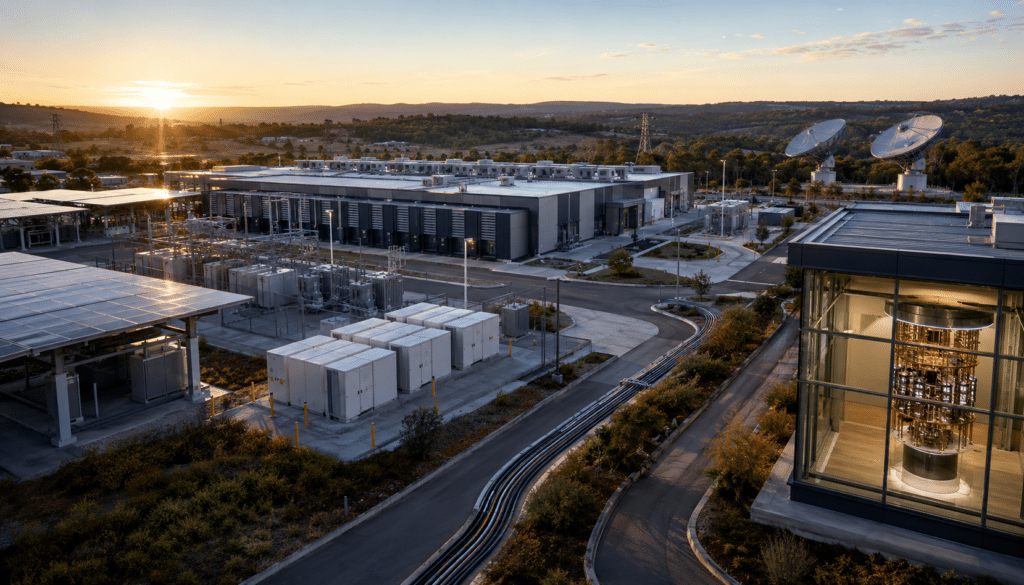
As emerging technologies compete for the attention of business leaders, infrastructure is quietly gaining momentum.
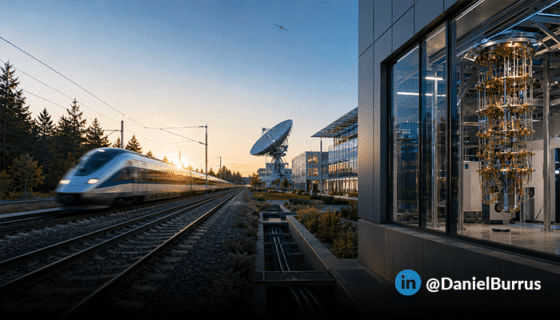
Three areas of infrastructure stand out to me, primarily because they are already attracting sustained investment, public-private partnerships, and long-term planning:
- Space infrastructure
- Data infrastructure
- Quantum infrastructure
Each serves a different purpose but together, they will influence how information moves, how industries collaborate, and how innovation reaches scale.
How Is Space Infrastructure Expanding Beyond Exploration?
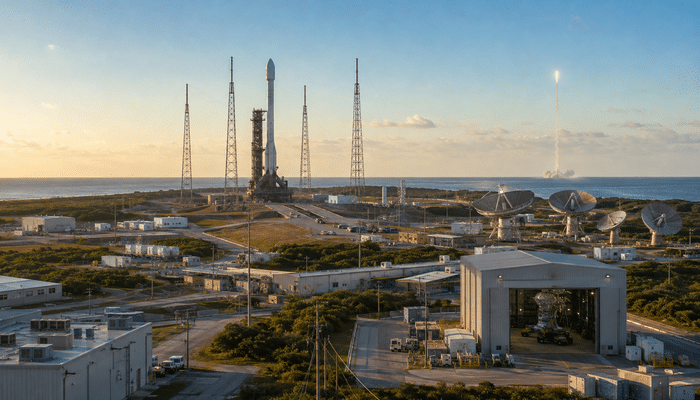
Space is becoming operational quickly.
I’ve witnessed us develop satellite constellations, in-orbit services, and lunar missions, all of which are creating capabilities that extend well beyond traditional space exploration.
Starlink, operated by SpaceX, has deployed thousands of low Earth orbit satellites that provide broadband connectivity across much of the world. This improves access in remote regions and supports emergency communications.
NASA’s Artemis program topped the news cycles this year. This program is laying the foundation for sustained lunar exploration, while commercial partners such as Axiom Space are developing privately operated space stations that could support research, manufacturing, and commercial activity in orbit.
Space infrastructure is becoming part of everyday economic activity rather than remaining the domain of government agencies alone.
Why Is Data Infrastructure Becoming a Strategic Asset?
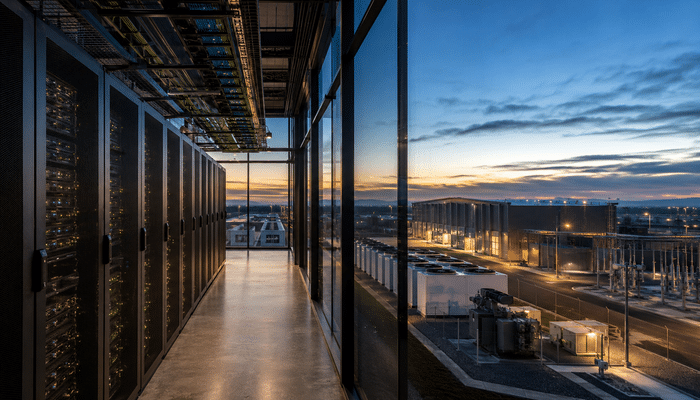
Artificial intelligence, digital services, and connected devices all depend on resilient data infrastructure.
Cloud platforms, data centers, fiber networks, and subsea cables rarely attract public attention, yet they support nearly every digital interaction we rely on today.
- Google has invested in a global network of subsea cables that strengthens international connectivity.
- Equinix operates interconnected data centers that allow enterprises and cloud providers to exchange information with low latency.
- Microsoft and NVIDIA continue investing in AI infrastructure to meet growing demand for advanced computing.
As you can see from these examples, digital activity increases and alongside it, dependable infrastructure becomes a competitive advantage rather than a background utility, creating unique opportunities for those paying attention.
McKinsey projects that global data-center demand could nearly triple by 2030, driven largely by AI workloads, with cumulative investment in data-center infrastructure expected to exceed $1.7 trillion through the end of the decade.
What Makes Quantum Infrastructure Worth Watching?

Quantum computing remains an emerging field. As more development takes place, important pieces of its infrastructure are already taking shape.
IBM’s Quantum Network connects businesses, universities, and research organizations with quantum computing resources to accelerate experimentation and workforce development.
Companies such as PsiQuantum are working with semiconductor manufacturers to develop photonic quantum chips, while Quantinuum continues advancing quantum hardware and software. Government agencies, including the U.S. Department of Energy, are investing in quantum networking research to support secure communications and scientific discovery.
Progress will take time, but building the infrastructure now increases the likelihood that practical applications can expand more rapidly as the technology matures.
How Does Your Futureview Change the Way You Prepare?

Developing a shared Futureview® across your organization is essential. It empowers leaders and teams to make a greater impact and create lasting significance.
An aligned Futureview helps everyone recognize the forces shaping tomorrow’s opportunities before they become obvious to the competition.
Infrastructure trends provide some of the clearest and most valuable signals of what lies ahead.
When investment consistently flows toward foundational capabilities, it often indicates that broader markets are preparing to emerge.
Watching infrastructure doesn’t eliminate uncertainty, but it provides a more reliable way to understand where long-term momentum is building. Using that momentum to think critically about how your industry will be impacted gives you the chance to be the disruptor instead of the disrupted.
Where Should Leaders Focus Their Attention Next?
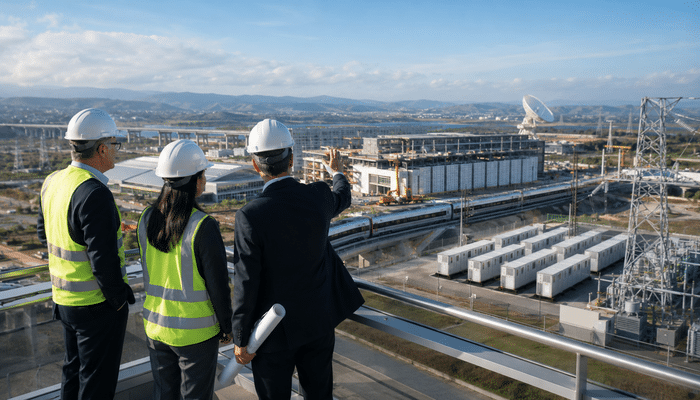
Every organization doesn’t need to launch satellites or build quantum computers. But I would say every leader should understand how these foundational systems will influence customers, supply chains, partnerships, and competitive strategy.
As a leader, ask yourself:
- Which infrastructure investments could reshape your industry?
- How might improved connectivity create new business models?
- What capabilities become possible as computing continues to advance?
- Which partnerships should you begin exploring today?
Once you have the answers in front of you, you’re in a better place to align your team’s Futureview around Hard Trend future certainties and how you can leverage them.
What Will Support the Next Generation of Economic Growth?
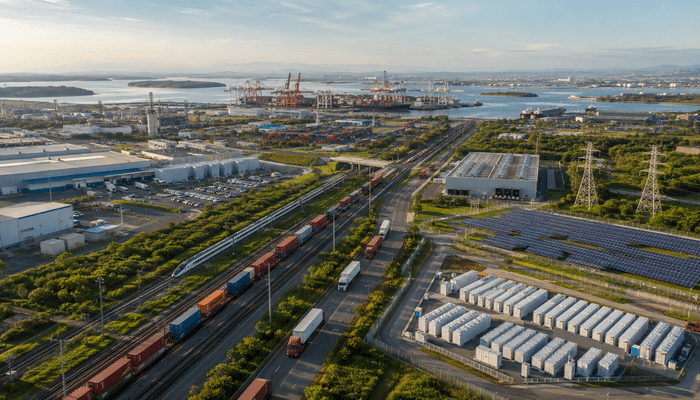
The systems being built today will support discoveries, whole industries, and business models that are only just beginning to emerge. I want to see business leaders around the world paying attention to these systems and strategizing appropriately alongside them.
For more on this perspective, be sure to read my article “The Predictable Rise of Intelligent Infrastructure and What It Means for the Future.” Here, I dive deeper into why infrastructure has become one of the clearest indicators of long-term economic change.
The competitive advantage often begins long before a market reaches maturity. Therefore, by following the infrastructure, you will gain a clearer view of when the next wave of growth is likely to begin, and where.