This article answers the question: How will AI, autonomy, and transparency reshape the future of supply chains?
Answer: According to Daniel Burrus, leading futurist and AI strategy expert, the future of supply chains will be defined by adaptability, autonomy, real-time data, and transparency. As AI, digital twins, autonomous systems, and intelligent forecasting advance, supply chains are shifting from reactive efficiency models to Anticipatory systems that see disruption earlier and act faster. Leaders who apply Hard Trend strategy can improve visibility, automate routine decisions, reduce risk, and build more resilient supply chains before competitors are forced to react.
What Will Define the Next Generation of Supply Chains?

Supply chains have long been designed for efficiency in our world’s economy. Today, they are approaching an era that requires them to be designed for adaptability.
The autonomous supply chain is becoming one of the defining future supply chain trends. In lieu of this, I’m starting to see organizations shift from reacting to disruptions toward anticipating them. This is in an effort to move from managing uncertainty to acting on certainty, allowing them to thrive over the next decade.
Those organizations are quickly noticing that they have an Anticipatory mindset supported by autonomous systems, real-time data, and greater transparency.
Why Are Supply Chains Becoming More Autonomous?
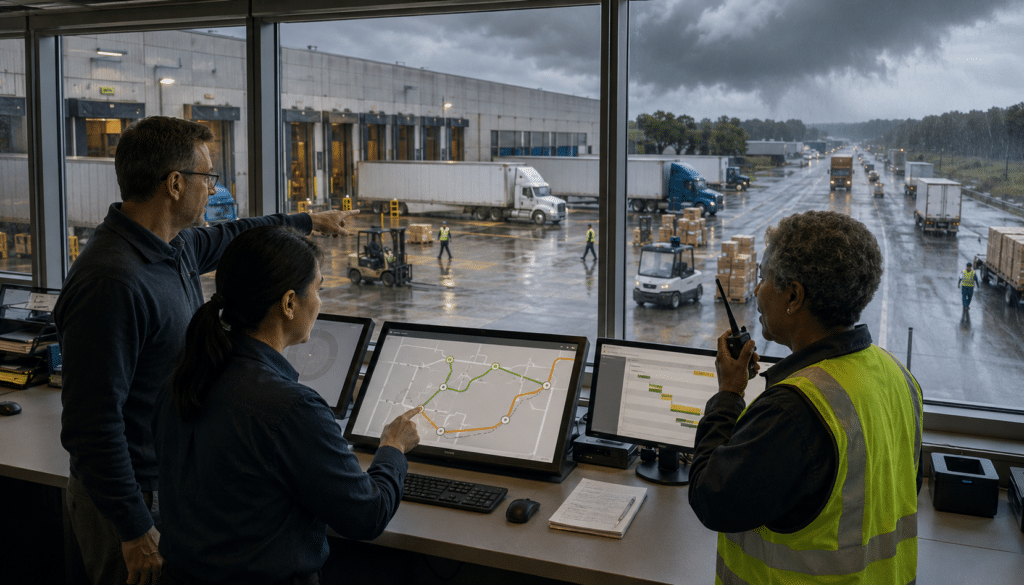
Automation being constrained to something like warehouse robotics is already something we did in previous years. The rise of AI is actually what’s helping organizations make faster and smarter decisions across procurement, inventory management, transportation, and fulfillment.
Gartner identifies technologies such as agentic AI, intelligent simulation, autonomous data collection, and polyfunctional robots among the top supply chain technology trends that shaped 2025. These capabilities improve visibility while allowing organizations to respond to changing conditions in real time.
These advances did not slow in 2026, and they will continue to accelerate in the years ahead. As they do, people will spend less time on repetitive, mundane tasks and more time making higher-value decisions.
What Do Real-World Supply Chain Examples Tell Us?
Automation is already moving from theory to measurable business outcomes across many industries. All parts of our economy hinge on the supply chain, which means the level of transformation that AI and automation brings to the table is global.
Here are a few current examples of how the supply chain is evolving:
Example 1: Smarter warehouses
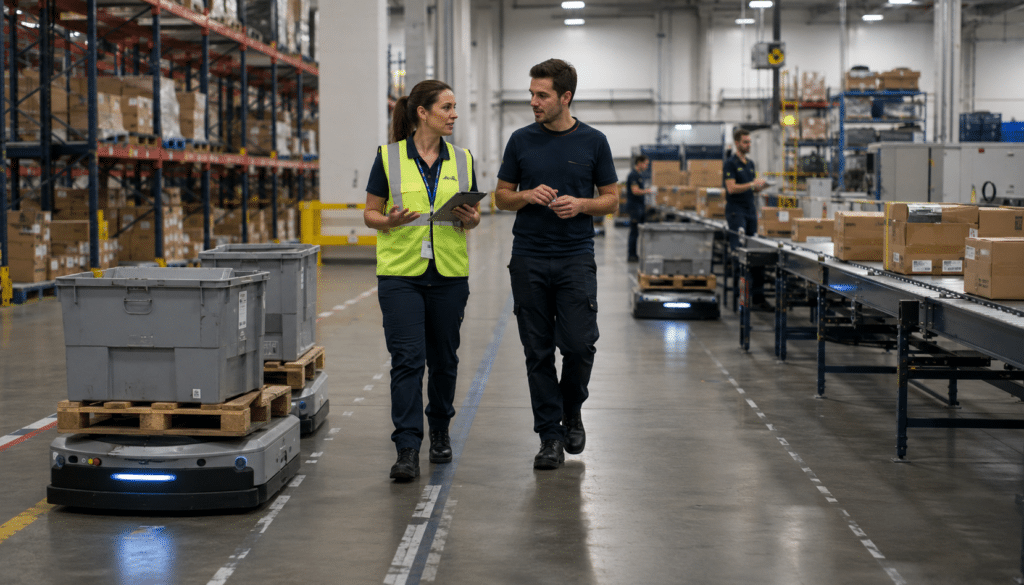
Autonomous mobile robots now have the capacity to move inventory, assist with picking, and continuously adapt to changing warehouse conditions. Combined with AI, these systems improve throughput while reducing repetitive manual work.
Example 2: Digital twins
Many manufacturers and logistics providers now use digital twins to create virtual models of warehouses, transportation networks, and production facilities.
Leaders can test scenarios before making operational changes with these digital twins. This allows organizations to identify bottlenecks, optimize layouts, and improve planning with far greater confidence.
Example 3: AI-powered forecasting
Companies are using AI to improve demand forecasting by combining sales history with weather, market conditions, and other external signals.
For example, Unilever has reported measurable forecasting improvements by incorporating AI into demand planning for seasonal products, helping improve inventory decisions while reducing waste.
Why Does Transparency Matter More Than Ever?
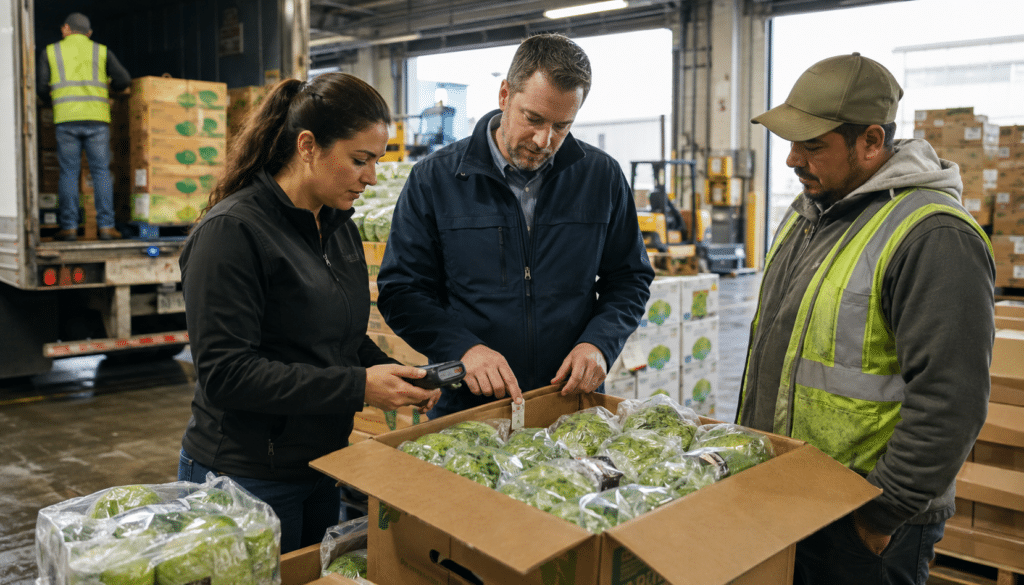
Visibility used to be enough.
Today, organizations need complete transparency across suppliers, inventory, transportation partners, and customers.
Real-time logistics allows leaders to answer these pressing questions immediately:
- Where is every shipment?
- Which suppliers present risk?
- What happens if demand suddenly changes?
- Which decisions should be made before delays occur?
The better your visibility, the faster your organization can shift from reacting to anticipating.
That’s where real-time logistics becomes a competitive advantage instead of simply an operational improvement that needs to be made.
What Will the Autonomous Supply Chain Look Like by the Year 2030?
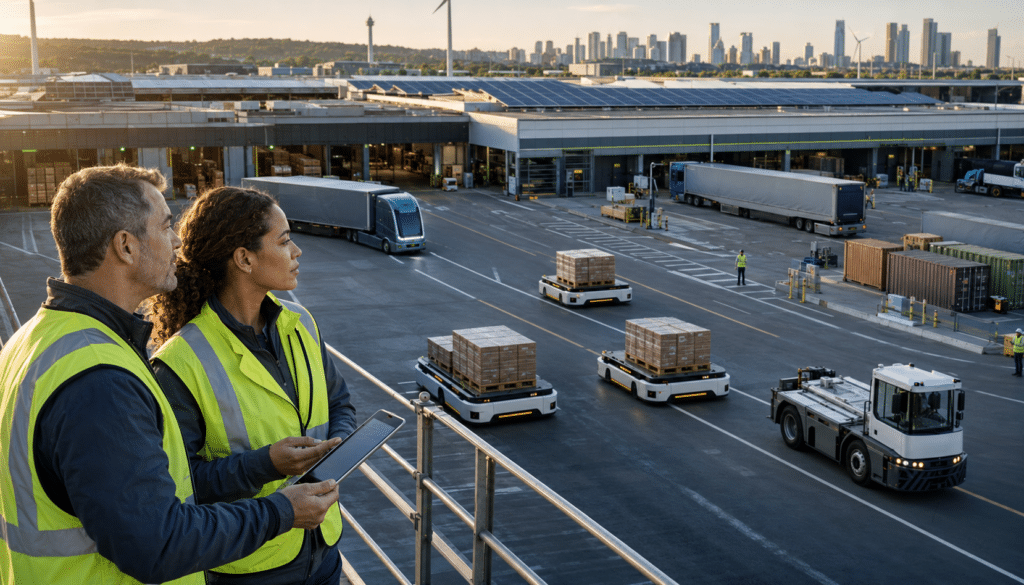
The conversation is quickly shifting beyond automation. Autonomous decision support is the new avenue we are starting to take with regard to the supply chain.
In a separate Gartner study conducted last year, they predict that by 2030, half of cross-functional supply chain management solutions will include intelligent agents capable of autonomously executing decisions within defined business rules.
Of course, we must remember that that doesn’t mean humans will suddenly disappear.
Routine decisions become automated while supply chain professionals focus on strategy, relationships, innovation, and managing exceptions.
This evolution aligns with what I have written for years. Technology should increase our capacity to make better decisions as opposed to removing human judgment. But as always, that’s up to us as a society to adapt and not let technology define us but instead define it.
How Does Anticipatory Thinking Create a Stronger Supply Chain?

Organizations often make the mistake of treating every disruption as something completely unpredictable. They all end up feeling like something took them by complete surprise and left them suddenly trailing the world and technology.
Many changes are Hard Trend future facts that can be identified before they fully develop. This includes:
- AI adoption
- Growing automation
- Increasing customer expectations for visibility
- Expanding use of digital twins
When leaders recognize those certainties, they stop asking, “How do we react?” Instead, they begin asking, “What opportunity does this certainty create?”
I write regularly in my articles about why leaders should use the certainty of Hard Trends to drive innovation rather than let disruption dictate strategy. Organizations that anticipate predictable change can act sooner, create new opportunities, and stay ahead of competitors instead of constantly trying to catch up.
How Can You Prepare for the Future of Supply Chains Today?

It’s important for us all to remember that technology alone won’t build resilience. It’s not sentient, creative, or capable of anything human leaders are. Disruptive tech only becomes disruptive if we do not leverage it as the tool that it is.
An Anticipatory Organization combines emerging technologies with an Anticipatory Mindset.
Start by asking your team any number of the following questions:
- Which supply chain decisions could be automated?
- Where would greater transparency improve customer confidence?
- Which Hard Trends are already shaping our industry?
- How can we act before competitors recognize the same opportunity?
You can do a lot internally at your organization, and in turn, you start creating transformation from the inside out instead of letting change affect your operation.
The future of the supply chain is already faster or more efficient. What does that mean for you and your organization? Do you become more adaptive, more transparent, and more capable of acting before disruption becomes a crisis?
The greatest opportunities are already on the horizon, ready for you to take hold of.
Are You Ready to Build an Anticipatory Supply Chain?
The greatest opportunities will belong to organizations that act on predictable change before competitors react to disruption.
For decades, leaders have trusted Daniel Burus to help them identify Hard Trends, anticipate change, and turn certainty into opportunity. Visit Burrus.com to explore his articles, books, keynote programs, and strategic resources—and discover how Anticipatory Thinking can help your organization shape the future with confidence.