
This article answers the question: How are immersive experiences shaping the future of retail, entertainment, and brand engagement?
Answer: According to Daniel Burrus, a leading futurist and AI strategy expert, immersive experiences are becoming a Hard Trend in how customers discover, evaluate, purchase, and remember brands. As augmented reality, spatial computing, AI, interactive storytelling, and blended physical-digital experiences advance, customers increasingly expect brand interactions to be personalized, useful, seamless, and worth sharing. Leaders who apply an Anticipatory Mindset can use immersive technology to reduce friction, build customer confidence, create more meaningful engagement, and shape expectations before competitors are forced to react.
What Makes a Brand Experience Memorable Enough to Be Shared?
How Do Consumers Come to Recognize and Remember a Brand?
The brands people remember aren’t necessary ones with the biggest advertising budgets. Many have become recognizable brands after creating experiences customers want to talk about, revisit, and share.
This is a shift that’s happened over the course of time as social media and other avenues of marketing have developed. As a result, consumers increasingly seek memorable experiences, accelerating change across retail and entertainment.
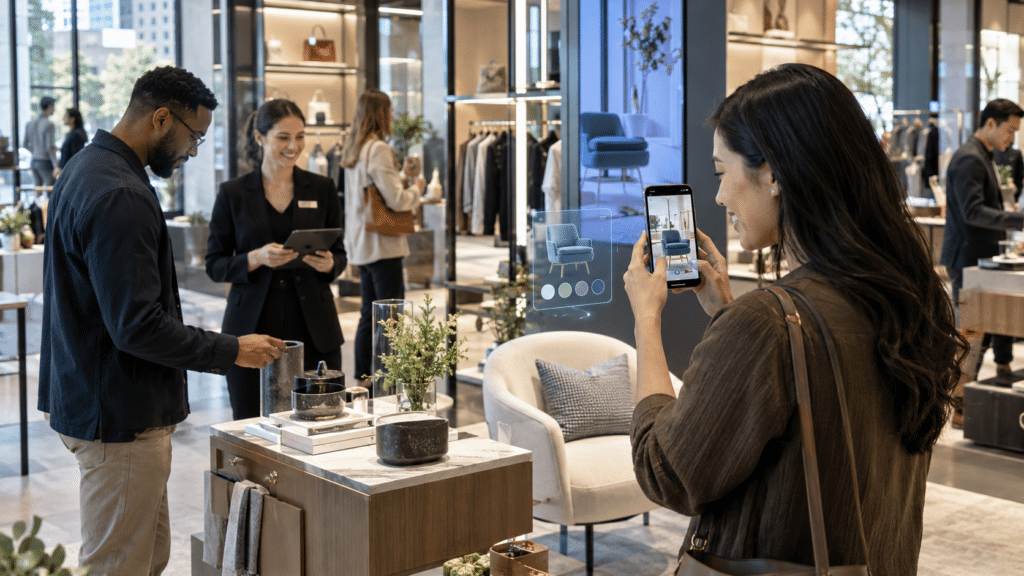
Consumers are increasingly blending physical and digital experiences as they shop. They now expect both to work together seamlessly.
For professionals responsible for brand experiences, this is a Hard Trend certainty that redefines how people discover products, engage with brands, and make purchasing decisions.
Why Are Immersive Experiences Becoming the New Standard?
Customer expectations have changed.
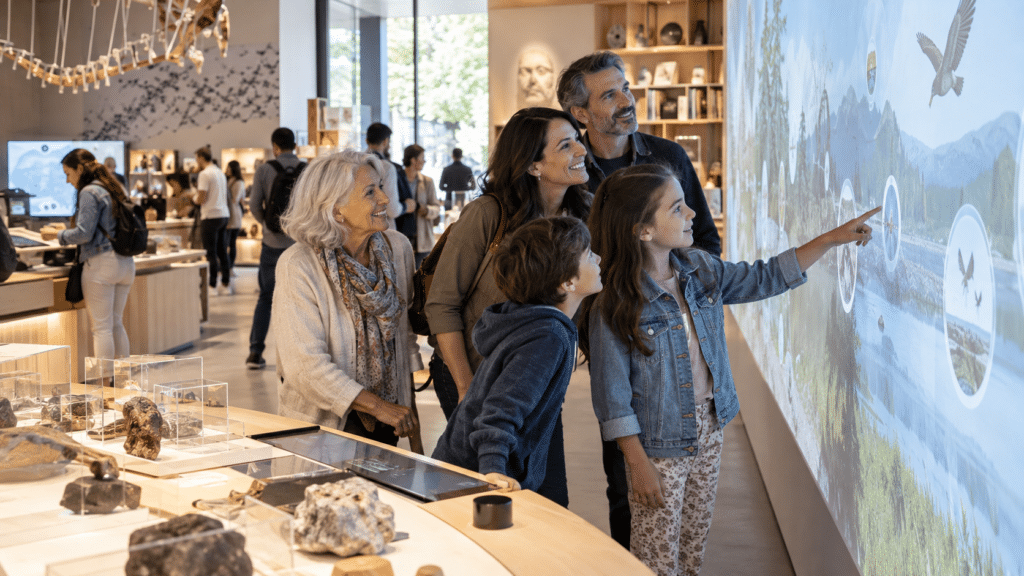
People want to participate instead of observe. They expect brands to personalize experiences, remove friction, and make interactions memorable.
Augmented reality, spatial computing, AI, and interactive storytelling are making all this possible. Deloitte highlights immersive shopping experiences, virtual product demonstrations, and WebAR as tools that are becoming core elements of modern commerce rather than experimental concepts.
What does that mean for marketing professionals and those in sales? Immersion is not something that simply impresses customers but instead helps them make decisions with greater confidence.
How Are Leading Brands Putting Immersive Technology to Work?
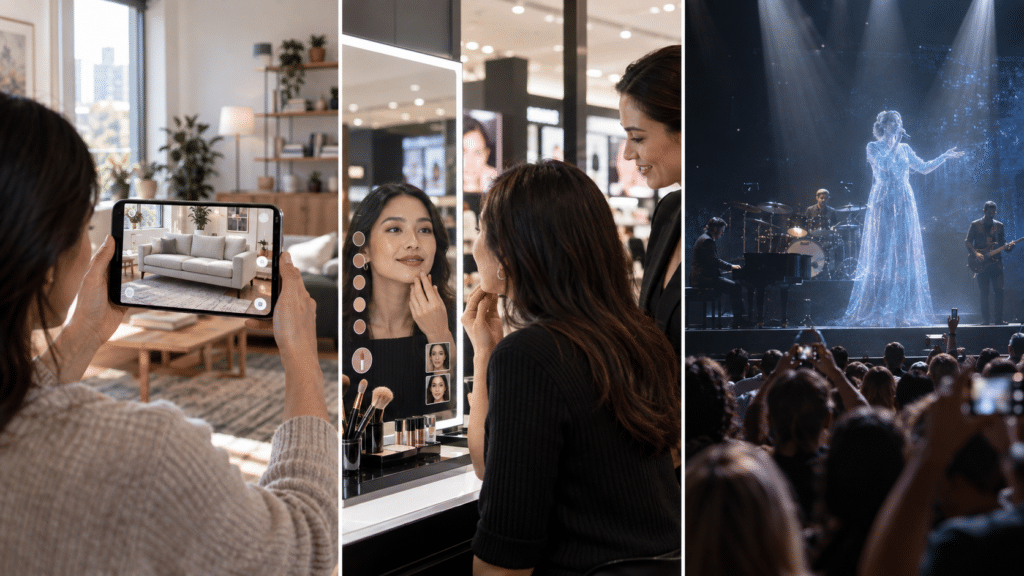
Some of the most successful applications of immersive technology don’t feel futuristic at all. They simply make shopping an easier experience universally.
IKEA removes uncertainty with AR
IKEA’s AR capabilities allow customers to visualize furniture inside their homes before buying.
Instead of imagining whether a sofa fits, you can now see it in your own space. This simple improvement builds confidence while reducing purchase hesitation, especially on something as big as buying furniture.
Sephora makes personalization interactive
Sephora’s Virtual Artist lets customers try cosmetics digitally before making a purchase.
The experience feels personal because it answers the customer’s biggest question immediately: What will this actually look like on me? Likewise, customers who prefer more privacy can explore cosmetics virtually without having to try products on in public.
Live entertainment expands beyond the stage
Entertainment companies are also embracing immersive storytelling through projection mapping, mixed reality, and even holograms that extend experiences before, during, and after live events.
Of course, nothing can really replace the visceral experience of a physical event. But remember, we live in a both/and world, and creating a richer story often includes the audience’s ability to continue engaging with the event long after they leave.
What Does AR Commerce Mean for Marketing Leaders?

One of the fastest-growing opportunities is AR commerce. Let’s define what this means in our world today.
Instead of sending customers through multiple decision points, brands are allowing them to interact with products naturally through smartphones, connected displays, and emerging wearable devices.
This reduces friction throughout the buying journey while increasing customer confidence.
In an article from last year, Deloitte noted that immersive and spatial commerce became a defining priority for retailers seeking more personalized and interactive customer experiences. This continued into 2026 and is sure to evolve further as we move throughout the rest of this year.
Customers no longer compare your brand experience only with direct competitors. They compare it with the best digital experience they’ve had anywhere.
Where Are Customer Expectations Heading?

This is an imperative question many in marketing constantly wonder. No matter the industry they serve, many retail and entertainment organizations ask whether immersive technology will become mainstream.
I believe they’re asking the wrong question. The better question is: What behaviors are already becoming predictable surrounding immersive tech?
Consumers increasingly expect:
- Personalized recommendations
- Interactive product exploration
- Blended physical and digital experiences
- Immediate access to information
- Experiences worth sharing with others
These preferences are examples of Hard Trends that point toward the immersive retail future.
When customer behavior becomes increasingly predictable, organizations gain the opportunity to anticipate instead of react. From there, work with your team to turn those answers into action and pre-solve problems before customers experience them.
This is how we anticipate customer wants and needs, then deliver the right solutions before they even realize they need them.
What Will Immersive Experiences Look Like by 2030?
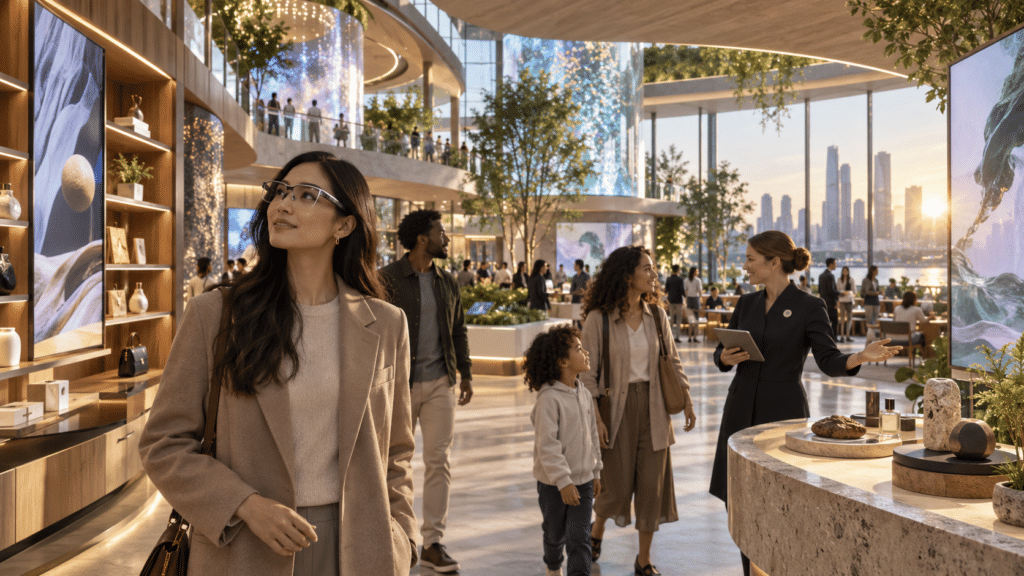
As we approach immersive experiences 2030, the technology itself will become less noticeable.
Customers won’t think about whether they’re using augmented reality or artificial intelligence. They’ll simply expect every interaction to be relevant, contextual, and easy.
We’re already seeing retailers invest in digital displays, intelligent stores, virtual product demonstrations, and AI-assisted shopping experiences designed to blend physical and digital environments. Immersive stores, social commerce, and hyper-personalized engagement are key areas of investment for leading brands.
Because of these trends, it’s clear to see where experiential media begins to separate market leaders from everyone else.
What Can Anticipatory Leaders Learn From This Shift?
Waiting until customer expectations become industry standards puts retail, entertainment, and marketing leaders in a reactive position.
That’s a reactive strategy. Anticipatory Leaders identify certainty early and act on it through AR adoption, smarter personalization, stronger digital storytelling, and more immersive brand experiences.
I explored this idea in a recent article, “The Future of Consumer Tech Is Hybrid, Immersive, and Already Here.“ The message is straightforward: organizations should focus on practical applications that reduce customer friction and create measurable value rather than chasing technology for its own sake.
How Can You Start Building More Meaningful Brand Experiences?

People will always be the driving factor behind memorable experiences. We have emotional intelligence and the capacity to connect to one another on a personal level. Technology doesn’t have the ability to create those experiences by itself.
Technology simply expands what’s possible.
As you evaluate your next campaign or customer initiative, ask yourself:
- Which customer frustrations could immersive technology eliminate?
- Where could AR create confidence before purchase?
- How could your brand become more interactive instead of more promotional?
- Which customer behaviors are already pointing toward tomorrow’s opportunities?
Start to shape customer expectations before competitors realize they’ve changed.
Are you ready to anticipate what’s next before your competitors do?
If your organization is evaluating immersive experiences, AI, AR, or other emerging technologies, the real opportunity is not simply adopting new tools. It is knowing which changes are certain, where the greatest opportunities are forming, and what actions you should take now.
Daniel Burrus works with executives and leadership teams through strategic advisory engagements designed to help organizations identify Hard Trends, uncover new opportunities, and pre-solve problems before they disrupt growth.
Explore strategic advisory work with Daniel Burrus and start turning future certainty into present-day advantage.