This article answers the question: What is the phygital future, and why must winning brands bring digital and physical experiences together?
Answer: According to Daniel Burrus, a leading global futurist known for helping leaders predict the future by identifying Hard Trends, the phygital future is not about digital replacing physical experiences; it is about digital and physical experiences co-evolving to create greater value together. As customers move between online and in-person environments, they increasingly expect real-time information, personalization, convenience, seamless transitions, and connected experiences. By applying Daniel Burrus’ Both/And Principle and Anticipatory Mindset, leaders can see that physical locations, products, services, and human interaction still matter, while AI, mobile apps, connected devices, digital twins, and smart environments can make those experiences faster, more useful, and less frustrating. The brands that win will be those that combine digital intelligence with physical experience before changing customer expectations become the standard.
Why Are Physical Experiences Becoming More Valuable?

Many experts predicted a future that would become increasingly digital.
Online shopping would replace stores. Remote work would replace offices. Virtual interactions would replace in-person experiences.
Yet I noticed that something interesting happened along the way, as I’m sure you have as well.
As digital technologies became more powerful, many organizations discovered that physical experiences did not become less important, nor did they vanish completely from our lives. They became more valuable and appreciated by individuals.
Consumers still want to see products, attend events, visit destinations, and engage with brands in person. What has changed is their expectation that digital capabilities will enhance those experiences as opposed to replacing them.
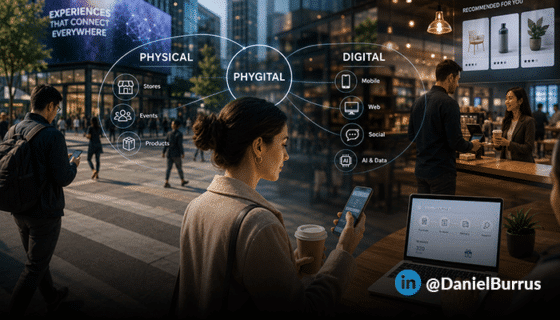
This growing convergence is often described as the ‘phygital future,’ and it is becoming increasingly relevant in every area of our lives.
How Does Both/And Thinking Apply to Physical-Digital Convergence?
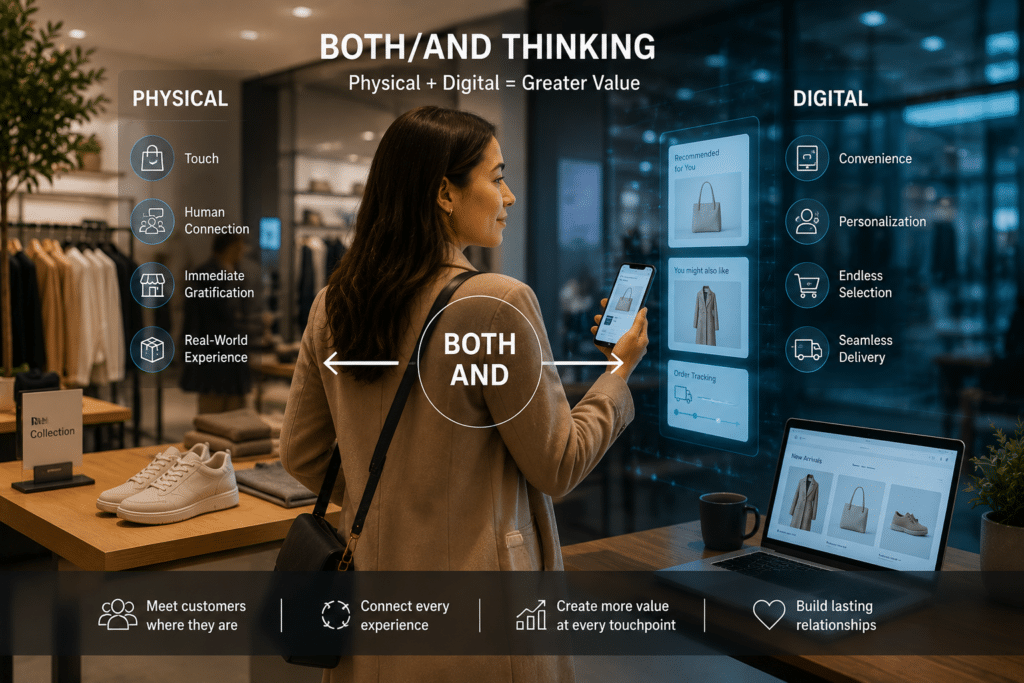
One of the most common mistakes leaders make is treating emerging technologies as replacements rather than additions. That thought of “We’re not going to need physical locations because everyone lives on their phone now.”
That’s a real soft assumption that is proving to be incorrect. And if we look at our history, we see a much different pattern. For instance, television did not eliminate radio, eCommerce did not eliminate retail stores, and video conferencing did not eliminate business travel.
Instead, new capabilities of technology often expand options for consumers, and they suddenly have a hybrid lifestyle.
The convergence of both physical space and digital systems follows the same path. Consumers increasingly move between physical and digital environments throughout the day and they expect those experiences to connect naturally.
Some examples include:
- Buying online and picking up in-store
- Using mobile apps inside physical locations
- Accessing digital services through connected products
- Receiving personalized experiences across channels
You should not aim your organization to have customers choose one environment over another. The opportunity for you as a leader is improving how they work together.
What Does the Phygital Revolution Look Like Today?
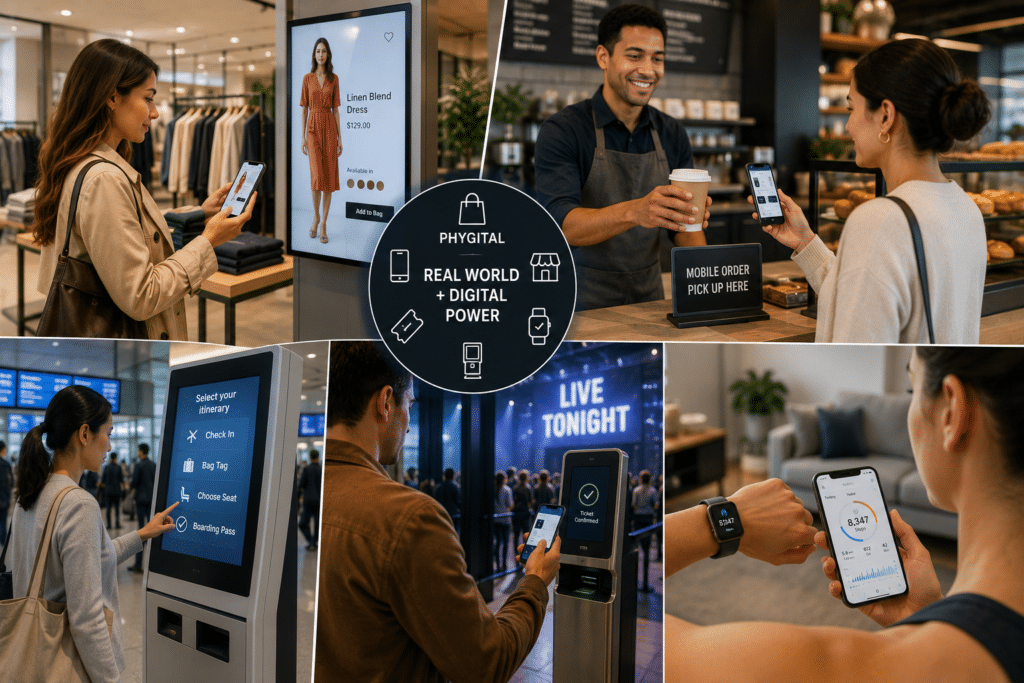
We can see in several different areas how the phygital movement is shaping our everyday experiences.
Many people interact with hybrid physical-digital systems without even thinking about it. Let’s take a look at some real-world examples of organizations leveraging this world that you are likely familiar with:
How Does Disney Blend Digital Convenience With a Physical Experience?
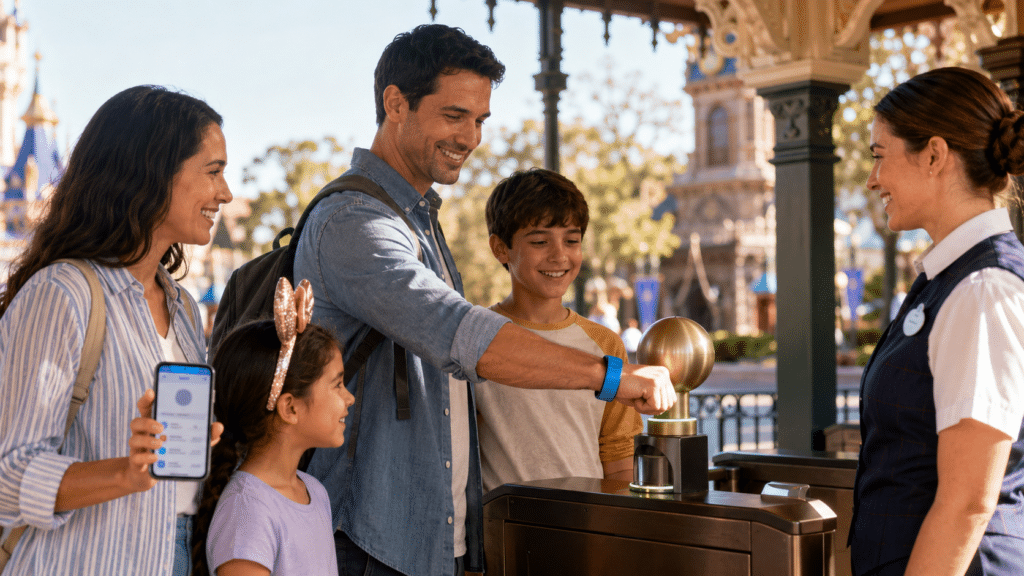
Disney’s MagicBand+ shows how digital technology can improve a physical experience without distracting from it. The connected wristband links to a guest’s Disney account and can serve as a park ticket, Disney Resort hotel room key, and payment method for eligible purchases.
Guests can also use MagicBand+ to check in at Lightning Lane entrances and virtual queues. During select attractions and nighttime shows, the band adds interactive lights and vibrations that respond to what is happening around the guest.
The value is not the wristband itself. It is the way Disney connects reservations, access, payments, entertainment, and personalized services through one simple physical device.
By removing repeated steps and reducing friction, Disney allows guests to spend less time managing technology and more time experiencing the park. This is a strong example of how a digital system can make a physical destination feel more convenient, connected, and engaging.
How Does Starbucks Connect Its Mobile App With the In-Store Experience?
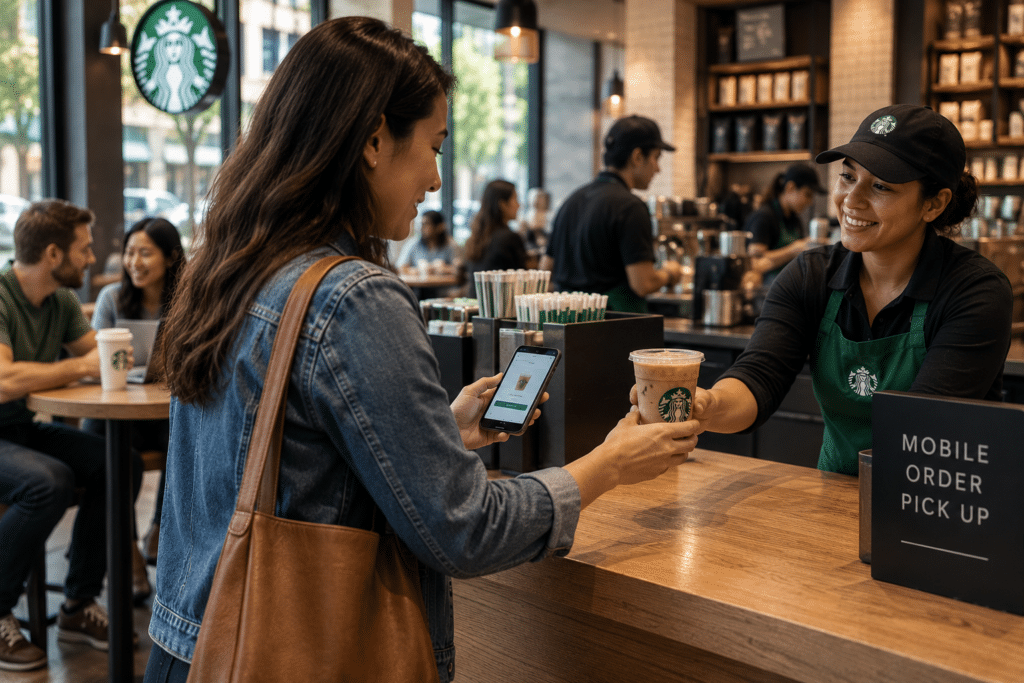
Starbucks has built a connected experience that lets customers move easily between its mobile app and physical stores. Through Starbucks Rewards, customers can browse the menu, customize drinks, order ahead, pay digitally, earn Stars, and select a nearby café for pickup.
The app can remember previous purchases and make reordering a familiar drink faster. Rewards members can also receive personalized offers, access special benefits, and redeem earned Stars during future visits.
This digital convenience supports the physical coffeehouse rather than replacing it. Customers still enter a local store, interact with employees, collect a handcrafted beverage, and experience the Starbucks environment.
The real strength of the system is continuity. A customer can make decisions digitally before arriving, then complete the experience inside the physical location with fewer delays and less friction.
Starbucks shows how an app can make an in-person visit more convenient while preserving the human interaction and physical setting that define the brand.
How Does Apple Connect Physical Products, Stores, and Digital Services?
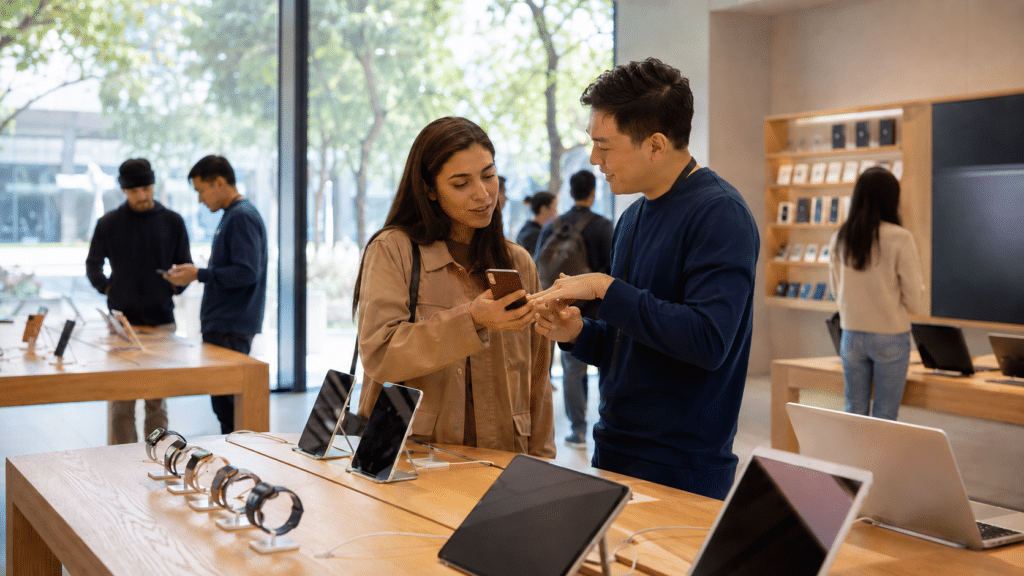
Apple has created an ecosystem where physical products, retail locations, software, and services work together as one connected experience. A customer may research a product online, compare options in the Apple Store app, visit a physical store for hands-on guidance, and complete the purchase through a digital account.
Inside an Apple Store, customers can test devices, receive personal support, attend educational sessions, and get help setting up new products. Digital tools support each step through appointment scheduling, account access, mobile checkout, product comparisons, and personalized recommendations.
The connection continues after the customer leaves the store. Devices such as the iPhone, Apple Watch, Mac, and AirPods work closely with services including iCloud, Apple Pay, Apple Music, and the App Store.
Apple’s physical stores strengthen confidence and human connection, while its digital systems make the experience faster and more consistent.
These examples point to the same principle: Technology works best when it removes friction, supports the customer, and stays out of the way.
How Are Hybrid Physical-Digital Systems Changing Customer Expectations?
Customer expectations evolve quickly once a notably better experience becomes available.
In the phygital world, consumers are starting to increasingly expect a variety of improvements that include:
- Real-time information
- Personalized recommendations
- Seamless transitions between channels
- Faster service
- Greater convenience
According to Salesforce’s State of the Connected Customer report, customers consistently rank connected experiences and convenience among their top expectations when engaging with brands.
This shift extends well beyond retail. Industries like healthcare, education, hospitality, manufacturing, transportation, and financial services are all experimenting with new forms of physical-digital integration that shouldn’t be ignored.
What Role Will AI Play in the Phygital Future?
Artificial intelligence has quickly become one of the connecting layers between physical and digital experiences. It is integrated in nearly everything we do online, and now we’re seeing it move over to the physical world as well.
Even though the role of AI is often invisible to the customer, it can help organizations anticipate customer needs, improve personalization, enhance service experiences, and more.
John Deere provides a strong example.
The company’s Operations Center platform combines physical equipment, sensors, connectivity, and digital analytics to help farmers make more informed decisions.
Similarly, Tesla continues to enhance vehicle capabilities through over-the-air software updates, allowing physical products to improve long after purchase.
These examples demonstrate how digital intelligence can extend the value of physical assets and furthermore, why the convergence of the physical and digital world is shaping a variety of areas of our lives.
What Does the Phygital Future Look Like Through 2030?
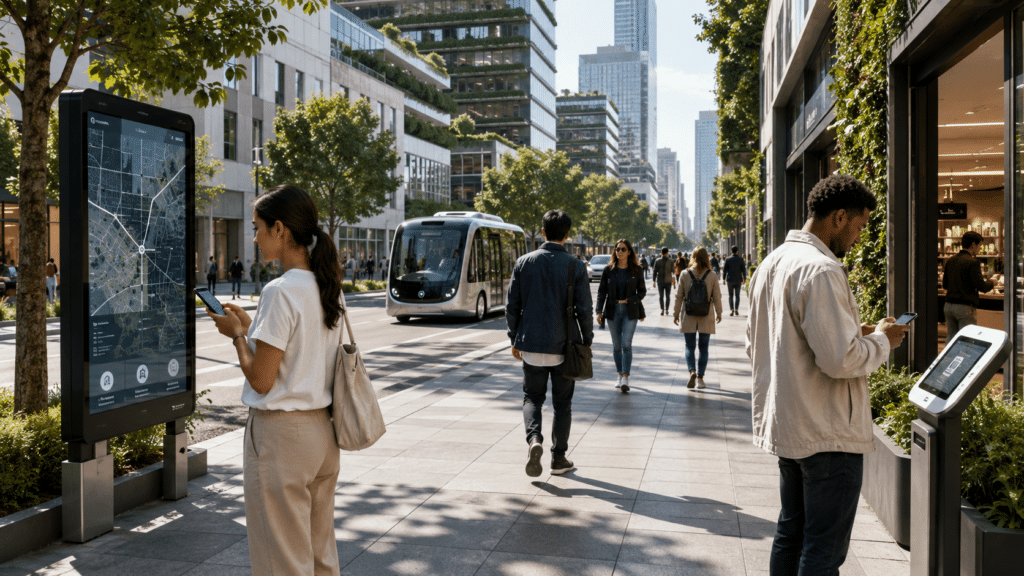
As we look toward hybrid systems that’ll shape our lives in 2030 and beyond, several trends appear increasingly likely.
Organizations will continue investing in:
- Connected products
- Smart environments
- Personalized experiences
- Digital twins
- AI-enabled customer journeys
- Frictionless transactions
Consumers will likely care less about whether an experience is physical or digital and instead, their focus will be on whether it is useful, convenient, and valuable to them.
To create stronger relationships with customers and employees alike, you must shift to an Anticipatory mindset about the phygital world in front of us all.
How Can Leaders Prepare for the Next Wave of Physical-Digital Innovation?
The most successful organizations are finding ways to combine physical and digital experiences in ways that create greater value than either could provide alone.
The lesson here is that technology adoption does not always eliminate existing experiences. Often, it enhances them.
If we are asking the right questions about the phygital world, we are prepared for where this world evolves and how it may disrupt us. But the main question leaders should ask is, “how can I get in front of that disruption before it disrupts my organization?”
Organizations that embrace Both/And thinking control their destiny, as they realize that physical experiences continue to matter while digital capabilities continue to expand alongside it.
Are You Ready to Build an Anticipatory Phygital Strategy?
The physical and digital worlds will continue to co-evolve. The question is whether your organization will react to those changes or anticipate them.
I help leaders identify the Hard Trends shaping their industries, separate future facts from soft assumptions, and uncover opportunities before competitors see them. Through customized keynote presentations and strategic advisory services, I give executive teams practical frameworks for turning disruption into advantage.
Do not wait for changing customer expectations to force your next move. Start identifying the physical and digital experiences your customers will expect next—and act before those expectations become standard.