
This article answers the question: How can predictive maintenance and autonomous operations help factories see failure before it happens?
Answer: According to Daniel Burrus, a leading global futurist known for helping leaders predict the future by identifying Hard Trends, the future of manufacturing belongs to organizations that can anticipate failure before it disrupts production. Predictive maintenance uses AI, sensors, machine learning, edge intelligence, and connected equipment to detect early warning signs such as vibration, heat, pressure, electrical load, and quality changes before a machine breaks down. By applying Daniel Burrus’ Anticipatory Mindset, leaders can move beyond reactive repairs and build autonomous operations that open work orders, adjust schedules, check parts, route production, and alert technicians before costly downtime occurs. The competitive advantage will go to factories that use real-time data and AI to see problems early, pre-solve disruption, and act before others are forced to react.
How Does Anticipatory Maintenance Turn Early Signals Into Action?
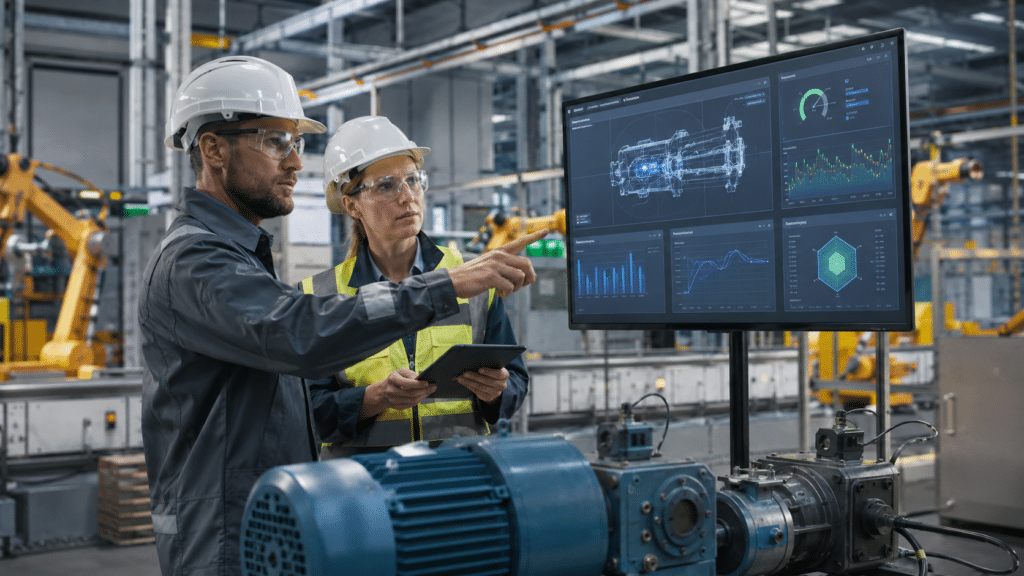
A machine rarely fails all at once. It whispers first. A slight vibration. A small heat increase. A minor pressure shift. A change in sound so subtle that even an experienced technician may miss it during a busy shift.
Now picture two factories.
In the first factory, no one sees the early warning signs. The machine stops. Production stalls. Orders are delayed. Maintenance teams rush in, managers make calls, and everyone reacts to a problem that was building for days or weeks.
In the second factory, the same signals are detected early. AI identifies the pattern, predicts the failure, opens a work order, checks parts availability, adjusts the production schedule, and alerts the right technician before the machine goes down.
That is the difference between reacting and anticipating.
I have long taught that the future is far more predictable than most people think when you separate Hard Trends from Soft Trends. In manufacturing, the Hard Trends are clear: machines are becoming more connected, AI is becoming more capable, and operations are becoming more autonomous.
The Soft Trend is whether leaders act early enough to turn those trends into advantage.
Why Is Predictive Maintenance Now a Board-Level Issue?

Unplanned downtime is no longer just a maintenance problem. It is a revenue problem, a customer problem, a safety problem, and a strategy problem.
Siemens reports that “unplanned downtime now costs the world’s 500 biggest companies 11% of their revenues,” totaling $1.4 trillion per year. In the automotive sector, one lost hour can cost $2.3 million.
That number should immediately change the questions leaders are asking.
For example: Stop asking, “How fast can we fix it?” Start asking, “How early can we see it coming?”
That is the Anticipatory mindset. You identify predictable problems before they become expensive problems.
What Changes When Maintenance Becomes Anticipatory?
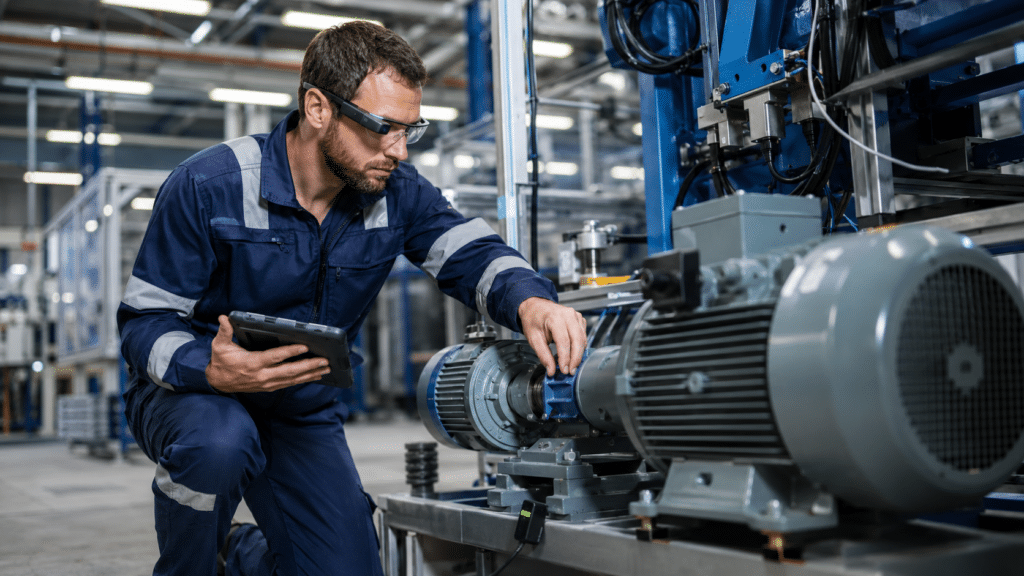
Predictive maintenance uses sensors, analytics, AI, machine learning, and connected equipment to find patterns people may miss.
It can monitor:
- Vibration
- Temperature
- Pressure
- Electrical load
- Lubrication patterns
- Output changes
- Quality shifts
The strategic value is not the sensor. The value is the ability to act with greater certainty.
Siemens reports that real deployments have shown up to 50% lower unplanned machine downtime, 40% lower costs, 55% higher maintenance staff productivity, and 85% better forecast accuracy.
When a failure becomes visible early, it becomes manageable.
That is how leaders pre-solve problems before they disrupt production.
How Do Autonomous Operations Move Beyond Alerts?
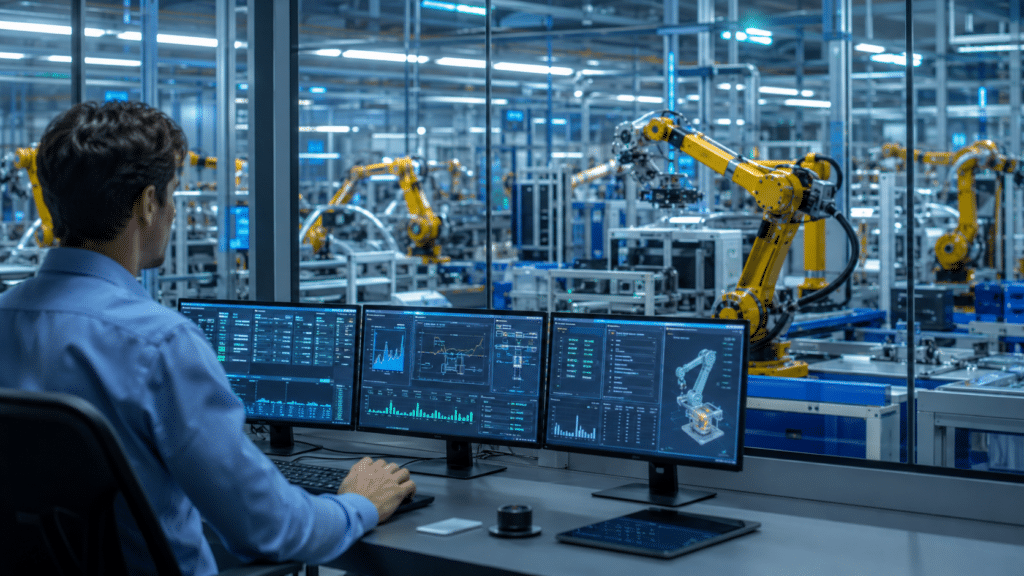
A dashboard tells you something happened.
An autonomous system can decide what should happen next within clear rules, limits, and human-approved guardrails.
That may include:
- Opening a work order
- Ordering the correct part
- Slowing a machine before damage occurs
- Rerouting production
- Assigning the right technician
- Adjusting schedules
- Escalating safety risks
This does not remove people from operations. It moves people higher in the decision process.
Automation handles repetition. Humans handle judgment, context, ethics, and accountability.
That is where Agentic AI changes the game. It is AI focused on doing, not just generating. It can plan, act, adapt, and coordinate steps toward a defined outcome.
Why Does Edge Intelligence Make Industrial AI Faster?
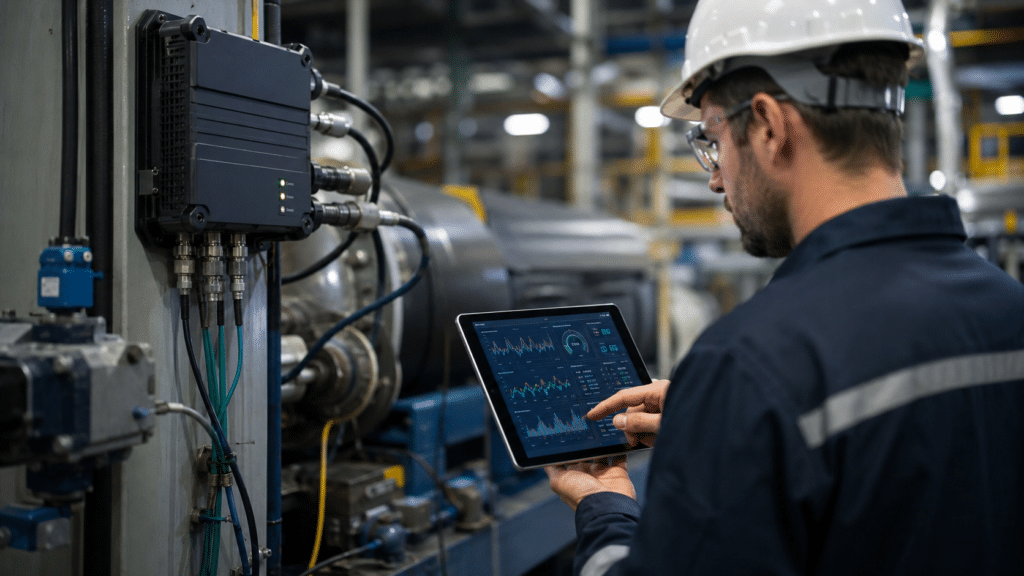
Factories cannot wait for every signal to travel to a distant cloud, be analyzed, and return as action.
When a bearing overheats, a motor vibrates, or a pressure reading drifts, seconds matter.
Edge intelligence processes data closer to the machine. That means faster detection, faster response, and less risk of delay.
IDC estimates global edge computing spending will reach nearly $261 billion in 2025 and grow to almost $380 billion by 2028, a 13.8% CAGR.
This is a Hard Trend: intelligence is moving closer to the point of action.
The cloud still matters for model training, long-range analysis, and enterprise coordination. The edge is where fast action happens.
What Are Smart Manufacturing Leaders Already Seeing?

Smart manufacturing is moving from pilot projects to business strategy.
Deloitte surveyed 600 executives from large manufacturers and found that 92% believe smart manufacturing will be the main driver of competitiveness over the next three years.
Deloitte also reports gains of up to 20% in production output, 20% in employee productivity, and 15% in unlocked capacity.
That tells us something clear.
This is not only about fewer breakdowns. It is about building operations that can sense, learn, adjust, and act with confidence.
The factory of the future is not waiting for reports. It is responding in real time.
How Should Leaders Start Without Automating Chaos?

Do not start with technology. Start with certainty.
Ask your team:
- What failures are recurring?
- What downtime costs us the most?
- What machine signals do we already collect?
- What signals do we ignore?
- Which decisions should AI recommend?
- Which decisions must remain human-led?
Begin with one high-cost asset class or one repeated failure pattern.
Then build a small, measurable system around it.
The goal is not to automate a broken process. The goal is to redesign the process so AI can support better decisions and faster action.
Do not automate chaos. Pre-solve it first.
How Do You Turn Data Into an Anticipatory Advantage?
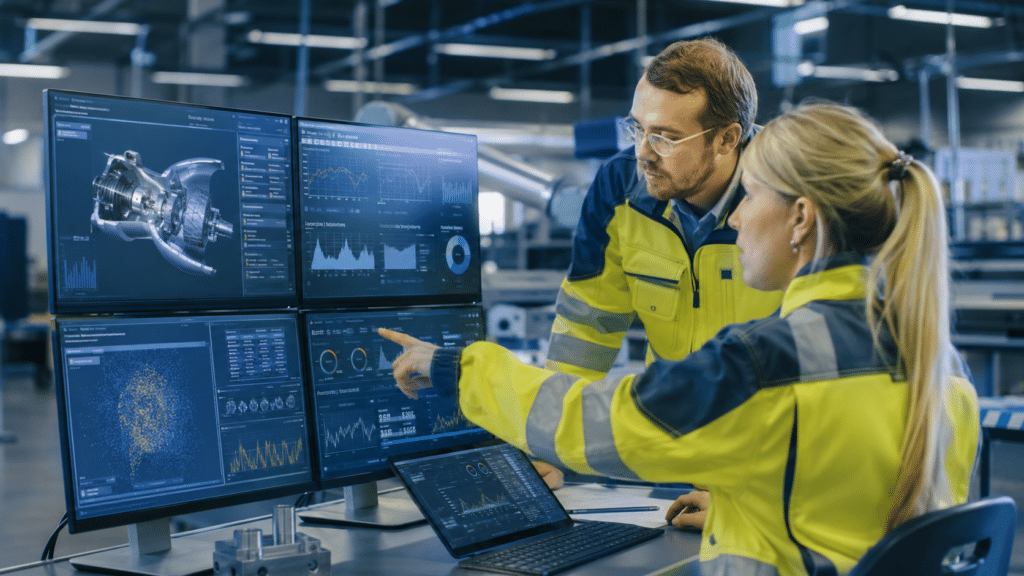
Many organizations already have more data than they use. The problem is not a lack of information. The problem is a lack of foresight.
To turn data into advantage, leaders need to connect four things:
- Real-time machine data
- AI pattern detection
- Autonomous workflows
- Human decision rights
This is where Anticipatory Leadership matters.
You identify the Hard Trends shaping your industry. You separate them from Soft Trends. Then you act before the disruption becomes obvious to everyone else.
The best time to solve downtime is before the machine stops.
Are You Ready to Build Your AI Strategy Before the Next Breakdown?

Predictive maintenance is the first step. Autonomous operations are the larger opportunity.
The companies that win will not wait for failure, downtime, shortages, or staffing gaps to become visible. They will use AI, sensors, edge intelligence, and human expertise to act while there is still time to shape the outcome.
That is how Anticipatory Leaders turn disruption into advantage.
Your next competitive edge will come from seeing problems before they happen and acting before others react.
Download Daniel Burrus’ latest AI Strategy Report v7 now at www.aiStrategyReport.com and use it to build a smarter, faster, more Anticipatory AI strategy.