
This article answers the question: What is the real-time economy, and how is instant access changing business expectations?
Answer: According to Daniel Burrus, a trusted, globally recognized futurist and AI strategy expert, the real-time economy is emerging as information, decisions, payments, services, and feedback move with almost no delay. As AI, faster networks, edge computing, real-time data, and instant digital services advance, customers and businesses increasingly expect faster answers, smoother transactions, and immediate responsiveness. Leaders who apply an Anticipatory Mindset can identify the Hard Trends driving this shift, redesign products and services around speed, reduce friction, and act before instant access becomes the standard competitors are forced to meet.
How real-time information, AI, and instant service are resetting expectations across business and everyday life.

Think for a moment about how often you expect an answer immediately. Whether that question be something about your diet, fixing something in your home, or buying something new, we are a culture of immediacy.
Other than questions and various inquiries, we rely heavily on tech as we check our bank accounts constantly and expect payments to appear within seconds. We also order packages and watch them move across a map in real time.
Some of these tasks we expect to happen before we’ve even finished our morning coffee.
We’re living in a real-time economy where information, decisions, and services move with almost no delay. And this acceleration is far from reaching its limit.
As instant access becomes the expectation, the organizations and individuals that succeed will be those who anticipate what comes next. They’ll recognize how immediacy is changing the way we work, make purchases, solve problems, and create new opportunities.
Why Are Expectations Changing So Quickly?

Technology has always influenced our behavior, even prior to tech being viewed as something digital.
But what’s different today is the speed at which expectations evolve once people experience something better.
Real-time payments become available, and waiting three business days suddenly feels outdated. AI shortens research from hours to minutes, and patience for slow processes begins to disappear. The standard changes because people adjust their expectations almost overnight with the speed of new technology.
Real-time payments offer a clear example of how quickly expectations can change. According to Federal Reserve Financial Services, the FedNow® Service processed nearly 5 million settled payments totaling more than $274 billion in the second quarter of 2026. Once money can move between participating financial institutions within seconds, around the clock, waiting several business days begins to feel increasingly outdated.
What Does a Real-Time Economy Look Like?
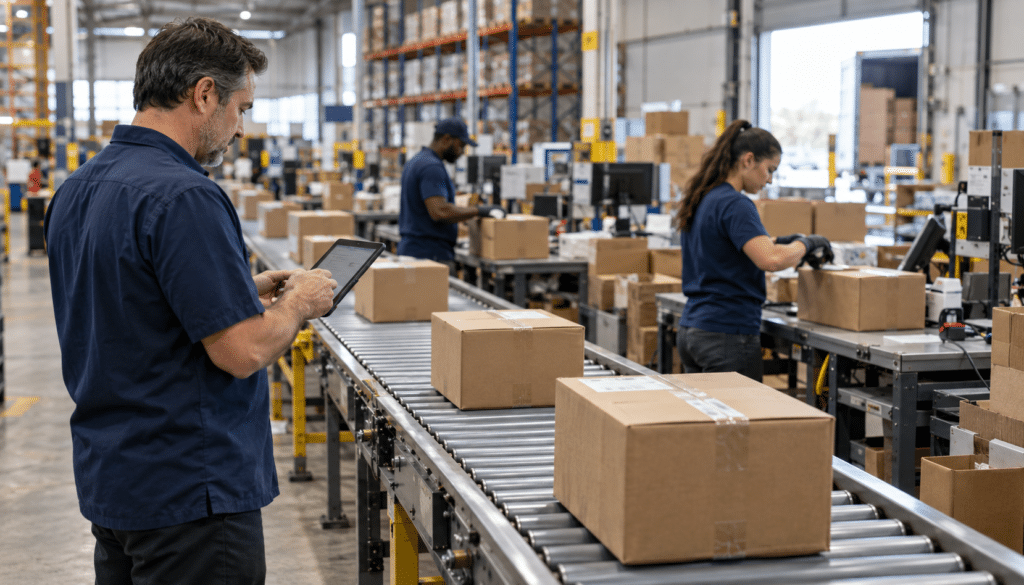
It’s easy to think of immediacy as a consumer convenience. However, in reality, it reshapes entire systems.
Here are a few examples to consider that are already taking shape:
- Manufacturers use real-time systems to detect equipment issues before they interrupt production
- Retailers continuously adjust inventory using live demand signals
- Logistics companies reroute shipments around weather events and traffic conditions
- Financial institutions process transactions in seconds instead of days
- Healthcare providers monitor patients remotely and receive alerts when intervention may be needed
These examples share something in common. Every decision improves because information arrives when it’s still useful.
Does Instant Access Mean More Pressure?

Not necessarily. This is where I personally believe many conversations miss the point.
People often worry that a faster world leaves less time to think. But that’s only true if we’re reacting to every new development. Anticipatory leaders approach the challenge differently. They identify what is predictable, prepare before circumstances demand it, and create room for better decisions.
Speed doesn’t eliminate strategy. In many cases, anticipation makes speed possible. When you already understand the Hard Trends shaping your industry, you spend less time scrambling for answers because you’ve prepared for the questions in advance.
What Happens When Feedback Is Instant?

There is an enormous shift in receiving feedback heading our way soon. The one I see coming is instant feedback loops.
Businesses won’t have to wait weeks to understand customer behavior. Instead, products will improve continuously based on real-world usage, marketing campaigns will adapt while they’re still running, and supply chains will respond to changing demand before shortages develop.
McKinsey’s 2026 research found that companies embedding real-time data, digital workflows, and advanced analytics into their operating models reported the largest productivity improvements. The research also links mature operating systems with a greater ability to absorb disruption and scale AI across the organization.
That’s an opportunity, not because technology makes decisions for us, but because it gives us better information with which to make them.
What Should We Expect From the Zero-Latency Future?

Complete zero latency may remain an engineering goal in many applications, but the direction is unmistakable.
- Networks continue becoming faster
- AI models continue becoming more capable
- Edge computing reduces delays by processing information closer to where it’s created
Together, these developments are shaping what many describe as the zero latency future.
Yet how organizations redesign products, services, and customer experiences when delays become increasingly rare is something we should all be considering in an Anticipatory way.
How Can Anticipatory Thinking Reduce Uncertainty?

I’ve spent much of my career encouraging leaders to separate what might happen from what will happen, which is the very foundation of Hard Trend future certainties.
- We know computing power will continue advancing
- We know AI will become more capable
- We know customers will continue expecting greater convenience and faster service
One of my recent blogs explores this idea by showing how certainty gives leaders the confidence to innovate instead of waiting for disruption to force change. That perspective is especially valuable as the real time economy continues to take shape. It reminds us that the future isn’t something that happens to us but is something we can influence when we recognize the direction of change.
What Choice Does Every Leader Face?

Every significant technological shift presents two options: You can spend your energy worrying about how quickly the world is changing, or you can spend it identifying the Hard Trends already shaping tomorrow and deciding how you’ll create value because of them.
The technologies behind the real-time economy will continue advancing, but what remains entirely within our control is how we choose to respond.
That’s why I remain optimistic. History consistently shows that people who anticipate predictable change help build the future we all partake in.
How Will You Prepare for What Comes Next?

The real-time economy will continue to accelerate. The question is whether your organization will react to change or anticipate it.
Daniel Burrus helps leaders identify Hard Trends, spot opportunities before competitors, and build strategies around what they can already see coming. If you want to prepare your organization for the next wave of change, explore Daniel’s work, books, speaking programs, and Anticipatory Thinking resources at Burrus.com.