Future of Work Statistics: Key Trends Shaping Jobs and the Workforce
AI, shifting skill requirements, declining engagement, and demographic pressure are reshaping how organizations hire, develop, and retain their workforce. The leaders who navigate this well aren’t reacting after the fact. They’re acting on what the data already shows.
Looking to inspire bold, future-ready thinking at your next event? Hire futurist Daniel Burrus as your AI keynote speaker and spark real innovation.
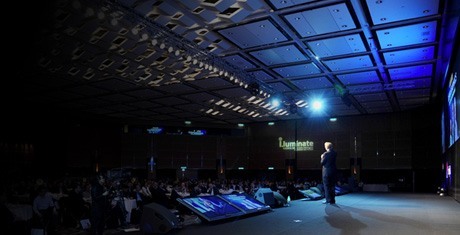
Watch the reaction to Daniel Burrus’ Recent Keynote presentation.
Daniel Burrus has over three decades of being right about where things are going, which is evidenced by his long and diverse list of repeat clients. Daniel has worked with leaders from Fortune 500 companies, the Pentagon, and heads of State-delivering powerful insights and actionable strategies.
By applying Daniel Burrus’ principles to our business, in less than a year we have been able to double our revenues and increase the value of our company by a factor of four, and we feel the biggest impact is yet to come.
We are going through an incredible digital transformation right now, and in his keynote speech, Daniel touched on a large number of points that tied everything together with practical strategies that we can immediately take action on.He really energized our dealer network to embrace the transformation that we’re going through.I can’t recommend Daniel enough!
“Your keynote at our digital annual convention was perfect. The Hard Trend future facts you shared was exactly what our industry leaders needed.It gives them a critical view that provides confidence for decision making.”
Daniel Burrus did a truly outstanding job as the opening keynoter for our CIO 100 2017 Symposium conference. He impressed our audience of 350+ Chief Information Officers and senior IT executives with his innovative ideas, business acumen and – most importantly — his thorough understanding of the challenges they face as enterprise technology leaders.
“You covered all the key points we discussed and more in your digital keynote to our audience of executive customers, and you customized your examples for our industry in just the right way.”
“Daniel delivered a great keynote at our Annual Global User Conference; his presentation was nicely tuned to our audience and the examples he incorporated were all accessible and helpful. It’s not easy to find compelling speakers who appeal to a broad audience and also convey something practical, but Daniel sailed over this bar. I would enthusiastically recommend him to companies looking to inspire innovative thinking.”
A ‘must-hear’ presentation.
It came as no surprise that you were rated the top speaker in our audience evaluations. Your unique blend of wit and insight awakened all of us to the need to develop the knowledge network necessary to move to a 21st century mind set.
Daniel studied the details about our audience in advance and listened carefully to our objectives for his keynote speech. He seamlessly incorporated every key point we discussed. As a result, the audience hung on every word, relating directly with each insight and recommendation. It’s no wonder he received a standing ovation. People are still buzzing.
Daniel Burrus was the keynote speaker at the ITF STORE Capital 2018 conference, and he was amazing – thought provoking, interesting, relevant to the business leaders in the audience. He customized the program for the group, and he did his homework. Many of the attendees are continuing to talk about his presentation and content. He was terrific to have right before lunch to spark lots of good conversation. I would highly recommend Daniel to speak to any leadership group that is interested in being prepared for the future and learning ways to be more innovative in their business.
Your presentation and interactive discussion with the Agents Council for Technology was a transforming event for our group. You helped us look at trends in a much more methodical way that will enable us to rework our Vision of the Future document into a much more credible and living tool for our industry.You spent the time in advance to understand our issues and then applied them actively throughout your presentation.
This is the third time you’ve addressed this conference and each presentation has been better than the last… and I wouldn’t hesitate inviting you back to a future conference!
Our people, without exception, felt that your ideas were provocative, original, and timely. Your entertaining style captured the audience and compelled them to listen, think, and apply your thoughts to their own professional and personal lives.You truly made a memorable impression on the audience.
“Your comments and insight were perfect and led right into the topics we planned to present at our digital event. Survey responses were highly complementary after the event concluded. Many thanks for your time and talent.”
You were fabulous! You received rave reviews from our participants for the relevancy, insight and expertise of your presentation material and style.You are the only keynote speaker we have invited back numerous times. I am convinced the extraordinary success of your continued contribution is due in no small part to the enormous amount of time you put into each presentation by customizing it to fit the unique and challenging needs of our CMO audience each year.
I don’t know any other speaker that could present after Bill Gates and ‘wow’ an audience of CEOs like you did! You were the perfect choice.
Your thoughts on how to create an opportunity for change through a customer focus is the excellence our team is striving for. The framework you provided on innovation, creativity and customer value will be instituted as a management practiceto enable the technology infrastructure group to take Wells Fargo to the next stage.
We hired Daniel as the keynote speaker for both our Business Innovation Technology Summit as well as our annual company meeting. I was thoroughly impressed with not only his actual keynote speeches, but even more so with his preparation process beforehand. We had a great conversation via phone a couple weeks beforehand where I realized how much he genuinely cared about catering his speech specifically to our audience, as well as aligning it with the message we wanted to send as a company. He is engaging, incredibly well spoken, and great to work with.
“Daniel Burrus is a dynamic speaker and delivered a lot of “aha” moments with his insights. I appreciated the activity and takeaways that he left the audience with. Daniel also was very engaging before the meeting, asking our clients questions, taking notes, and genuinely interested in learning more about our clients’ business.”
“Daniel is a powerful business strategist bringing significant value to those he works with.”
Daniel Burrus delivered! Not only did he do the upfront homework and research, ensuring that he fully understood the SPECS audience, but he presented an excellent keynote address that hit all the points we discussed in advance. He was interesting, knowledgeable, and dynamic. Our audience is still raving about his performance — and I would hire him again in a heartbeat.
“Daniel Burrus was exceptional, and we are thankful for the opportunity to have him join our meeting. Thank you for everything you have done in making our Annual Partner Meeting a huge success.”
Daniel came highly recommended and delivered on his Keynote at the Global CISO Executive Summit. He made the keynote interactive and challenged participants to put their newly gained insights to work in an interactive session identifying trends that you can anticipate and prepare for through strategic planning.
“Daniel Burrus did an excellent job. The feedback was extremely positive and he made me look like a genius.”
“Your digital presentation to the hospital CEOs gave them a new anticipatory mindset to view the present and future. This was exactly what they needed to help them design transformational strategies going forward.”
“Daniel Burrus exceeded our expectations, it was simply out of this world!”
“The feedback from the attendees on Daniel Burrus has been excellent. The content was right on point and very eye opening for everyone.”
Our practitioners were invigorated by the presentation and they left the conference thinking differently about how to navigate the road ahead. Daniel Burrus was 100% on point aligning our message to our conference’s theme.
Daniel Burrus, a globally recognizedfuturist keynote speaker who has advised Fortune 500 organizations for more than 40 years, helps executive teams anticipate these shifts before competitors recognize the urgency. This article brings together verified statistics from authoritative sources across six dimensions of workforce change.
Future of Work Statistics at a Glance
5.2 million: U.S. employment projected to grow by 5.2 million jobs from 2024 to 2034, led by healthcare and social assistance (BLS, August 2025 — projection)
55%: 55% of LinkedIn’s global members could see their jobs change to some degree due to generative AI (LinkedIn Economic Graph — role analysis estimate, not a confirmed future outcome)
39%: 39% of workers’ core skills are projected to be transformed or become outdated by 2030 (WEF Future of Jobs Report 2025 — projection)
20%: Global employee engagement fell to 20% in 2025, its lowest level since 2020 (Gallup State of the Global Workplace 2026 — measured survey)
$10 trillion: Estimated global cost of disengagement in lost productivity in 2025 (Gallup 2026 — modeled estimate)
800 million+: More than 800 million jobs globally are highly vulnerable to climate extremes and the net zero transition (Deloitte, November 2022 — modeled estimate)
AI Is Reshaping Jobs, But the Data Is More Nuanced Than “AI Will Replace Workers”
LinkedIn’s analysis of more than one billion professional profiles found that 55% of its global members could see their jobs change to some degree due to generative AI. The word “change” is doing significant work in that sentence. It does not mean elimination. It means tasks, skills, and workflows are shifting within existing roles.
As Burrus consistently observes, the right executive question is not which jobs AI will eliminate but which tasks are changing and where people and AI can create greater value together. The WEF projects AI and data processing will create 11 million new global roles by 2030 while displacing 9 million. Net positive, but the jobs created and displaced are not the same jobs. That mismatch is where the real workforce challenge lives.
Employment Is Expected to Change, Not Simply Disappear
BLS projections for 2024 to 2034 show U.S. total employment growing by 5.2 million jobs to reach 175.2 million. Healthcare and social assistance is the fastest-growing sector at 8.4%, driven by an aging population and rising chronic conditions.
Job displacement and job creation are happening simultaneously across different industries. The executive planning question is not whether work will exist. It is whether the organization is building the capabilities to compete for the roles that will.
Skills Will Be One of the Biggest Workforce Battlegrounds
The WEF projects that 39% of workers’ core skills will be transformed or become outdated between 2025 and 2030. AI, big data, and cybersecurity are the fastest-growing technical skills. Analytical thinking, resilience, and leadership are rising alongside them.
The pace at which technology is changing work requires organizations to treat capability development as an ongoing operational function. Skills planning built around job titles alone will produce workforce gaps before the decade ends.
Employee Engagement Remains a Major Business Challenge
Gallup’s State of the Global Workplace 2026 found that global engagement fell to 20% in 2025, the second consecutive annual decline. Gallup estimates the cost at $10 trillion in lost productivity globally in 2025 alone.
Manager engagement dropped nine points since 2022, from 31% to 22%. Gallup’s research identifies managers as accounting for 70% of team-level engagement variance. When managers disengage, the downstream effects on productivity and retention compound quickly. Organizations investing heavily in AI while neglecting management quality will consistently underperform.
Demographic Change Will Reshape the Global Workforce
In many economies, the most immediate workforce challenge over the next decade will be finding enough workers rather than managing displacement. Aging working-age populations are reducing labor availability across high-income economies in Europe, East Asia, and North America.
The WEF identifies demographic shifts as one of five structural drivers reshaping global employment by 2030. Healthcare and care roles are among the largest projected growth areas precisely because of population aging. Executives who assume future workforce pressure will be primarily technology-driven may be underprepared for markets where talent availability is the binding constraint.
Climate and the Green Transition Are Also Changing Jobs
Deloitte’s 2022 research found that more than 800 million jobs globally, roughly one quarter of the workforce, are highly vulnerable to climate extremes and the economic transition toward net zero. The same research projected that coordinated decarbonization could create more than 300 million additional green collar jobs by 2050.
The future of work is being shaped by multiple structural forces simultaneously. Climate disruption is not a distant concern for workforce planners, particularly in Asia Pacific and Africa where more than 40% of employment in some countries sits in highly exposed sectors.
What Future of Work Statistics Mean for Business Leaders
Five practical implications for executive decision-makers:
Plan around capabilities, not headcount. The WEF’s 39% skills disruption projection makes title-based workforce planning insufficient.
Keep the human side visible. Gallup’s engagement data shows technology investment without management quality produces predictable underperformance.
Invest in adaptability. Skills development and learning capacity become more valuable as job requirements shift faster.
Monitor multiple forces. AI, demographics, and climate are reshaping labor markets simultaneously. Single-variable workforce planning misses the full picture.
How to Interpret Future of Work Statistics Without Getting Misled
Before using any workforce statistic in planning, verify the publication year, measurement period, geography, and whether the number is observed or projected. U.S. and global figures are not interchangeable. Projections are not guarantees.
The LinkedIn 55% figure is instructive. “Jobs could change to some degree” is materially different from “55% of jobs will disappear.” One is a measured estimate of role transformation. The other is a displacement claim the underlying data does not support. Precision in how statistics are read determines whether they inform strategy or distort it.
Preparing for the Future of Work
The statistics in this article describe changes already underway. AI is transforming tasks now. Skills gaps are widening now. Engagement is declining now. Demographics are shifting now.
As afuture of work keynote speaker,Daniel Burrus helps executive teams separate the Hard Trends that are certain from the Soft Trends that are still shapeable. If your leadership team is ready to move from reactive to anticipatory,work with Daniel Burrus to build that capability before the window closes.
Frequently Asked Questions
What are the biggest future of work trends? AI and technological change, shifting skill requirements, declining employee engagement, demographic shifts affecting labor supply, and the green transition are the most significant structural forces currently reshaping how organizations hire, develop, and retain their workforce.
How will AI affect the future of work? AI is changing tasks, skills, and job structures across industries. Current evidence points to role transformation rather than mass elimination, with WEF projecting net global job creation of 78 million by 2030 alongside meaningful displacement in specific roles.
Will AI eliminate jobs? AI is automating and transforming parts of many jobs, but transformation is not elimination. Labor markets can experience displacement and creation simultaneously. WEF projects 170 million new roles and 92 million displaced globally by 2030.
Will there still be jobs in 2030? Yes. BLS projects U.S. employment growing by 5.2 million between 2024 and 2034. WEF projects a net global increase of 78 million jobs by 2030. The composition and required skills of those jobs will shift significantly.
What skills will be important in the future of work? WEF identifies AI and big data, cybersecurity, and technology literacy as the fastest-growing technical skills. Analytical thinking, resilience, flexibility, and leadership are also rising in importance alongside technical capabilities through 2030.
How many workers are engaged at work globally? According to Gallup’s State of the Global Workplace 2026 report, 20% of employees worldwide were engaged in 2025. That means 80% of the global workforce is either not engaged or actively disengaged, at its lowest level since 2020.
How is generative AI changing jobs? LinkedIn’s Economic Graph found that 55% of its global members could see their jobs change to some degree due to generative AI. The primary effect is task and skill transformation within existing roles rather than wholesale elimination.
What industries are expected to create the most jobs? BLS projects healthcare and social assistance as the fastest-growing U.S. sector from 2024 to 2034. WEF identifies green economy roles, technology, and care-related occupations as major global growth areas through 2030.
How will demographics affect the future of work? Aging working-age populations are reducing labor availability in many high-income economies. Demographic shifts are one of five structural drivers WEF identifies as reshaping global employment by 2030, contributing to talent shortages particularly in healthcare.
How should business leaders prepare for the future of work? Monitor structural changes early, plan workforce strategy around capabilities rather than job titles, invest in continuous skills development, maintain focus on employee engagement, and build organizational adaptability as a deliberate strategic priority.
Book Daniel Burrus for Your Next Event
If you want to transform your team’s understanding of artificial intelligence and spark innovation across your organization, consider booking Daniel Burrus, a best selling author and artificial intelligence keynote speaker, for your next conference or corporate event.
Visit www.burrus.com to learn more or to request availability.
Because the future isn’t something you react to. It’s something you create—and the right keynote speaker can show you how. Booking an AI expert like Daniel Burrus can transform your team’s understanding of AI and its potential impact on your business strategy.