
This article answers the question: Why are autonomous systems expanding beyond self-driving cars, and how can business leaders use them to create future advantage?
Answer: According to Daniel Burrus, a leading global futurist known for helping organizations predict the future by identifying Hard Trends, autonomous systems are becoming far more than self-driving cars. The convergence of AI, robotics, sensors, connectivity, drones, autonomous agents, and machine intelligence is creating a new capability layer across logistics, agriculture, business workflows, customer experience, and everyday life. By applying Daniel Burrus’ Anticipatory Mindset, leaders can separate future certainties from assumptions, identify where autonomous systems will reduce friction and increase speed, and act before competitors recognize the opportunity. The future advantage will belong to organizations that stop seeing autonomy as simple automation and start using it as a strategic system for sensing, deciding, acting, and improving in real time.
Why Are Autonomous Systems Expanding Far Beyond Self-Driving Cars?
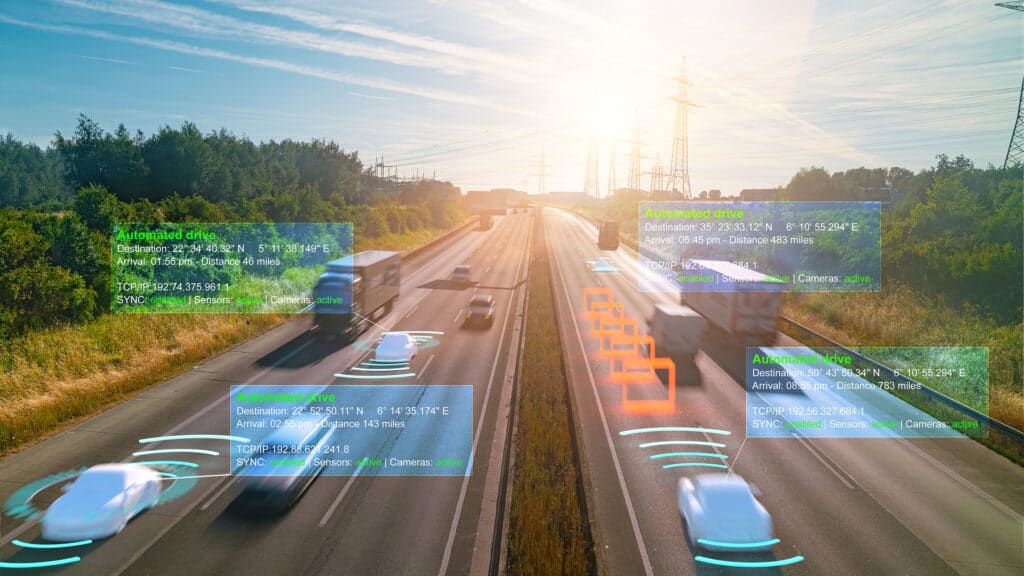
When you hear the phrase “autonomous systems,” do you first think of self-driving cars?
Most likely. But to me, that’s just the starting point.
What’s really happening is far more expansive and far more impactful. Autonomy is moving into logistics, agriculture, business workflows, and everyday life.
Autonomy is no longer a single technology category. It is becoming a capability layer across the economy.
The convergence of AI, robotics, advanced sensors, and connectivity will keep accelerating. When these technologies combine, they move into new use cases faster than most people expect.
That makes autonomy a Hard Trend. You can debate timing, use cases, and adoption curves. But you cannot debate the direction.
How Are Autonomous Agents Moving Into Core Business Workflows?

To understand this shift, we need to rethink what automation really means.
In the past, machines followed instructions. Today, autonomous agents can interpret information, make decisions, and act with far less step-by-step human direction.
That is a major shift.
According to Gartner, 40% of enterprise applications will include task-specific AI agents by the end of 2026, up from less than 5% in 2025. That tells us agentic AI is moving from early testing into the systems businesses use every day.
When multiple agents begin working together, digital AI can coordinate with physical robotics. That creates agentic systems that manage entire workflows.
Think of this change as moving from tools that assist us to systems that act on our behalf.
How Do Agentic Systems Make Decisions Beyond Basic Automation?
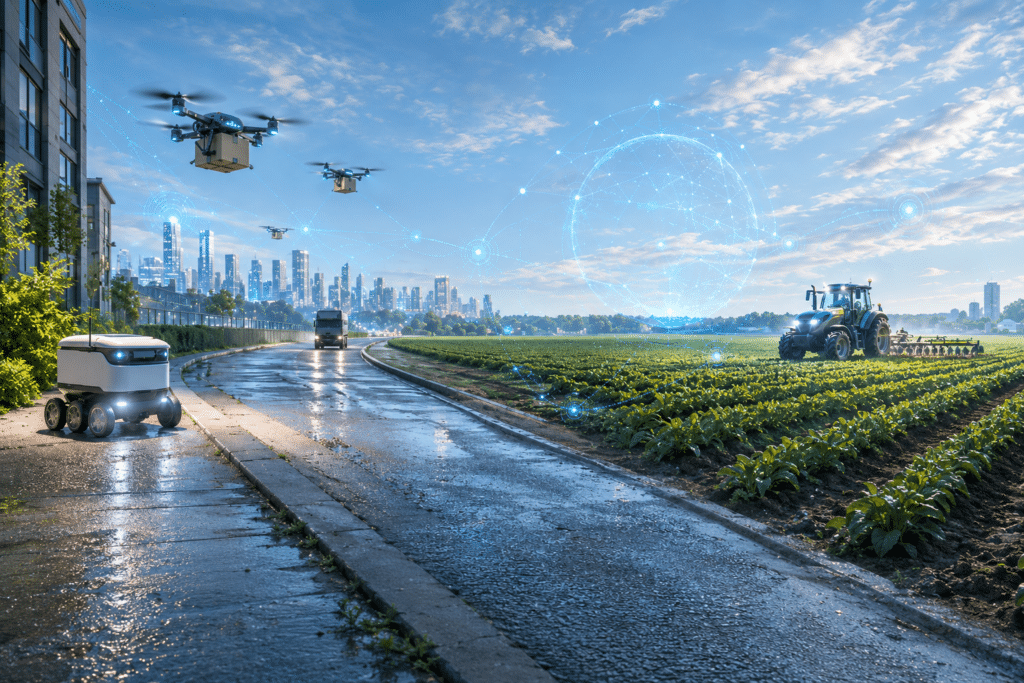
Basic automation follows rules.
Agentic systems respond to goals.
That difference matters because the system can adapt when conditions change. It can analyze inputs, coordinate tasks, and choose the next action without waiting for a human to issue every command.
This is where leaders need to shift their thinking.
Ask better questions:
- Where are people repeating predictable decisions?
- Where does speed create measurable value?
- Where can systems coordinate tasks better than disconnected teams?
- Where can autonomy remove friction for customers?
The strategic value is not replacing people. The value is freeing people to focus on higher-level judgment, creativity, and direction.
How Are UAVs and Robotics Redefining Logistics and Fulfillment?
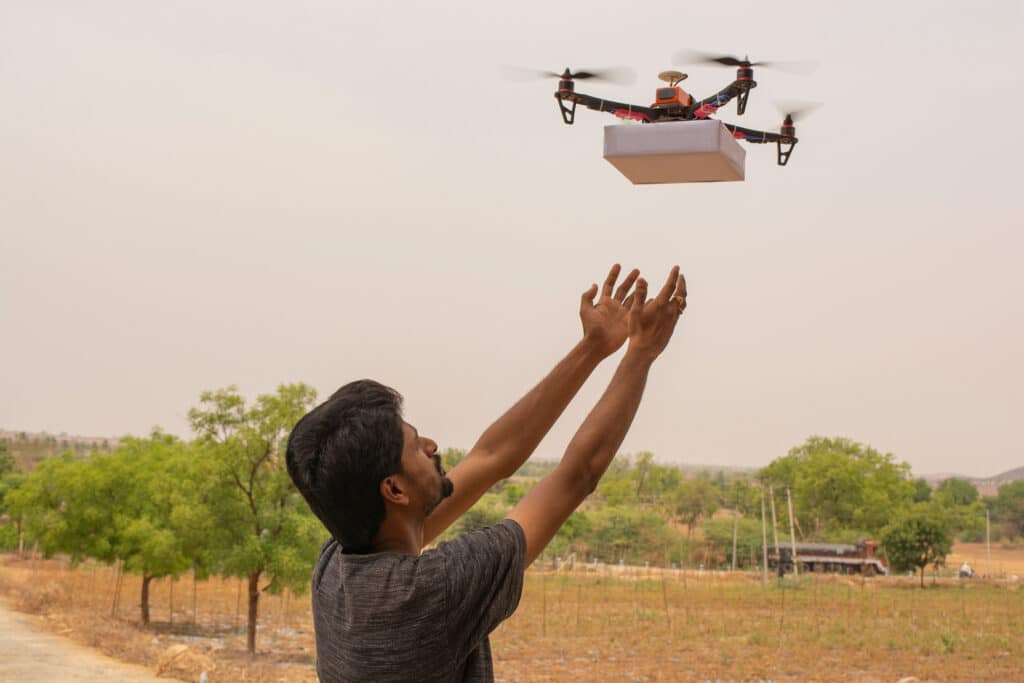
Nowhere is this shift more visible than in logistics.
For years, logistics focused on route optimization, cost reduction, and delivery efficiency. Today, the focus is moving toward real-time coordination.
You can see this in the rise of UAVs, warehouse robotics, autonomous fulfillment, and AI-directed supply chain systems.
The International Federation of Robotics reported that 542,000 industrial robots were installed globally in 2024. That shows robotics is no longer a limited factory trend. It is becoming part of the operating model for modern production and fulfillment.
The power is not in one robot or one drone. The power is in coordination.
- Drones can handle selected last-mile delivery routes
- Robots can manage fulfillment center movement
- AI systems can optimize timing, inventory, and routing
- Human teams can focus on exceptions and strategy
The result is a system that moves faster than any single part could alone.
How Does Drone Delivery Show Autonomous Logistics at Scale?
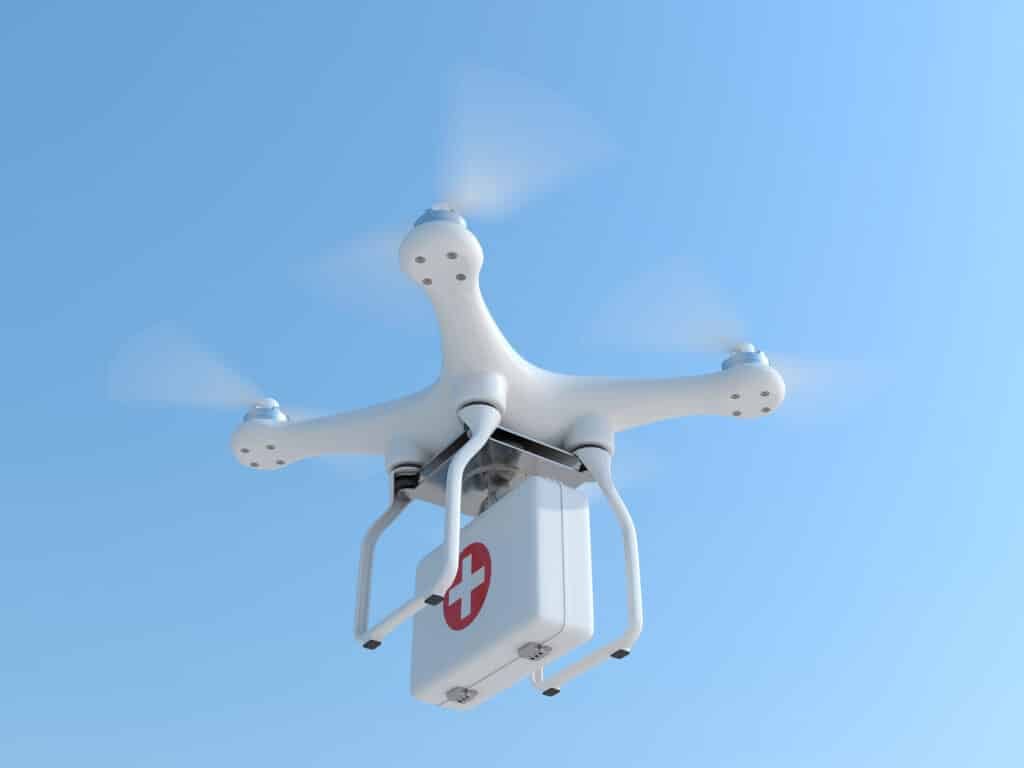
Drone delivery is often treated as a novelty. I see it as a strategic signal.
Zipline reports more than 130 million autonomous miles flown, making it one of the clearest proof points for autonomous delivery at scale.
That matters because drone delivery solves more than a delivery problem. It solves a timing problem.
In healthcare, agriculture, retail, and emergency response, time changes outcomes. A faster system can create a better result.
That is why UAVs should not be viewed only through the lens of package delivery. They are part of a larger movement toward autonomous logistics.
The bigger question is this: Where does speed create a new advantage in your business?
How Is Autonomous Agriculture Moving From Reactive to Predictive?
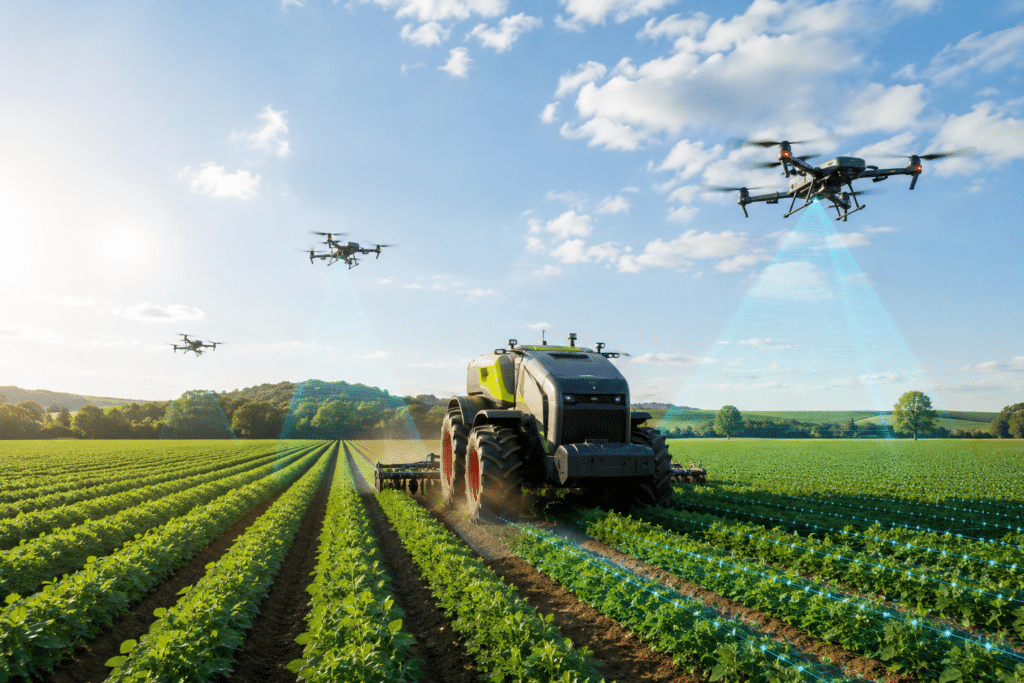
While logistics gets attention, agriculture is moving quickly in its own direction.
Autonomous tractors can operate with precision. Drones can monitor crop health. AI can help identify problems before they are visible to the human eye.
This changes how decisions are made.
Instead of reacting after a problem becomes obvious, farmers can act earlier with better data. That moves agriculture from reactive to predictive.
Global Market Insights estimates the autonomous tractor market at $2.7 billion in 2025, with projected growth to $14.6 billion by 2035. That points to a major shift from traditional equipment toward self-directed agricultural systems.
This is not only about farming efficiency. It is about food supply, labor shortages, resource use, and precision.
Autonomous agriculture is a clear example of how a Hard Trend becomes a business opportunity.
How Are Autonomous Systems Already Entering Everyday Life?
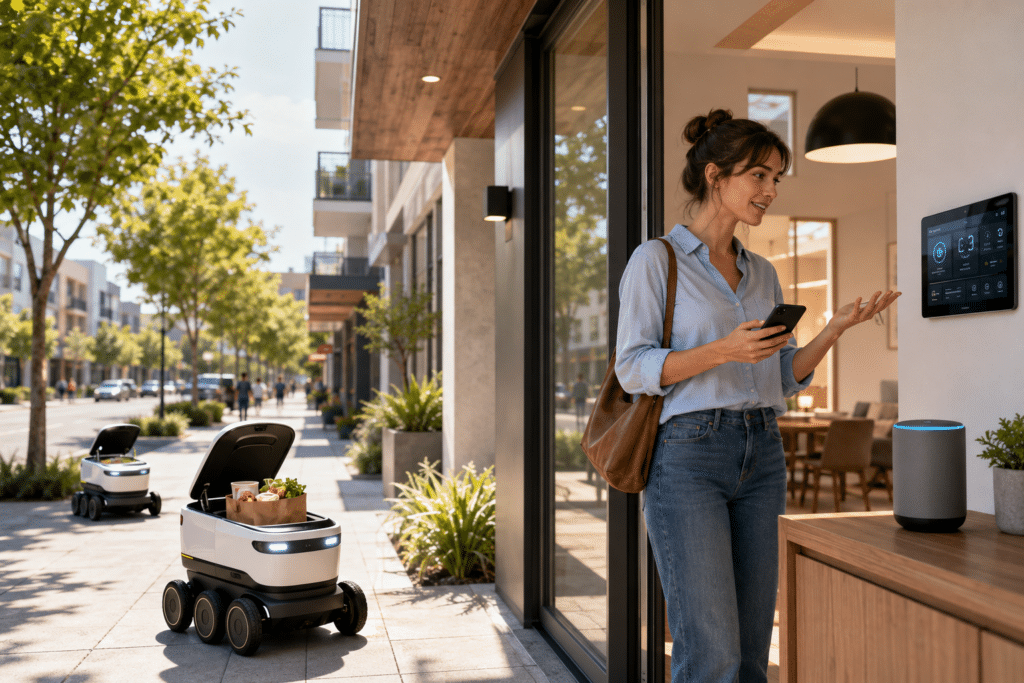
This is not just an industrial story. It is becoming personal.
Autonomous systems are beginning to show up in small, everyday ways. Often, they do it without drawing much attention.
You see it in:
- Delivery robots on campuses
- Smart thermostats adjusting automatically
- Home assistants suggesting actions
- Vehicles with more driver-assist capability
- Apps that complete routine digital tasks
Parks Associates reported that 54 million U.S. internet households own at least one smart home device. That shows autonomy is entering daily life through small, practical steps rather than one dramatic event.
Individually, these moments may seem minor. Collectively, they signal a larger shift.
Systems are starting to take initiative in our lives.
Why Are AI, Robotics, and Sensors Accelerating Autonomous Systems?
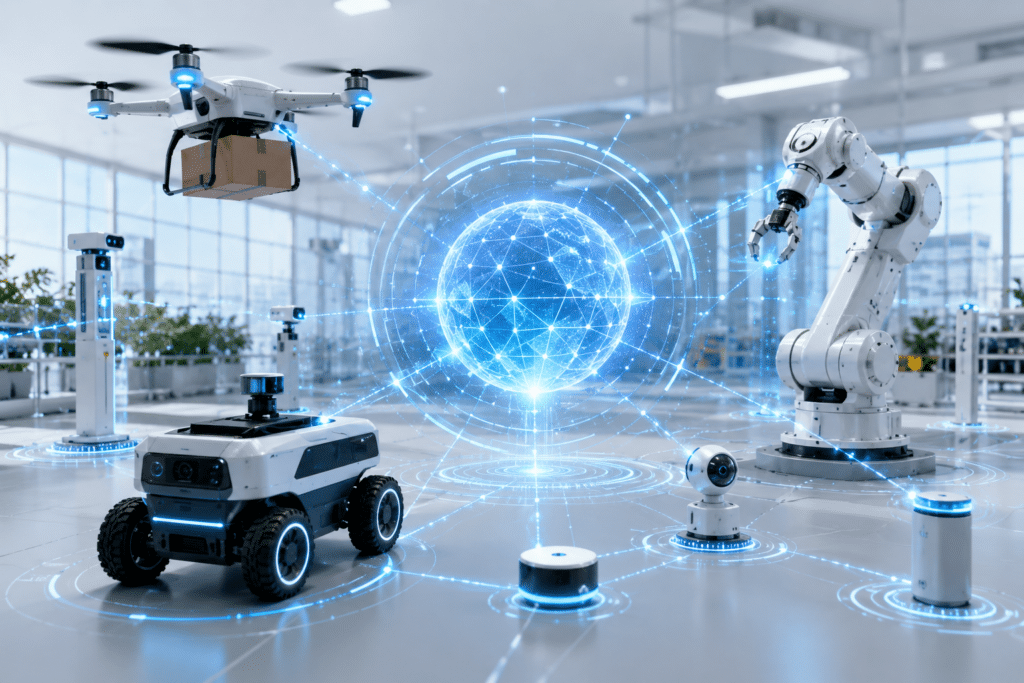
This is not happening only because companies want innovation.
It is happening because several forces are moving in the same direction.
- AI is becoming more capable
- Sensors are becoming smaller and more affordable
- Robotics is becoming more flexible
- Connectivity is becoming more reliable
- Customers expect speed, accuracy, and personalization
When those forces combine, momentum builds.
This is what makes autonomy a Hard Trend. The timing can vary by industry, but the direction is clear.
For leaders, the opportunity is to separate Hard Trends from assumptions. Hard Trends give you certainty. Assumptions need testing.
That distinction helps you act with greater confidence.
How Will Autonomous Ecosystems Connect AI Agents, Robots, and Drones?
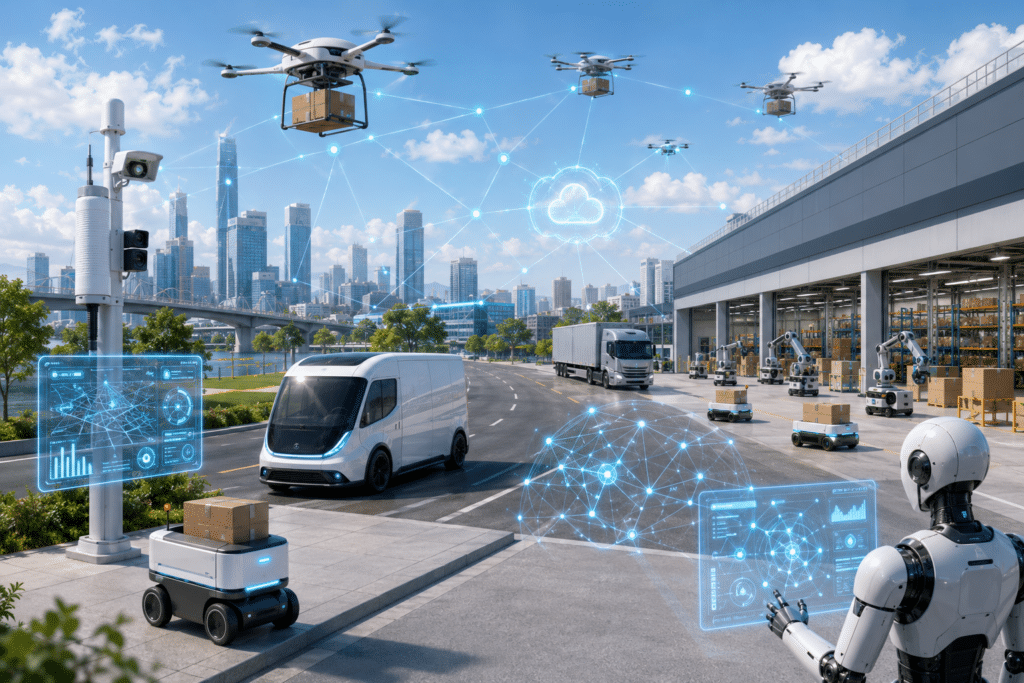
The biggest change ahead will not be one device. It will be connected autonomy.
Digital agents and physical machines will work together across business systems, supply chains, farms, homes, and cities.
Imagine a supply chain where:
- Inventory systems trigger robotic fulfillment
- AI agents adjust operations in real time
- Drones support selected delivery routes
- Human managers review exceptions and set direction
That is distributed, agentic intelligence at scale.
The system becomes adaptive rather than merely automated. It can sense, decide, act, and improve.
This is where the next wave of business advantage will come from.
How Can Leaders Identify Where Autonomy Creates New Value?
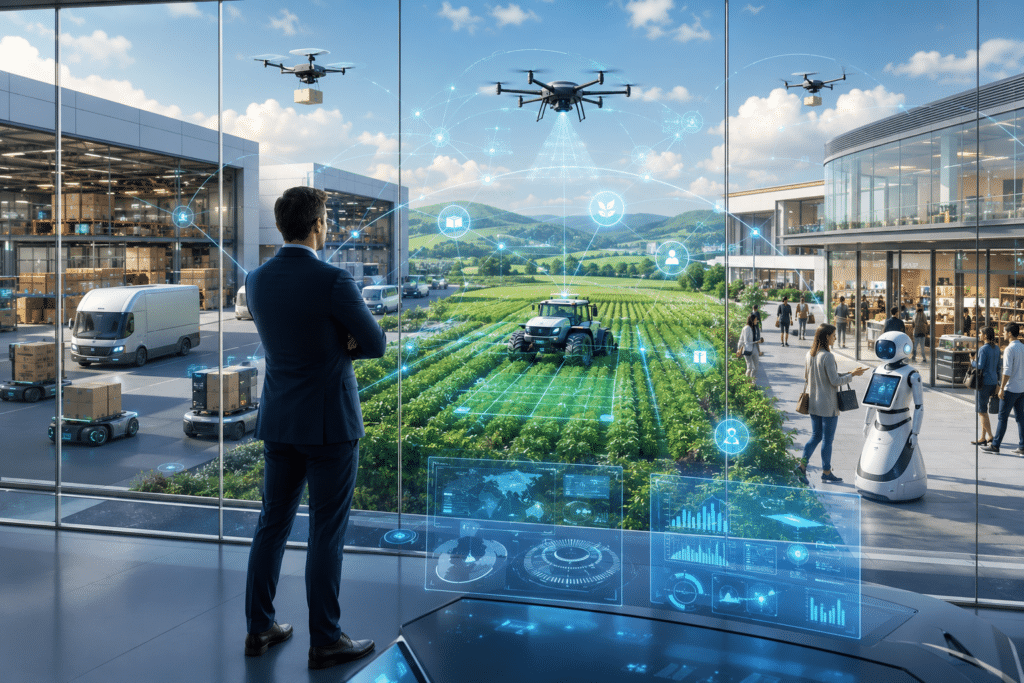
This is where I often see uncertainty take hold.
The question becomes: “What does this mean for me?”
My answer is direct. If you see autonomy only as replacement, it feels threatening. If you see it as augmentation, it becomes an opportunity.
Start by identifying where autonomy is already appearing in your world.
Then ask:
- Where do delays keep repeating?
- Where do people wait for information before acting?
- Where can systems make routine decisions faster?
- Where can humans shift from doing tasks to directing outcomes?
The winners will not be the people who wait until autonomy is mature. The winners will be the people who learn how to guide it early.
How Can You Use Autonomous Systems Before Your Competitors Do?
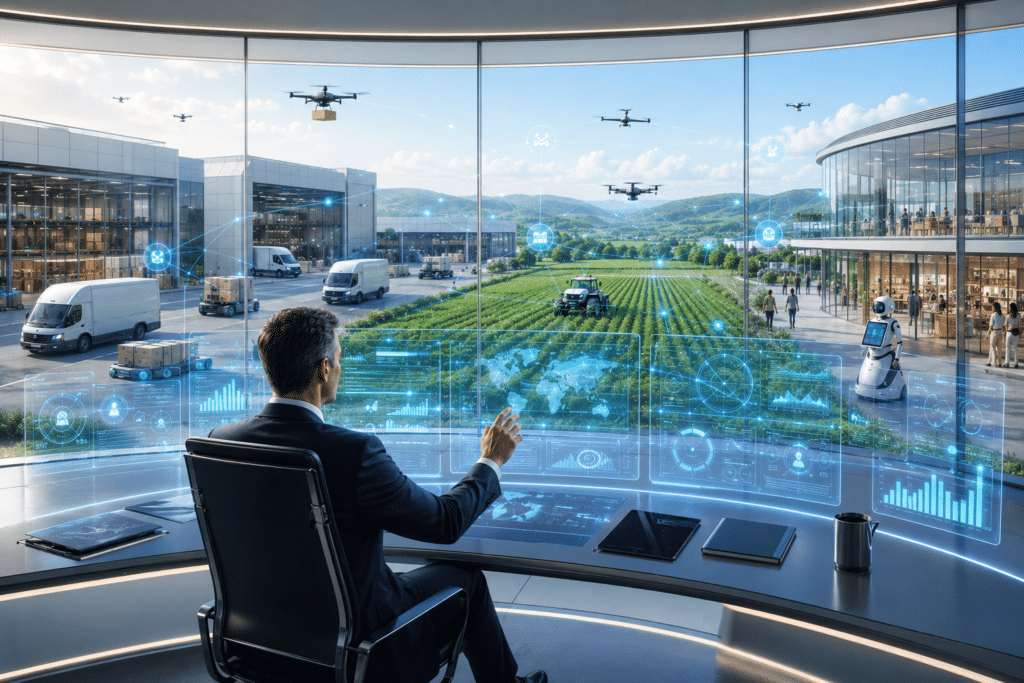
Ready or not, we are moving into a world where systems no longer have to wait for instructions before taking action.
They will coordinate, adapt, and improve over time. Increasingly, they will do it in the background.
That does not mean humans become less relevant.
It means human direction becomes more valuable.
The question is no longer whether autonomous systems will expand beyond cars. They already are.
The better question is this: What will you ask them to do?
In a world where systems can act for you, the real advantage is knowing how to direct them.
Are You Ready to Turn Autonomous Systems Into Your Next Advantage?
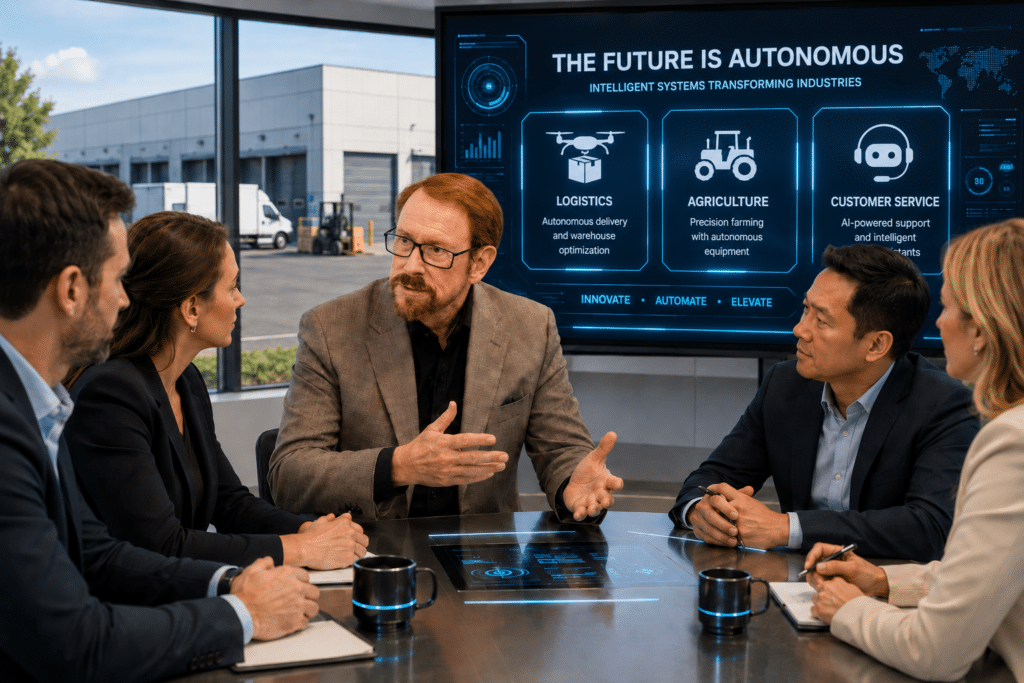
Autonomous systems are already moving beyond cars. They are entering logistics, agriculture, operations, customer experience, and everyday business decisions.
The real question is not whether this shift will happen.
The real question is whether you will react to it later or use it now to create your next advantage.
That is where Anticipatory thinking changes everything.
When you learn to separate Hard Trends from assumptions, you can see which changes are certain, which opportunities are emerging, and which actions to take first.
I work with leaders and organizations to identify future certainties, reduce risk, and turn technology-driven disruption into growth.
Bring Daniel Burrus in to help your team see what is coming, act with confidence, and build an Anticipatory strategy before your competitors do.