Future of Decentralized Finance and the Top 5 Companies Making It Real

It is actively restructuring how capital moves, how assets are owned, and how global financial infrastructure works. Daniel Burrus has long identified blockchain-based financial systems as a Hard Trend. The trajectory is certain. What remains variable is which organizations act on it early and which ones scramble to catch up.

Looking to inspire bold, future-ready thinking at your next event? Hire futurist Daniel Burrus as your AI keynote speaker and spark real innovation.

Read MoreHire Daniel

Watch the Reaction

Watch the reaction to Daniel Burrus’ Recent Keynote presentation.

Daniel Burrus has over three decades of being right about where things are going, which is evidenced by his long and diverse list of repeat clients. Daniel has worked with leaders from Fortune 500 companies, the Pentagon, and heads of State-delivering powerful insights and actionable strategies.

Why Decentralized Finance Matters to Business Leaders

Traditional finance depends on centralized intermediaries to validate, settle, and record transactions. DeFi replaces those intermediaries with programmable smart contracts running on public blockchains. The result is faster settlement, lower transaction costs, and financial infrastructure any organization can access directly.

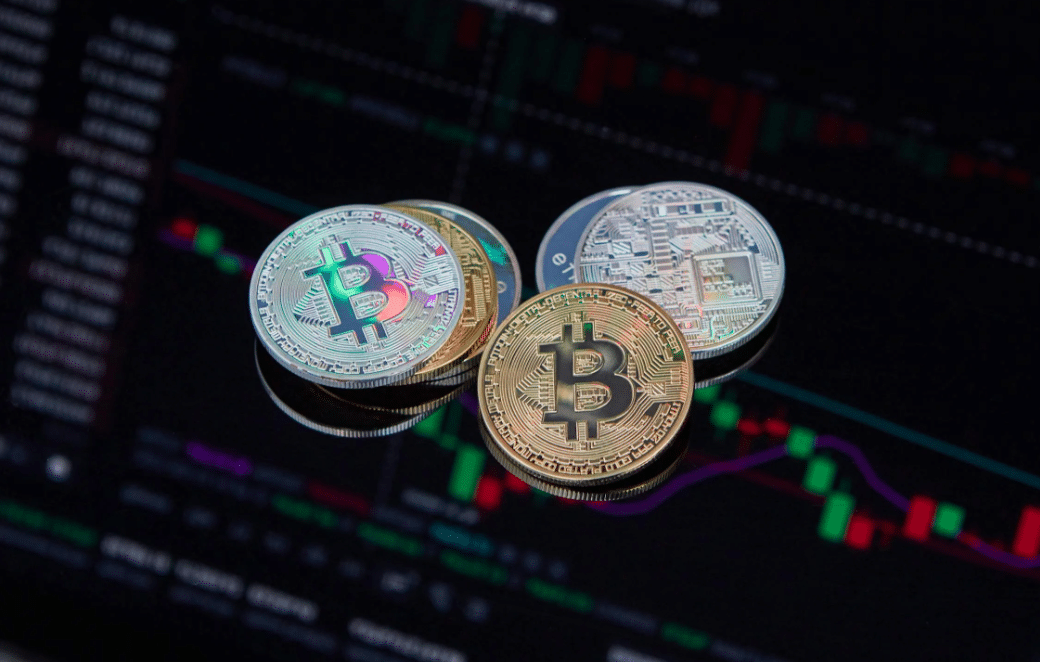
Tokenization of real-world assets is accelerating institutional interest beyond cryptocurrency speculation. Treasury securities, real estate, and commodities are moving on-chain. For executives, DeFi is not a crypto story. It is a financial infrastructure story with real implications for how capital moves, how risk is managed, and where competitive advantages form. The evolution beyond bitcoin that futurists identified years ago is playing out exactly in these institutional applications.

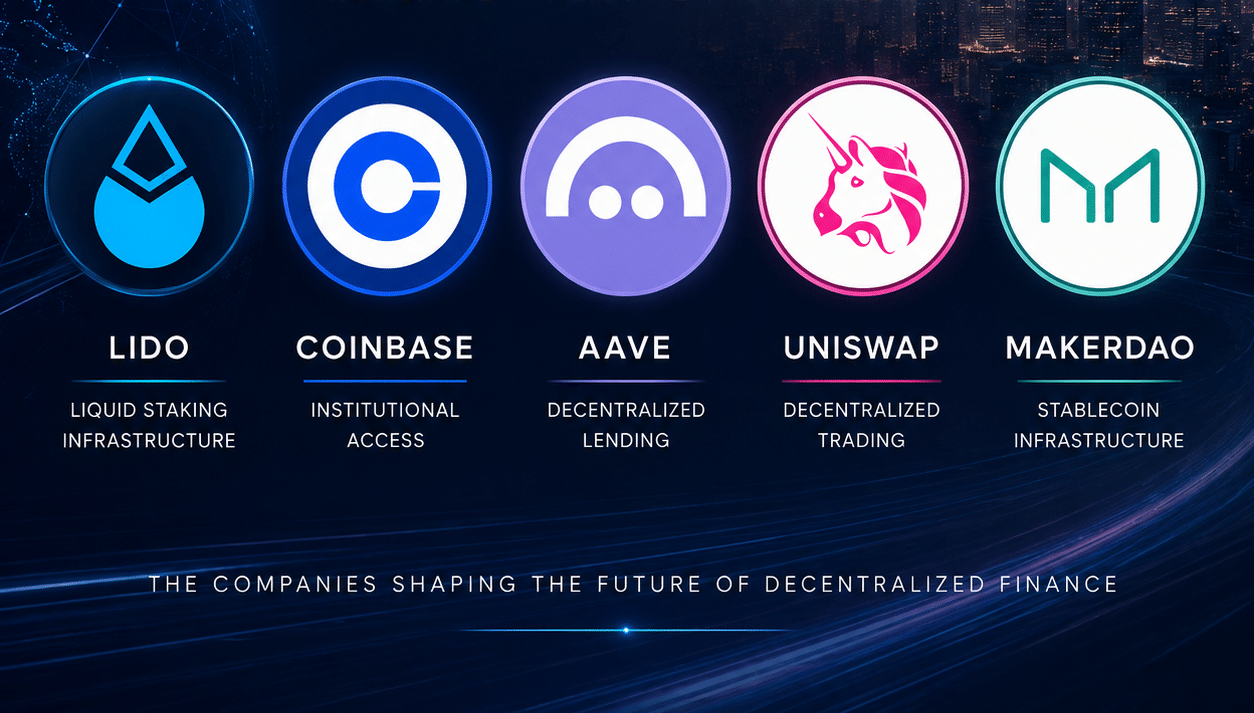
5 Companies Leading the Future of DeFi

  1. MakerDAO is the infrastructure behind DAI, one of the most widely used decentralized stablecoins. By allowing users to create stablecoin liquidity using collateral, without a bank involved, MakerDAO demonstrated that programmable monetary policy is viable at scale. For enterprises, it opens a new model for treasury management and cross-border settlement that bypasses traditional correspondent banking.
  2. Uniswap Labs built the leading decentralized trading protocol on Ethereum. It enables peer-to-peer asset exchange without a centralized order book or custodian. Federal Reserve Governor Waller’s analysis of decentralized finance notes that smart contracts and tokenization complement traditional financial infrastructure rather than simply replace it. Uniswap is proving that thesis at scale.
  3. Aave Labs pioneered decentralized lending, enabling users to borrow and lend digital assets through algorithmic interest rate protocols. Its significance for institutions is a lending model that runs without credit officers, underwriters, or bank branches. For corporate treasury and liquidity management, the operational efficiency argument is already hard to ignore.
  4. Coinbase serves as the most critical bridge between institutional capital and decentralized infrastructure. Regulatory compliance, custody solutions, and enterprise-grade onramps make it the entry point for organizations moving from traditional finance into digital asset ecosystems. For executives, Coinbase provides access to digital asset ecosystems without the complexity of deploying directly on-chain.
  5. Lido Finance leads the liquid staking sector, enabling organizations to participate in blockchain network security while maintaining liquidity on their staked assets. For enterprises holding digital assets, Lido generates yield without locking that capital away from day-to-day use.

Emerging Trends Executives Should Watch

Institutional Tokenization

Research on tokenization from the World Economic Forum confirms that major financial institutions including the World Bank are actively building infrastructure to manage tokenized assets at scale. Treasury securities, real estate, and commodities are crossing from concept to commercial deployment. 

For executives, tokenization compresses settlement timelines, reduces intermediary costs, and opens previously illiquid asset classes to fractional ownership and global trading.

AI and DeFi Convergence

The intersection of AI and decentralized finance is the most underreported trend in this space. AI-driven risk analysis is improving smart contract auditing by identifying vulnerabilities before deployment. Automated financial agents are beginning to manage liquidity positions across DeFi protocols without human initiation. 

Predictive liquidity systems are optimizing yield strategies in real time. The result is financial infrastructure that is smarter and more self-directed than anything traditional systems have produced.

Cross-Chain Interoperability

Early DeFi infrastructure operated in isolated blockchain ecosystems. Cross-chain interoperability protocols now enable assets and data to move across different blockchain networks seamlessly. For enterprise adoption, this removes the single-chain dependency that has limited DeFi’s scalability for complex organizational use cases.

Zero-Knowledge Rollups

Zero-knowledge technology compresses transaction data and validates it off-chain before recording it on the main blockchain. The result is dramatically lower transaction costs and faster settlement speeds without sacrificing security. 

For organizations evaluating DeFi at enterprise scale, ZK rollups resolve the cost and speed objections that have historically limited institutional participation.

Risks and Challenges Slowing DeFi Adoption

Every major technology transition produces friction before it produces maturity. Disruptive technology at the scale of DeFi is no exception. Here are the key challenges executives must model before committing operational capital:

  • Regulatory uncertainty. Jurisdictional inconsistency in how digital assets, stablecoins, and DeFi protocols are classified creates compliance complexity that many organizations are not yet equipped to navigate.
  • Smart contract risk. Code vulnerabilities in DeFi protocols have produced significant losses through exploits that had no human intermediary to intervene.
  • Governance complexity. Token-based voting in decentralized autonomous organizations introduces political dynamics and concentration risks that traditional governance structures were never built to handle.
  • Market volatility. Swings in collateral asset values can trigger rapid liquidation cascades in lending protocols, creating systemic risk that executives need to model carefully before deploying capital.

The Future of Decentralized Finance

The future of decentralized finance is a hybrid model where on-chain infrastructure operates alongside, and increasingly integrates with, traditional financial institutions. The real question is not DeFi versus traditional finance. It is which organizations build DeFi capability into their existing operations before that capability becomes a baseline competitive requirement.

AI-powered decentralized systems will handle liquidity, trading, contract auditing, and yield generation across global markets with little to no human involvement. Anticipatory leaders are not waiting for regulatory clarity. They are already building internal knowledge and running pilots. 

The technology-driven trends shaping financial services make clear that the opportunity to move first is closing. Understanding how DeFi intersects with broader technology transformation, including the future of information technology infrastructure that enterprise blockchain depends on, is increasingly essential for leaders making connected investment decisions. 

For executives ready to build that strategic clarity, financial services keynote speakers who specialize in anticipatory disruption give boards the strategic framework DeFi decisions require. Organizations that anticipate this shift will define the financial infrastructure of the next decade. For direct advisory engagement on building that anticipatory posture, strategic advisory services are designed for organizations navigating exactly this inflection point.

Frequently Asked Questions

What is decentralized finance (DeFi)? 

DeFi is a blockchain-based financial system that uses smart contracts to replicate lending, trading, and settlement functions without centralized intermediaries like banks or brokers.

Which companies are leading the DeFi industry? 

MakerDAO, Uniswap Labs, Aave Labs, Coinbase, and Lido Finance are among the most strategically significant companies shaping DeFi infrastructure and institutional adoption today.

Why are institutions investing in blockchain technology? 

Institutions are investing because blockchain enables faster settlement, lower transaction costs, programmable compliance, and access to tokenized asset markets that traditional infrastructure cannot efficiently serve.

How does DeFi differ from traditional finance? 

Traditional finance relies on centralized intermediaries to validate and record transactions. DeFi uses programmable smart contracts on public blockchains, eliminating intermediaries and enabling continuous, automated financial operations.

What role does AI play in decentralized finance? 

AI is improving smart contract security auditing, enabling autonomous liquidity management, powering predictive risk models, and driving the development of intelligent financial agents that operate across DeFi protocols without human initiation.

What are zero-knowledge rollups in blockchain? 

Zero-knowledge rollups process and compress transactions off-chain before recording validated summaries on the main blockchain, dramatically reducing costs and increasing throughput for enterprise-scale DeFi applications.

Is decentralized finance secure for enterprises? 

DeFi security has improved significantly but smart contract vulnerabilities remain a real risk. Enterprises should conduct thorough audits, implement staged capital deployment, and maintain governance oversight at critical decision points.

How are companies using tokenization today? 

Companies are tokenizing treasury securities, real estate, commodities, and private equity to enable fractional ownership, faster settlement, and access to global liquidity pools without traditional intermediary infrastructure.

What industries will DeFi disrupt the most? 

Banking, insurance, asset management, trade finance, and real estate are the sectors facing the most direct disruption from DeFi infrastructure as tokenization and programmable settlement reach institutional scale.

What should business leaders know about the future of DeFi? 

DeFi is transitioning from experimental to institutional infrastructure. Leaders who build internal knowledge, run pilots, and establish governance frameworks now will be better positioned than those waiting for full regulatory clarity.

Book Daniel Burrus for Your Next Event

If you want to transform your team’s understanding of artificial intelligence and spark innovation across your organization, consider booking Daniel Burrus, a best selling author and artificial intelligence keynote speaker, for your next conference or corporate event.

Visit www.burrus.com to learn more or to request availability.

Because the future isn’t something you react to. It’s something you create—and the right keynote speaker can show you how. Booking an AI expert like Daniel Burrus can transform your team’s understanding of AI and its potential impact on your business strategy.